Get in Touch with Koven Air Company

ISO Certified
Lithium Battery Dehumidifier
Lithium Battery Dehumidifier, Composite-Rotor Dry-Room Systems to −50°C Dew Point
Hold your cell-assembly and electrolyte-filling rooms below −45°C dew point, year-round, without over-drying your energy budget. Koven Air designs, sizes, and verifies desiccant-rotor dehumidification for lithium battery dry rooms, with the thermodynamic calculations shown, not hidden.
Request a Quote (RFQ)A lithium battery dehumidifier is a desiccant-rotor system that drives dry-room air below a −40°C dew point (the mainstream industry baseline; Koven’s dry-room design target is −45°C), roughly 0.5% relative humidity, so lithium salts and electrolyte never meet enough airborne moisture to react. That single specification protects lithium-ion battery cell yield, cycle life, and safety across electrode winding, calendering, and electrolyte filling, the heart of humidity control on the line. Below, we show how the system is sized, what it should and should not over-deliver, and how the regeneration energy, usually the largest running cost, is cut.
≤ −45°C
Dry-room dew point (design target, −50°C rotor outlet margin)
~40 kg/h
Moisture removal per unit, sized to load
ISO 6–8
Cleanliness per ISO 14644-1
~60–88%
Regeneration energy cut with heat-pump option (published range)
Why Lithium Battery Production Needs a −40°C Dew-Point Dry Room
Lithium-ion battery production needs a −40°C dew-point dry room because the electrolyte salt, lithium hexafluorophosphate (LiPF₆), hydrolyzes on contact with airborne water: LiPF₆ + H₂O → LiF + POF₃ + 2HF. That hydrofluoric acid then attacks cathode material, current collectors, and the SEI film, raising internal resistance, accelerating capacity fade, and, in the worst case, feeding thermal-runaway risk. That’s why electrolyte water content is typically held at or below 20 ppm and the room air is pushed to ultra-low dew points.
A dry room sits inside a broader moisture-control strategy, component baking, electrolyte handling, and airlock discipline all matter too, yet it remains the layer that governs the room air every open cell sees. Requirements are expressed as dew point rather than relative humidity because at these extremes RH is effectively zero. Independent industry practice converges on −40°C dew point (0.5% RH at 72°F) as the mainstream assembly baseline, with electrolyte-filling micro-environments taken lower. Cleanliness is controlled in parallel to ISO 14644-1 Class 6–8.
Getting the target wrong is expensive in both directions. A room that drifts 5°C above spec risks a full batch of cells; but over-specifying a deeper dew point, chasing −60°C when the process needs −45°C, just burns regeneration energy for yield you already have. It is not always the obvious trade-off. This is where the physics of moisture-independent desiccant drying matters: an adsorption rotor reaches dew points a refrigerant coil cannot (US 2010/0275775 A1). Unlike a supplier who prints one headline number, Koven Air quantifies each room’s target against a moisture-load calculation before a unit ships, because the dew point has to match the process, not a brochure.
KOVEN AIR /// SYSTEM MATRIX
Koven Air Lithium Battery Dehumidifiers, Models & Selection
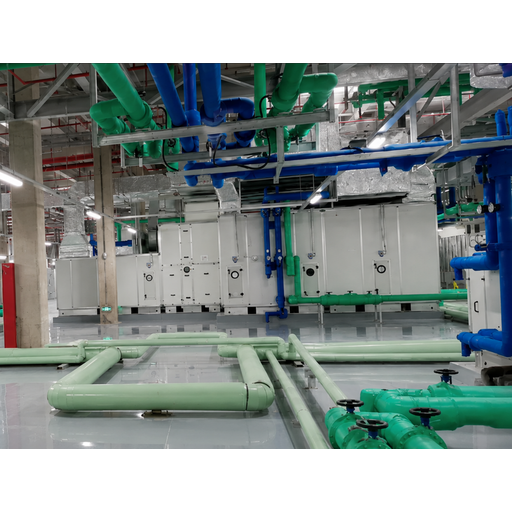
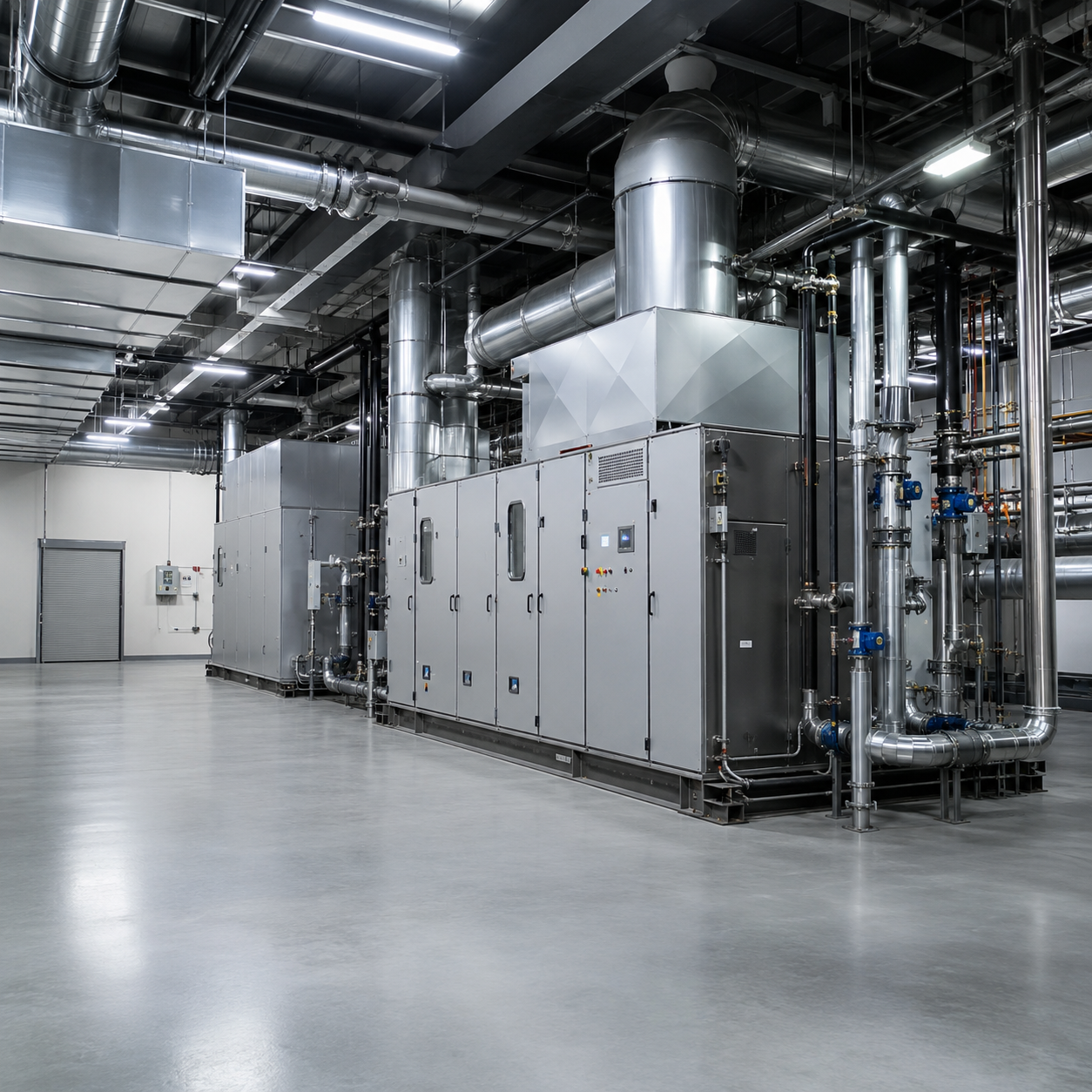
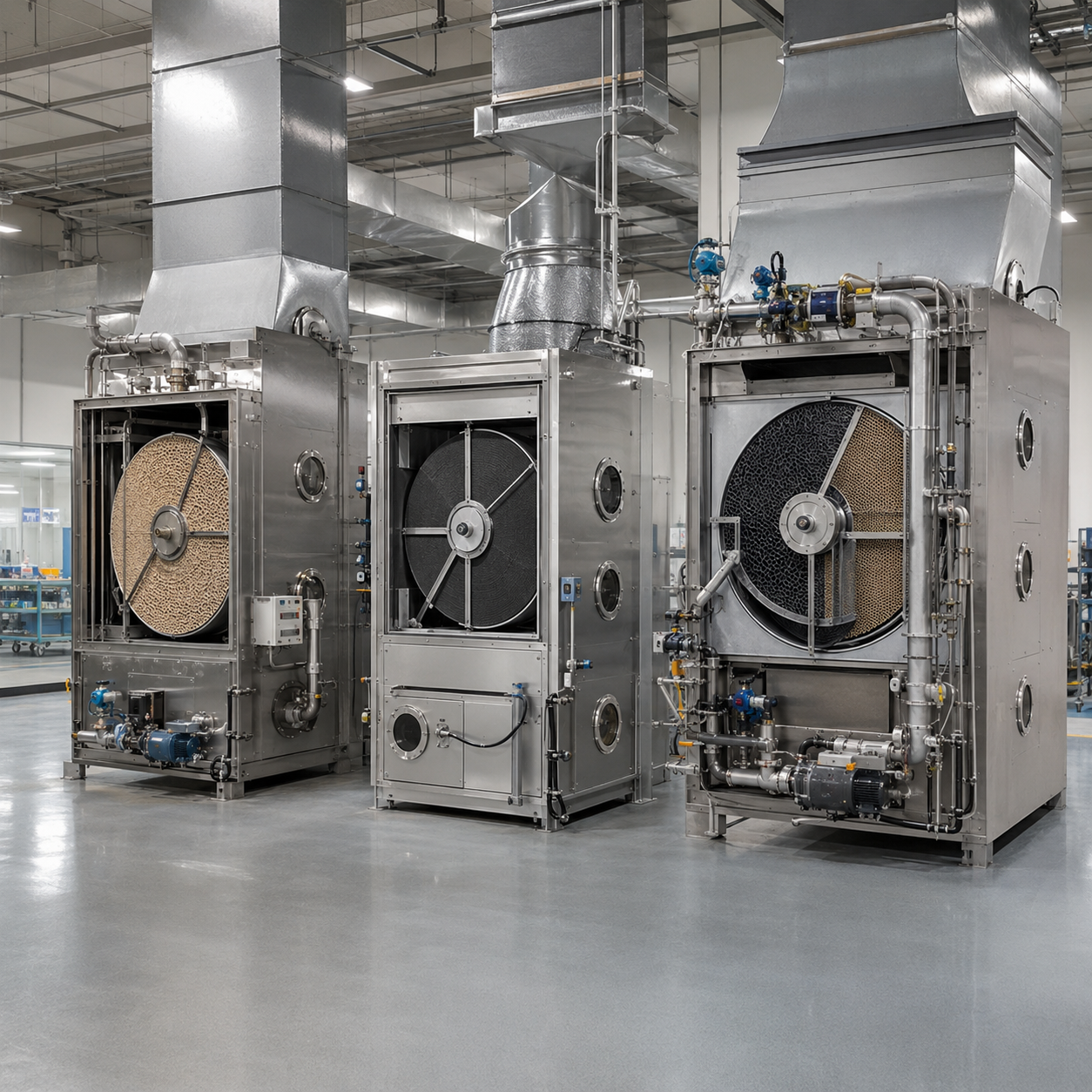
Koven Air builds combined silica-gel + molecular-sieve composite-rotor dehumidifiers configured to each dry room’s load, not sold as a fixed catalog SKU. This composite media reaches deep dew points a single-media rotor struggles to hold, and each unit is matched to your airflow, target dew point, and regeneration energy source. Our representative configuration below is sized for a dry room for battery manufacturing, a large cell-assembly and electrolyte-filling room; smaller R&D and pilot rooms scale down the same architecture.
| Parameter | Representative composite-rotor unit | Selection driver |
|---|---|---|
| Adsorption media | Silica gel + molecular sieve composite rotor | Deep dew point + high-humidity capacity |
| Process airflow | Configured to load (example ~48,000 m³/h) | Room volume × air changes for target dew point |
| Rotor outlet dew point | ≤ −50°C (margin below −45°C room target) | Safety margin against summer/peak load |
| Regeneration heat | Electric, or cascade high-temp heat pump (75/90/120°C) | Energy source & running-cost strategy |
| Post-cooling | Chilled-water after-cooler (e.g. 7/12°C) | Sensible temperature control (23 ± 2°C) |
| Filtration | G4 pre + F8 secondary + H13 terminal | ISO 6–8 cleanliness |
Composite Rotor vs Single-Stage, Performance Comparison
A composite silica-gel + molecular-sieve rotor is the balanced choice for battery dry rooms because it holds a stable −50°C outlet with lower regeneration energy than a single molecular-sieve stage, while reaching deeper dew points than silica gel alone. Rather than High/Medium/Low labels, the comparison below uses concrete engineering values, so the trade-off is legible.
| Criterion | Single-stage silica gel | Single-stage molecular sieve | Silica gel + molecular sieve (composite) |
|---|---|---|---|
| Deep low dew point (≤ −50°C) | Marginal — adsorption falls off below −40°C | Strong (to −60°C and below) | Strong, with margin |
| −50°C outlet stability | Small headroom | Ample | Ample |
| Regeneration temperature (indicative) | ~120–140°C | ~140–200°C (higher energy) | ~110–160°C (staged) |
| Running energy | Medium | Higher | Lower (composite + heat recovery) |
| Capital cost | Low | High | Medium |
| Verdict | Yield risk near target | Energy-heavy | Best balance |
Regeneration temperatures above are indicative engineering ranges, actual values depend on media formulation, rotor design, and target dew point, not a single published figure.
Buyers get the trade-off wrong when they chase the deepest-drying rotary desiccant dehumidifier available; the right call is matching media to the dew point the process actually needs. Peer-reviewed work confirms the direction, combined rotary-desiccant configurations reduce energy consumption versus standard or purge dehumidifiers (MDPI, Sustainability 2025) — and minimizing regeneration temperature is a core design lever (US 6,751,964 B2). The comparison above reflects composite-rotor adsorption behavior characterized against ISO-referenced test conditions, not catalog optimism.
Engineering Design Example, Sizing a 2 GWh Dry Room to −50°C
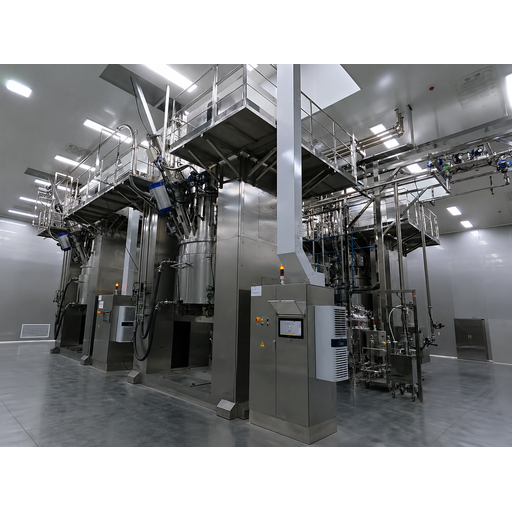
Nothing shows how we work more clearly than a full sizing example. The following is a representative engineering design case, a 2 GWh LFP lithium-ion battery dry room (winding + electrolyte filling, 600 m², 1,920 m³, ISO Class 7) worked from summer design conditions to acceptance targets. It shows the method; a project-specific verification report accompanies each delivered system.
| Acceptance item | Design target | Engineering result |
|---|---|---|
| Dry-room temperature | 23 ± 2°C | 23.1°C |
| Dry-room dew point | ≤ −45°C | −46.3°C (design, 12-point average) |
| Rotor outlet dew point | ≤ −50°C | −51.2°C |
| Cleanliness (≥0.5 µm) | ≤ 352,000 /m³ (ISO 7) | 128,000 /m³ |
| Positive pressure | ≥ 15 Pa | 18 Pa |
| Steady moisture removal | ≥ 40 kg/h | 41.2 kg/h |
| Calc vs result deviation | — | < 3% |
This summer mixed-air load is the real challenge: 1,500 m³/h fresh supply air + 46,500 m³/h return air = 48,000 m³/h, with the supply air reduced from 0.724 g/kg to a 0.031 g/kg rotor outlet — a 39.9 kg/h computed moisture duty the unit is sized to meet with margin (41.2 kg/h capacity). The modeled dew-point and temperature targets land within 3% of the design calculation because the method is disciplined thermodynamic and mass-balance, not a guess. Koven Air engineers this to a −50°C outlet with 400 process-traceability points on the assembled system, and grades cleanliness to ISO 14644-1 Class 7; the same air-handling discipline underpins published battery dry-room energy studies (Ahmed et al., J. Power Sources 2016) and current deep-drying patents (US 2024/0019135 A1).
We size the rotor to hold a −50°C outlet, five degrees below the room target, so summer peaks and door cycling never push the room above −45°C. Over-specifying a deeper dew point would just burn regeneration energy for yield we already have. That is the honest trade-off, and we would rather show it than hide it.
A published vendor example (Cotes).
Cotes, itself a dehumidification supplier, so an industry peer rather than a neutral third party, publishes a worked case for a 500,000 m³/h gigafactory dry room on 100% fresh air: conventional one-stage ~48.8 GWh/year versus a heat-pump strategy at ~18.7 GWh/year (~62% on that basis), up to ~88% where waste heat is recoverable — on the order of €8.5M/year in that best case at €200/MWh. Treat it as an illustrative order of magnitude, not a guarantee for your load.
Koven engineering estimate.
On our representative design, moving regeneration from electric heat to a cascade high-temp heat pump lowers the regeneration line roughly ~70% on that line, within the band those published examples suggest, not a promise. Payback isn’t a single headline number: it scales with your site’s industrial electricity rate (the U.S. average is ≈8.7 ¢/kWh and varies materially by state), operating hours, and recoverable waste heat, so we quote it on your numbers.
The mechanism, heat-pump-coupled desiccant wheels for energy-efficient dehumidification, is an established, peer-reviewed approach (Energy, 2025), and minimizing regeneration temperature is a long-standing design lever in the patent record (US 6,751,964 B2). Whereas most vendors leave the regeneration energy out of the quote, Koven Air specifies cascade high-temp heat pumps to JB/T 12840-2016, delivering 75/90/120°C regeneration heat even at low ambient — the tiers that drive the composite rotor’s staged regeneration for battery dry-room dew points; a deeper staged case can add supplementary electric heat, so the heat-pump saving applies to the dominant regeneration duty. That’s the trade-off worth putting in writing.
Dry-Room Standards, Dew Point & the Dew-Point Ladder
Process Specifications Overview
Process Zone
Typical Dew Point
Air Changes (Indicative)
Implication
General Dry-Room / Return
−30 to −45°Cdp
—
RH < 1%
Cell Assembly (Baseline)
−40 to −45°Cdp
~30–60 ACH
Mainstream Design Point
Electrolyte Filling (Critical)
down to −80°Cdp
higher
Micro-Environment, Not Whole Room
Deeper (−60°Cdp)
−60°Cdp
~180 ACH
Energy Rises Steeply
Lithium Battery Dry-Room Calculators
Four quick estimators for sizing, energy, dew-point targeting, and humidity conversion. These are engineering approximations for early scoping — a Koven Air verification calculation confirms the final specification.
Lithium Battery Dehumidifier FAQ
01
Is humidity really that bad for lithium batteries?
Yes. Airborne moisture hydrolyzes the LiPF₆ electrolyte salt into hydrofluoric acid, which corrodes electrodes and the SEI film, cuts capacity and cycle life, and raises safety risk. Electrolyte water content is typically held at or below 20 ppm, which is why the room air is driven below a −40°C dew point.
02
What dew point do I need for lithium battery manufacturing?
Most cell-assembly rooms are designed for −40 to −45°C dew point (about 0.5% RH), with electrolyte-filling micro-environments taken lower, sometimes to −80°C. There’s no single mandatory standard number, the target come from your process specification. Matching the dew point to the process stage, rather than over-drying the whole room, is the key to controlling energy.
03
What is the difference between a dry room and a clean room?
A clean room controls airborne particles (graded by ISO 14644-1); a dry room additionally controls moisture to an ultra-low dew point. Battery production needs both, typically ISO Class 6–8 cleanliness combined with a −40°C-or-lower dew point.
04
How much energy does a battery dry room dehumidifier use, and can it be reduced?
Dehumidification is one of the largest energy lines in a battery plant, dominated by regeneration heating. Published analysis shows a heat-pump regeneration strategy can cut that electricity roughly 60–88% versus conventional one-stage systems. The saving depend on your electricity rate, operating hours, and available waste heat.
05
Can a desiccant rotor hold −45°C in summer and integrate with our existing dry room?
Yes, we size the rotor to a −50°C outlet, a five-degree margin below a −45°C room target, so peak summer load and door cycling don’t breach the room spec. The unit is configured to your airflow and can be integrated with existing air handling; we verify the fit by calculation before quoting.
06
Are you a reliable supplier for a 24/7 production line?
Continuous production is designed for from the start: key components are specified for redundancy and on-line maintenance, regeneration temperature is precisely controlled to protect the rotor, and after-sales includes on-site commissioning plus lifetime technical service. We support the electrical listing and documentation your local jurisdiction requires.