Get in Touch with Koven Air Company

Packaged Rooftop Units: Commercial RTU & Rooftop HVAC Systems
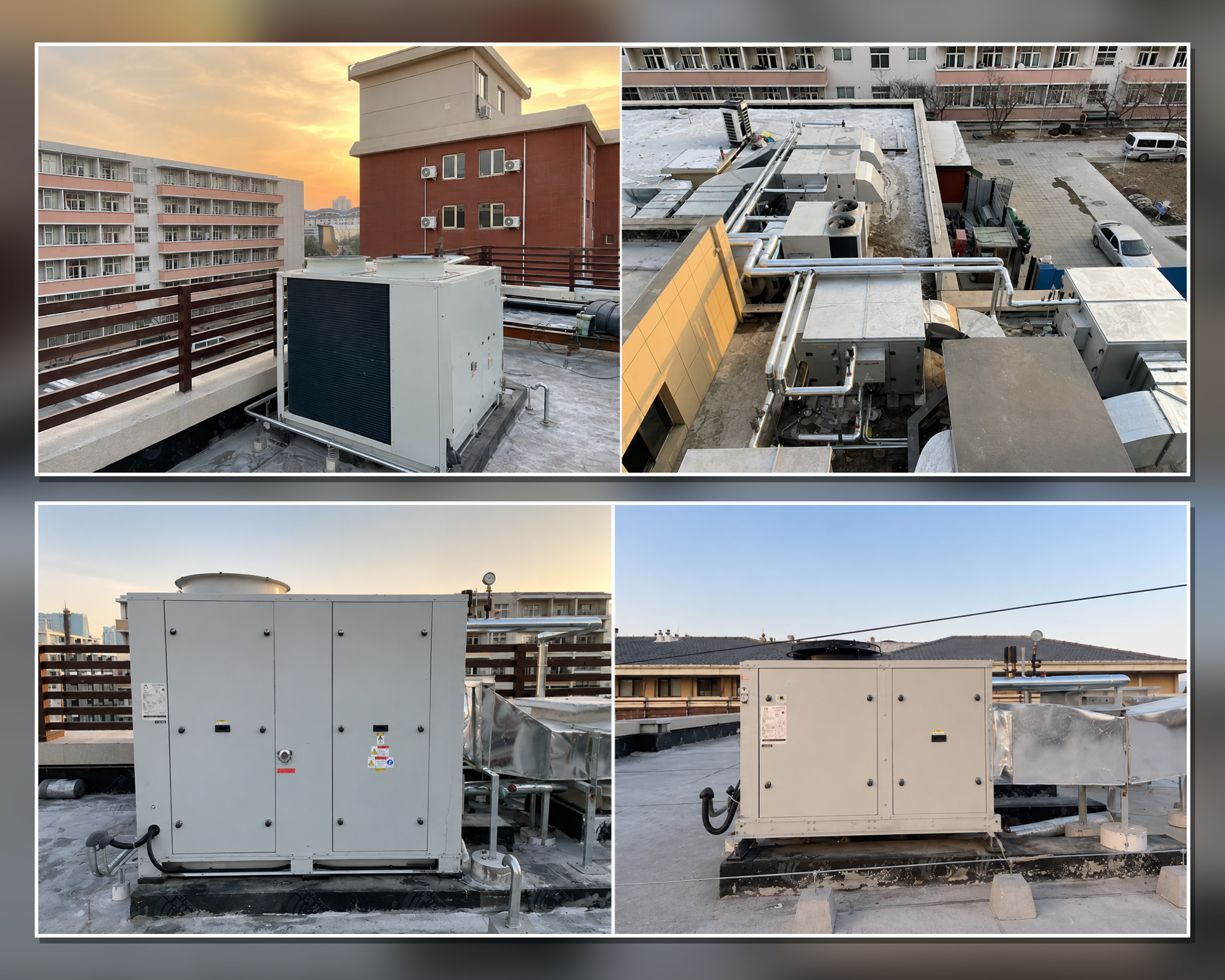
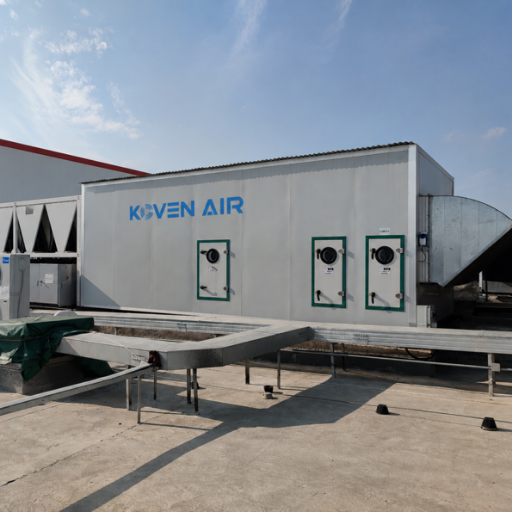
Packaged rooftop units (RTUs) are self-contained, all-in-one HVAC systems that mount on a commercial roof and deliver cooling, heating, ventilation, and filtration from a single weatherproof cabinet, no mechanical room, no chilled-water piping, no cooling tower. Koven Air builds them factory-direct from 2.5 to 149 tons, with cold-climate heat pump models that keep heating down to −20 °C (−4 °F) on electricity alone.
Technical Specifications
2.5–149
ton capacity (9–523 kW)
14.8–16.9
IEER (pro configuration)
−20 °C
heat-pump heating (−4 °F)
R-32
low-GWP option (R-410A std)
$5.94
/sqft §179D eligible (2026)
28%
energy cut, field-verified
Why Commercial Buildings Choose Packaged Rooftop Units
Most commercial cooling-and-heating problems start indoors: a chilled-water plant that needs a dedicated mechanical room, condenser and hot-water loops that can leak or freeze, and a construction sequence that drags for months. A packaged rooftop unit moves the entire system to the roof and runs on air, not water. Also called a commercial rooftop air conditioner, it packages air conditioning, heating, and ventilation into one weatherproof AC cabinet for commercial spaces, new construction, and retrofits alike.
New buyers usually start with two questions, how does a rooftop hvac unit work, and what do packaged rooftop units cost, and both trace back to the single-cabinet design below. (A rooftop package unit and a packaged rooftop hvac unit are the same thing.)
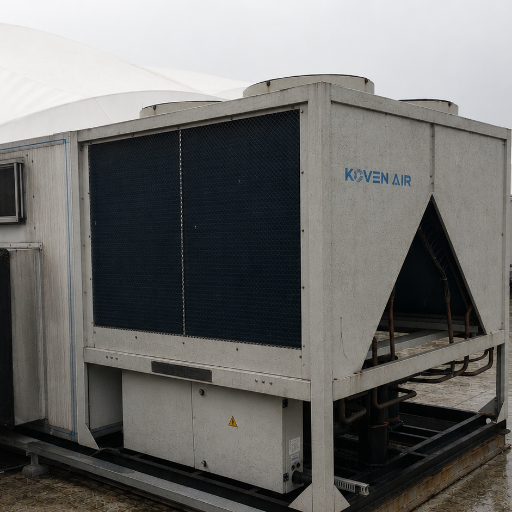
A packaged rooftop unit is a single-cabinet HVAC system installed on a building roof that houses the compressor, condenser, evaporator coil, supply-air blower, filters, and controls together — all the core HVAC components in one shell. It delivers heating and cooling and ventilation through ducted supply air, unlike a split system, which separates the condenser and air handler into two connected units. Packaged air conditioners like this keep the whole refrigeration circuit outdoors.
- RTU vs. air handler (AHU): an AHU only moves and conditions air; it needs an external chiller or DX condenser. An RTU is self-contained: refrigeration, heating, and air handling in one cabinet.
- RTU vs. split system: a split system runs refrigerant lines between an outdoor condenser and an indoor coil. An RTU keeps refrigerant outside the building envelope, in one rooftop package.
Can an RTU be a heat pump? Yes. Koven builds heat-pump RTUs that both cool and heat, including cold-climate models rated to −20 °C.
The honest trade-off
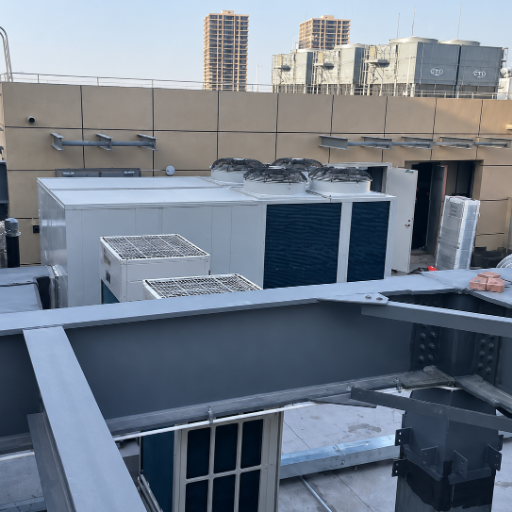
Packaged rooftops win on simplicity, but they aren’t free of drawbacks: the equipment sits in the weather, and the roof carries the structural and service load. Koven answers both with a double-skin, anti-corrosion, weatherproof enclosure and vibration-isolation bases, plus modular sections that crane-lift for easy installation and reassemble on site.
And bigger is not better: oversized RTUs short-cycle, waste energy, and swing indoor comfort — a sizing loss U.S. DOE flags for commercial rooftops. Right-sizing, not padding the tonnage, is the first selection decision, which is why this page leads with a selection framework rather than a spec dump.
The mistake most projects make is padding tonnage for a worst-case day that never arrives; an oversized 20 ton RTU is expensive to run every hour it short-cycles, because the compressor never settles into steady load. Koven engineers size against your measured load, not a safety guess.
Koven Air KAWD Rooftop Units, Models, Tonnage, Controls & Configuration
The KAWD series spans 2.5 to 149 tons of cooling (9–523 kW) and 10 to 560 kW of heating, moving 1,800 to 99,900 m³/h (1,060–58,800 CFM) of air. Every unit uses hermetic scroll compressors, DX or chilled-water coils, and EC / plug / dual-inlet centrifugal blowers, with external static pressure configurable from 100 to 600 Pa. It’s a flexible, all-in-one solution: the same cabinet ships as a cooling-only, heat-pump, or DOAS configuration.
Three ways to specify a Koven rooftop
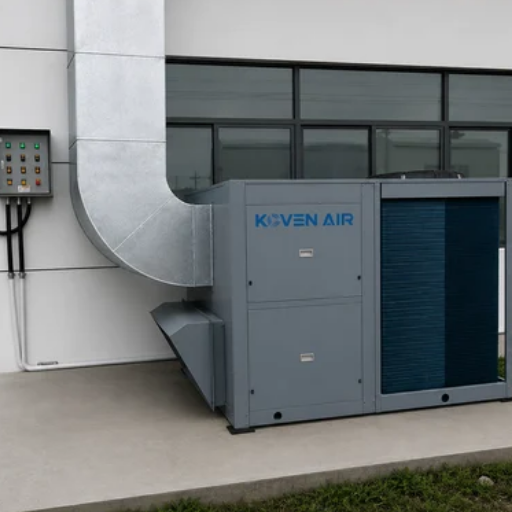
Commercial Rooftop Unit
- Cooling-only & constant temp/humidity
- 5.7–149 ton · IEER to 16.9
A workhorse packaged unit for offices, data centers, and precision environments where tight temperature and humidity control matter. See the commercial rooftop unit range.
Commercial Rooftop Unit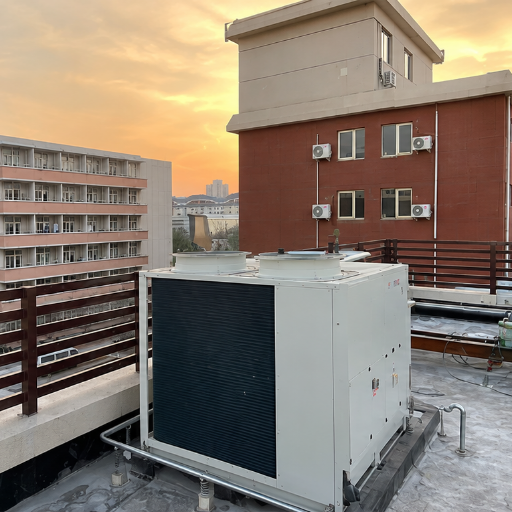
RTU with Heat Pump
- Cool + all-electric heat
- Heating to −20 °C (EVI, −30 °C capable)
Cold-climate heat-pump rooftop for electrification and decarbonization projects that must drop the gas line. Explore the heat-pump RTU line.
RTU with Heat Pump
DOAS Rooftop Unit
- 100% outdoor-air / dedicated ventilation
- 10–80 ton · AHRI 920 · MERV 8–HEPA H14
Dedicated outdoor air system for indoor-air-quality-critical spaces, schools, labs, healthcare. Review the DOAS rooftop range.
DOAS Rooftop UnitNeed dedicated ventilation air or a non-rooftop option instead? Koven also builds a make-up air unit and full air handling unit lines for the same buildings.
Koven doesn’t sell one rooftop and hope it fits every site. The KAWD platform ships in five operating configurations, each matched to an ambient range: this is the selection map, not a tonnage guess.
| Configuration | Cooling ambient | Heating ambient | Best-fit application |
|---|---|---|---|
| Heat Pump | 15–43 °C | −20 to 21 °C | Electrification / cold-climate, no gas |
| Cooling Only | 15–43 °C | — | Cooling-led southern climates |
| Year-Round Cooling | 0–43 °C | — | Data centers / server rooms |
| Low-Temp Cooling | −15 to 43 °C | — | Process cooling, cold ambient |
| Constant Temp & Humidity | 15–43 °C | varies | Labs, archives, cleanrooms |
Cooling rated at 27/19 °C return, 35/24 °C ambient; heating at 20/15 °C return, 7/6 °C ambient. Full 30-model table available on request.
| Model | KA-Tons | Cooling kW | Heating kW | IEER std / pro | Airflow CFM | ESP Pa |
|---|---|---|---|---|---|---|
| WD006 | 5.7 | 20 | 22 | — | 2,354 | 150 |
| WD010 | 10.0 | 35 | 38 | 12.3 / 15.1 | 4,120 | 150 |
| WD016 | 15.9 | 56 | 60 | 13.2 / 15.1 | 6,592 | 200 |
| WD023 | 23.3 | 82 | 88 | 13.0 / 15.0 | 9,653 | 250 |
| WD038 | 37.5 | 132 | 141 | 16.0 / 16.5 | 15,539 | 350 |
| WD058 | 58.0 | 204 | 218 | 14.4 / 15.0 | 24,015 | 350 |
| WD088 | 88.0 | 309 | 330 | 15.5 / 15.8 | 36,376 | 500 |
| WD149 | 149.0 | 523 | 560 | 16.6 / 16.9 | 58,800 | 600 |
IEER, Refrigerant & Code Compliance, Where Koven RTUs Sit
ASHRAE 90.1-2022 rates packaged rooftop units under 760,000 Btu/h on IEER, and the minimums rose again on 1/1/2023, set by capacity class in Tables 6.8.1-1 / 6.8.1-2, roughly >14 IEER for the main 65,000–135,000 Btu/h commercial class. Code also now requires an airside economizer down to 33,000 Btu/h (about 2.75 tons).
Koven’s commercial packaged rooftop units run 14.8–16.9 IEER in pro configuration, which clears that floor across the commercial range. We’ll be straight about the ceiling, though:
Where we compete: code-compliant, standard-to-high efficiency at a factory-direct price, and, more importantly, cold-climate heating that premium units don’t publish.
Where premium brands lead: top-tier US units headline IEER around 20–21.5. If a project is chasing the single highest cooling-IEER number, that’s an honest reason to look at a premium line, we would rather earn the spec on total value than overstate a rating.
Efficiency also comes from how the unit runs, not just its rating plate:
- economizer-ready hoods
- energy-recovery wheels
- part-load capacity modulation
- EC fans
all cut real operating hours, the levers that matter once the unit is on the roof.
Koven ships R-410A as standard with an R-32 low-GWP option (GWP ~675 vs R-410A ~2,088). The US market is moving to R-454B under the AIM Act, and premium brands have adopted it. On pure refrigerant GWP we’re behind those lines, so we lead with the R-32 option rather than claim a GWP win we don’t hold.
Chasing the single highest IEER number is the wrong buying test for most projects, it’s an expensive way to buy 2 points of efficiency you may never use, because 85–90% of buildings still run at code-minimum anyway. Koven engineers spec to the ASHRAE 90.1 floor plus the incentives that actually pay back. Unlike premium lines that headline a 21.5 IEER, we publish the honest ceiling and compete on cold-climate COP and price.
Ready to verify performance for your project?
Request a spec sheet with the IEER for your exact model →Cold-Climate Heat Pump RTUs: Verified COP Down to −20 °C
Here’s the gap almost no competitor fills with data: heat-pump rooftop units are still under 1% of RTUs installed, and the ones that exist rarely publish low-temperature heating numbers. Koven’s packaged heat pump RTU uses EVI (enhanced vapor injection) to hold usable heating COP as the ambient falls — delivering warm supply air where a standard unit would blow cooled air only — and we publish the whole curve.
“At −20 °C we still deliver a 30–36 °C supply-air temperature on the heat pump alone, no electric-resistance strip carrying the load. That is the whole point of the vapor-injection circuit: the building keeps heating when a single-stage heat pump would have already tapped out.”
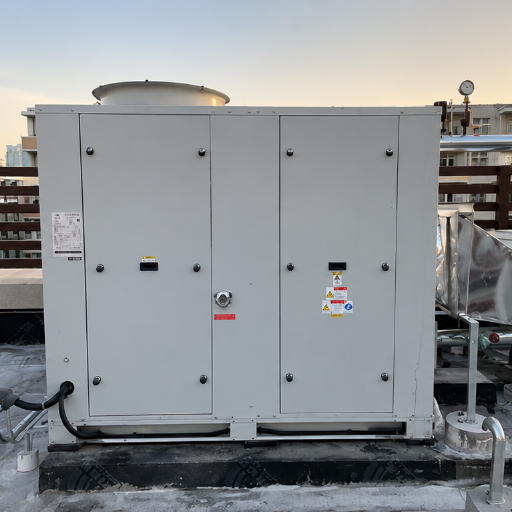
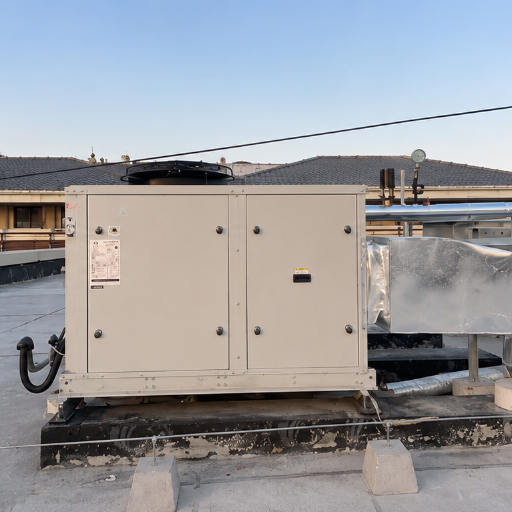
A cold-climate heat-pump RTU can carry most of a heating season on electricity, without auxiliary resistance heat, a point DOE Better Buildings makes for this exact equipment class.
For sites not ready to go fully electric, a dual-fuel configuration pairs the heat pump with gas backup, independent analysis shows a dual-fuel RTU can save 20–30% over an existing gas-fired RTU.
The trap in cold climates is a heat pump that quits below 0 °F and hands the load to expensive electric-resistance strips; Koven’s EVI circuit holds 1.6–2.0 COP at −20 °C because the vapor-injection stage keeps the compressor inside its operating envelope. That’s the difference between a unit that carries a Minnesota January and one that runs the electric bill up.
The −20 °C Continuous-Heat COP Curve
| Outdoor temp | Supply-air temp | Heating COP |
|---|---|---|
| 7 °C (45 °F) | 38–45 °C | 4.0–4.2 |
| 0 °C (32 °F) | 35–43 °C | 3.5–3.7 |
| −5 °C (23 °F) | 33–41 °C | 3.0–3.2 |
| −10 °C (14 °F) | 32–40 °C | 2.7–3.0 |
| −15 °C (5 °F) | 30–38 °C | 2.3–2.5 |
| −20 °C (−4 °F) | 30–36 °C | 1.6–2.0 |
TECHNOLOGY SPECIFICATIONS
EVI vapor-injection heating is a well-established cold-climate refrigeration technology (US patents US10871314B2, US11953239B2). Koven’s units are rated to operate to −30 °C (−22 °F).
Proven in the Field: Quantified Results Across Three Deployments
Ask any working HVAC pro whether a badge guarantees reliability and you get a blunt answer: “Every brand breaks down with really no rhyme or reason… I’m not going to tell you one brand is more reliable than the other.” Reliability is proven in service records, not logos, so here are three deployments with numbers you can check the shape of, presented as climate-transferable engineering data.
28%
energy reduction & ~920,000 kWh/yr saved — 18 heat-pump RTUs, 42,000 m² industrial park, stable heating at −20 °C with no auxiliary resistance heat
SOURCE: Koven Air field deployment, Hebei industrial park (first-party)
Three deployments, three outcomes
- Cold-climate industrial park (42,000 m²): 18 heat-pump RTUs at 34 tons each; −20 °C full-load heating without electric strips; 28% energy cut, ~920,000 kWh/yr saved, install 60% faster than a chiller-boiler build.
- 100% fresh-air campus (35,000 m²): 15 DOAS rooftop units at 42 tons each; measured indoor CO₂ held below 800 ppm; 30% part-load energy saving; construction 50% faster with no water system to test.
- Government-building decarbonization (18,000 m²): replaced a water-cooled chiller + gas boiler plant with all-variable DX rooftop units, eliminating roughly 359 tons of CO₂ per year of direct fossil emissions (29.9 kgCO₂/m² baseline → zero on-site combustion).
U.S. Incentives & Total Cost of Ownership: §179D, ITC & Rebates
Efficiency doesn’t sell itself; incentives do. Roughly 85–90% of high-efficiency RTU sales still land at minimum efficiency unless an incentive moves the buyer. That’s exactly why the operating costs and the money math belong on this page, not just the rating plate.
The §179D Deduction Ladder
Commercial rooftop units are eligible equipment under the IRA Section 179D energy-efficient commercial buildings deduction. For projects completed in 2026, the deduction reaches up to $5.94 per square foot at the maximum prevailing-wage / apprenticeship tier.
| Building size | Deduction at max tier (~$5.94/sqft) |
|---|---|
| 25,000 sqft | up to ~$148,500 |
| 50,000 sqft | up to ~$297,000 |
| 100,000 sqft | up to ~$594,000 |
Base tier starts near $0.50–$1.00/sqft; the prevailing-wage / apprenticeship multiplier lifts it to the enhanced tier. Eligibility and amounts vary by project; confirm with a qualified tax professional.
Total cost of ownership vs. a water system
- No cooling tower, boiler, chilled-water pumps, or plant-room piping to buy, install, or maintain.
- No winter freeze protection or glycol / heat-trace on a water loop.
- Cold-climate heat pump replaces a gas boiler, DOE data puts up to a 50% cut in GHG and energy cost vs. a gas-heat RTU.
- Layer ITC (30–70% for paired renewables) and utility rebates on top of §179D where the project qualifies.
The hidden problem is first cost: a high-efficiency RTU can be expensive up front, which is exactly why 85–90% of buyers default to code-minimum. In a 42 ton data-center application, a §179D deduction at $5.94/sqft plus utility rebates offsets a large share of the install; the incentive, not the rating plate, is what closes the gap.
Certifications, Standards, Controls & Factory
The warranty question comes up fast with any direct or overseas purchase: buyers have been burned by channels that “upsell 50 to 100% and give minimal or no warranty.” Koven answers it with documented standards (ISO 9001 / 14001), a real after-sales process, and a factory you can audit.
Documented Standards
- ISO 9001 Quality management
- ISO 14001 Environmental
- CE EU conformity
- DIN 1946 Ventilation standard
- AHRI 920 DOAS rating basis
Factory
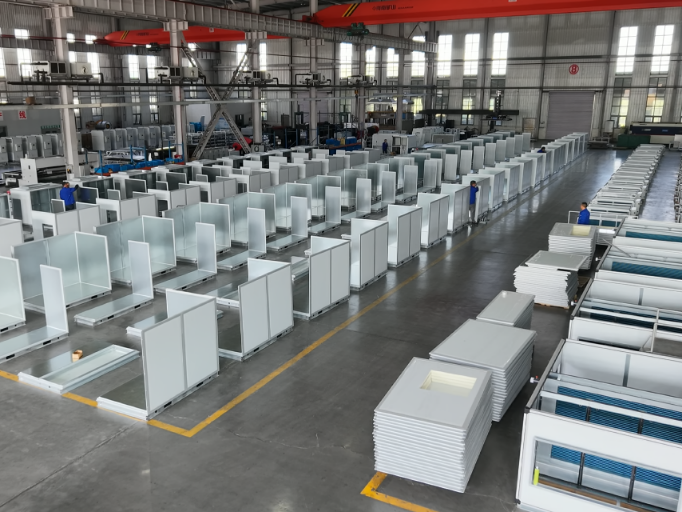
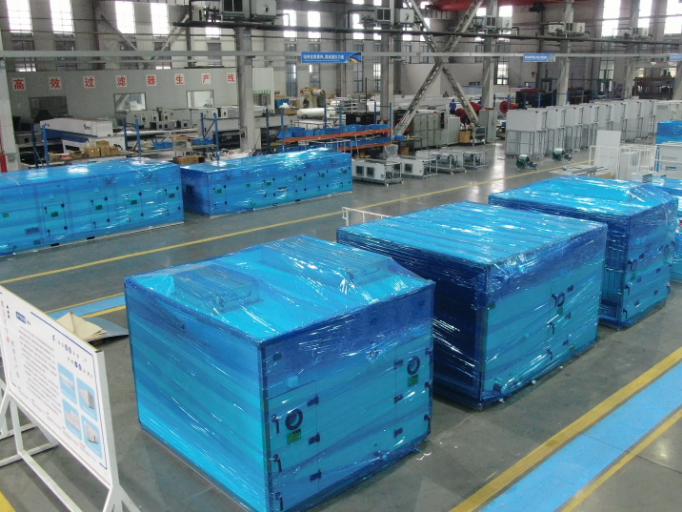
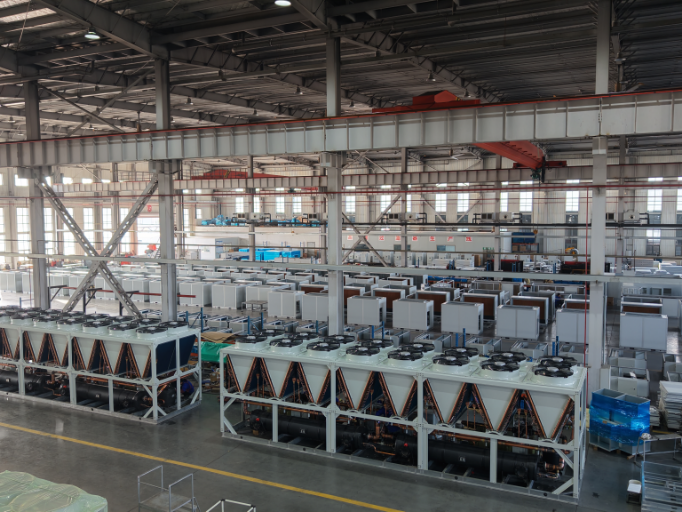
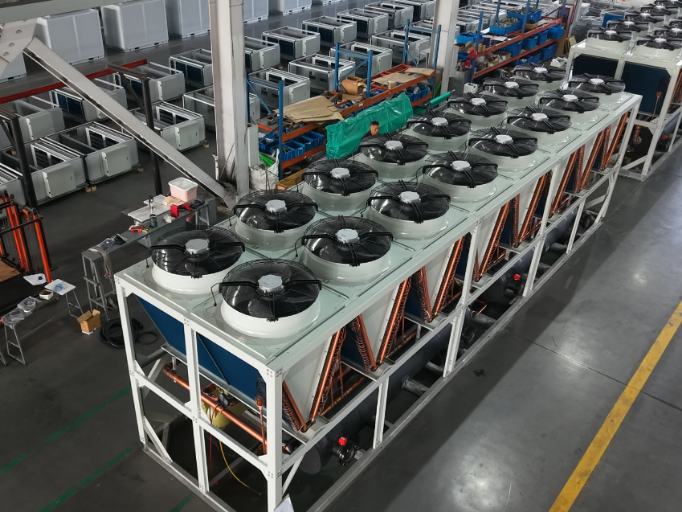
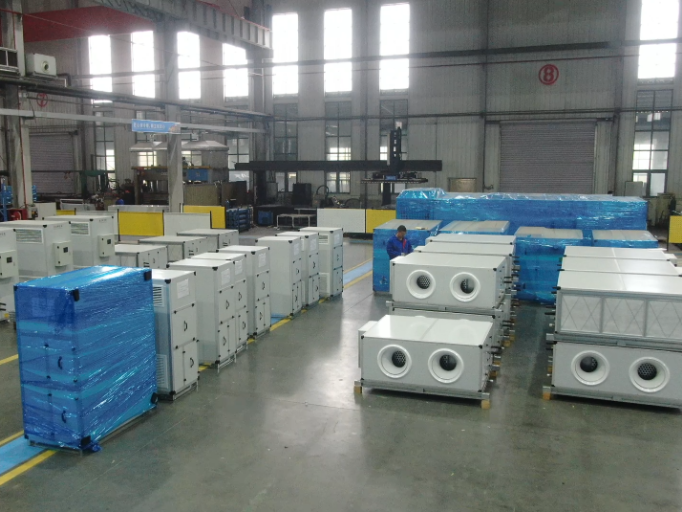
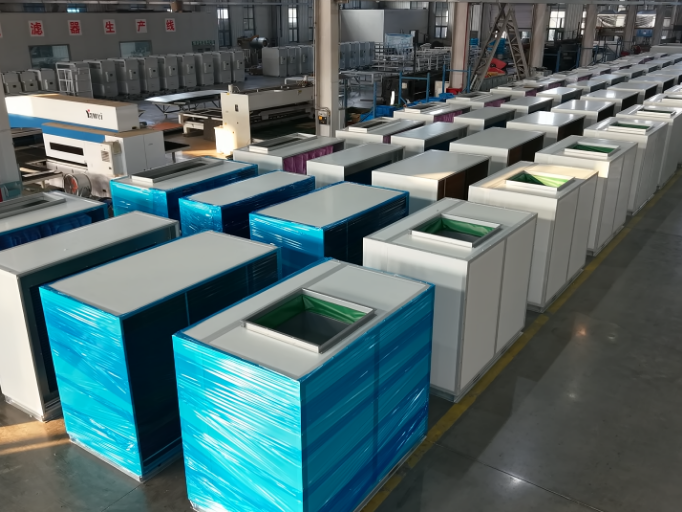
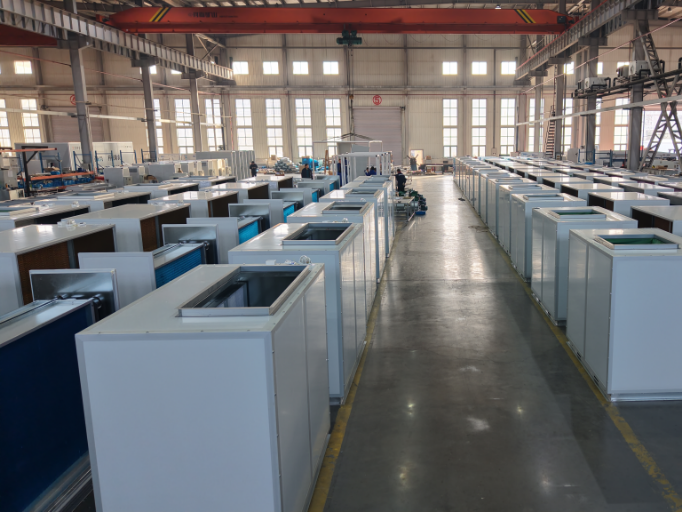
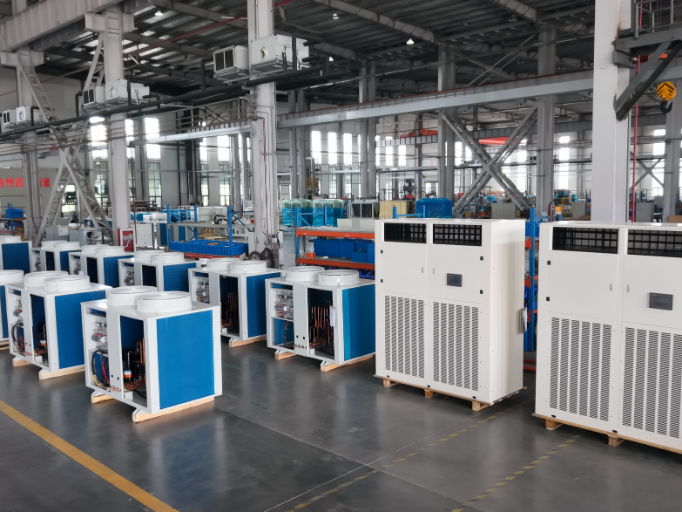
20,000 m² plant, 18 standardized production processes, robotic modular assembly lines, and 400+ manufacturing-traceability points per unit.
Testing
A 24-hour aging test on every unit and an in-house chiller-and-heat-pump testing laboratory; the −20 °C COP curve above comes off that bench.
After-sales
Lifetime free technical-service guidance, immediate response during the warranty period, and periodic training for engineering contractors and site engineers.
The risk buyers name most is a supplier that vanishes after the sale — minimal warranty, no one to call. Koven answers with ISO 9001 and ISO 14001 certification, a 24-hour aging test, and lifetime service, because trust is a process, not a logo. Unlike a brochure certificate list, every claim here is auditable at the factory. Request the full compliance documentation and a spec sheet →
Building an electrification or replacement project?
Send us the load, the climate zone, and the roof, and we return a model, an IEER, and a §179D estimate.
Engineering Tools & Calculators
FAQ: Packaged Rooftop Units, RTUs & Cold-Climate Heat Pumps
What is a packaged rooftop unit used for?
A packaged rooftop unit provides cooling, heating, and ventilation for commercial buildings from a single roof-mounted cabinet. It suits offices, retail, schools, data centers, and industrial spaces where floor and mechanical-room space is scarce and a self-contained, all-air system is simpler than a chilled-water plant. Because everything lives in one weatherproof package on the roof, there is no indoor plant room to build, no chilled-water or condenser-water piping to run, and no cooling tower to maintain, which is why developers reach for rooftop units when they want usable floor space and a faster construction schedule.
What is the difference between an RTU and an air handler (AHU)?
An air handler only conditions and moves air; it depends on an external chiller or condensing unit for its cooling source. A rooftop unit is self-contained: compressor, condenser, coil, blower, and controls are packaged together, so it needs no separate refrigeration plant to run.
Can a rooftop unit be a heat pump?
Yes. A heat-pump RTU reverses its refrigeration cycle to provide heating as well as cooling. Koven’s cold-climate heat-pump rooftops use EVI vapor injection to keep heating output down to −20 °C (−4 °F) on electricity alone, with dual-fuel configurations available where gas backup is preferred.
What are the disadvantages of a packaged rooftop unit?
Two real drawbacks stand out — weather exposure and roof load: the equipment lives outdoors, and the structure carries its weight and service access. Both are managed with a weatherproof, anti-corrosion enclosure, vibration bases, and modular sections, and unlike a water plant, an RTU has no indoor pipe runs to leak.
How long do commercial rooftop HVAC units last?
Commercial RTUs typically serve 15–20 years, with service life driven more by maintenance discipline and climate exposure than by brand. Regular coil cleaning, filter changes, and controls checks matter far more than the logo, which is why our after-sales program includes scheduled maintenance guidance.
How much does a commercial rooftop unit cost?
Pricing depends on tonnage, configuration, efficiency tier, heating method, and controls, so a rooftop unit is quoted per project rather than sold at one sticker price. A qualifying §179D deduction, up to about $5.94/sqft in 2026, can offset a significant share, so ask for both the quote and the deduction estimate together. Distributor listings for small 3-5 ton units can look like a fixed price, but a configured commercial unit, with its own efficiency tier, heating method, refrigerant, and controls, is always quoted against the project, and factory-direct ordering keeps that number tighter than a multi-tier distribution channel.
Are rooftop units energy efficient?
Modern packaged RTUs are rated on IEER under ASHRAE 90.1-2022, and Koven’s pro configurations run 14.8–16.9 IEER, clearing the code minimum for the commercial class. Efficiency in service also comes from economizers, energy-recovery wheels, and part-load modulation, not the rating plate alone.
Can a packaged rooftop unit dehumidify?
Yes, and a dedicated outdoor air system (DOAS) rooftop does it best. Our DOAS units are rated to AHRI 920 and drive leaving-air dew point to 55 °F or lower, with MERV 8 through HEPA H14 filtration for indoor-air-quality-critical spaces.
Split system or packaged unit, which is right?
A split system separates the condenser and indoor coil and suits smaller or zoned loads; a packaged rooftop consolidates everything outdoors and suits commercial roofs where indoor space and simplicity win. A high-efficiency packaged rooftop is often the simpler, faster-to-install answer for a commercial building; ductless isn’t always the more modern choice.
When is an economizer required?
ASHRAE 90.1-2022 extended the airside-economizer requirement down to 33,000 Btu/h (about 2.75 tons) in most climate zones. Our rooftops ship economizer-ready.

![Vertical Fan Coil Unit: Design & Maintenance [Guide]](https://kovenair.com/wp-content/uploads/2026/09/vertical-fan-coil-unit-guide-featured-1-150x150.png)