Get in Touch with Koven Air Company

Cleanroom Air Handling Units for Pharma & Biotech GMP Facilities
Cleanroom Air Handling Units from Koven Air are ISO 5-8 (and semiconductor-grade ISO 1-4) clean with HEPA H14/ULPA filtration, ±0.5°C / ±5% RH control and EC-fan Energy Savings of up to 40%-built for pharmaceutical, Biotech, and medical device production in GMP-regulated environments where a contamination excursion means a rejected batch, not a support ticket.
99.995%
HEPA H14 removal at MPPS
±0.5°C
Temperature control accuracy
ISO 5–8
Cleanliness class range (ISO 1–4 optional)
8.5–1,843 kW
Cooling capacity range
40%
Energy savings, EC fan + VFD
0.16%
Cabinet air leakage rate
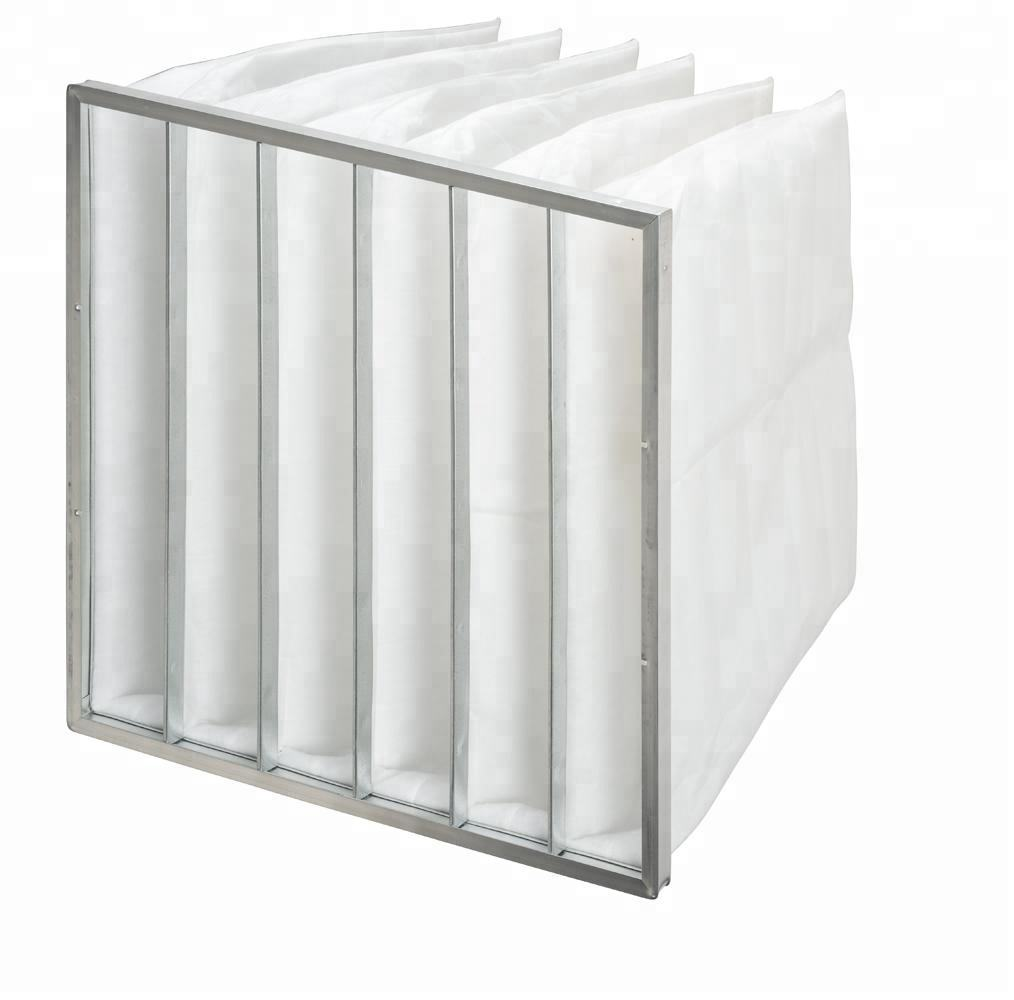
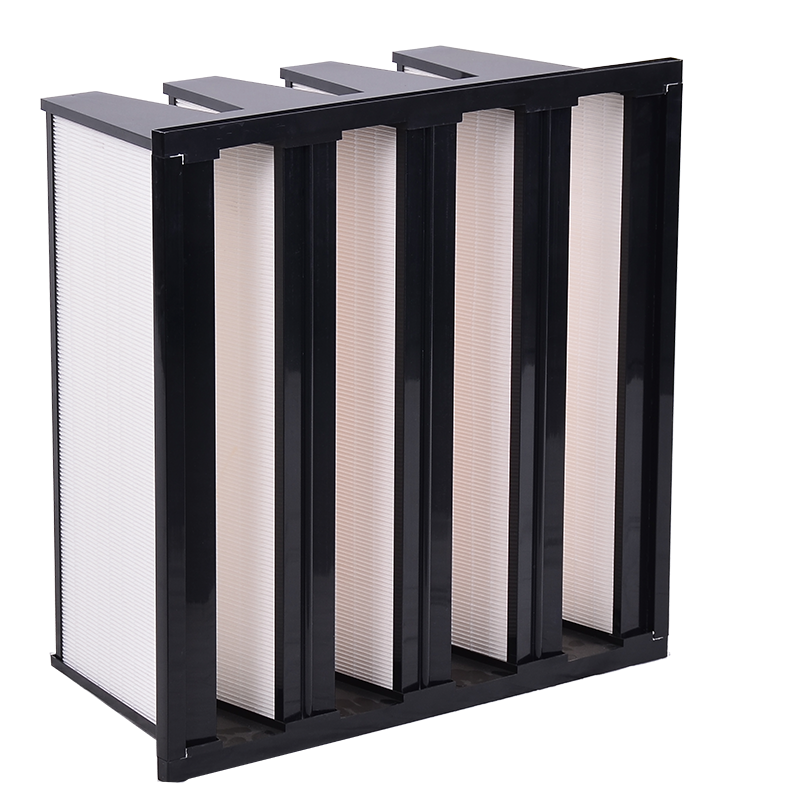
Click to switch views
Contamination Risk in Pharma Manufacturing, How Cleanroom AHUs Solve It
SEC.01 // PURPOSE
What’s the point of a Air Handling Unit in a pharmaceutical Cleanroom? The purpose of an air handling unit in a pharmaceutical cleanroom is to filter, cool, dehumidify and pressurize air so the room holds a defined ISO 14644-1 particle class and GMP Grade — the same basic job any HVAC system in pharma production performs, just Engineered to a finer tolerance than comfort-cooling equipment will ever need to hit. The stakes, though, are higher than the simple definition implies: a Pressure Cascade that drifts, or a gap in filtration, doesn’t appear as a comfort complaint. Instead, it appears as a failed environmental monitoring test, a quarantined batch, or a 483 observation from an auditor. Industry guidance repeatedly frames AHU non-compliance as a direct threat to ISO 14644 conformance, a message that resonates clearly in how procurement teams view suppliers: not, “Does it move air?” but, “Can it reliably keep the numbers an auditor will check?”
SEC.02 // ARCHITECTURE
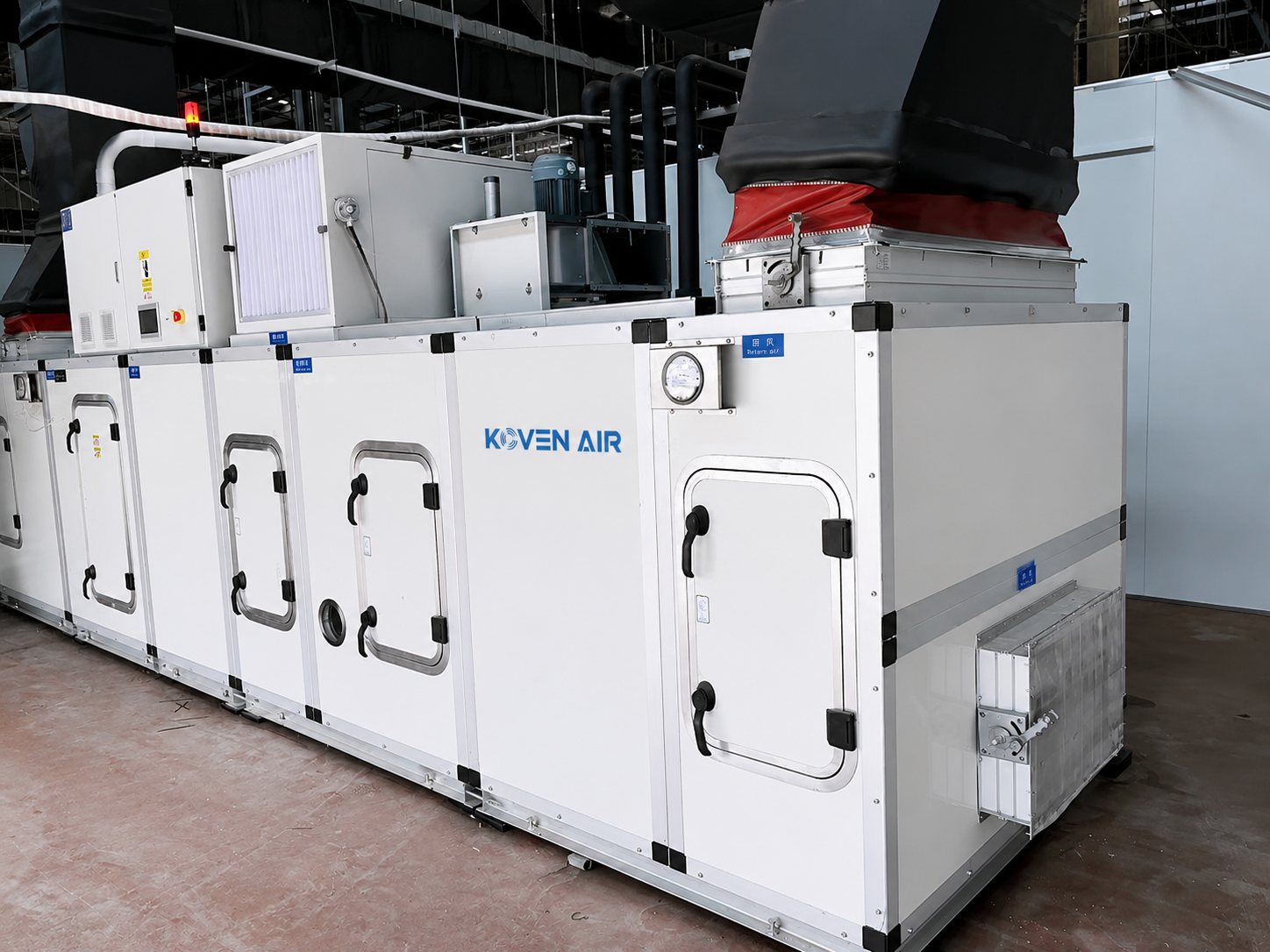
The root cause of non-compliance is rarely a single failed component. More often, it’s an AHU that was spec’d to a generic data sheet instead of the room’s specific contamination risk-perhaps because it was built with incorrect filtration staging to handle the expected particle load, undersized dehumidification for the local climate, or a control system unable to compensate for the contamination incursion that occurs when a door open. Every Koven Air Cleanroom AHU is built on a three-tier, decoupled control architecture. Filtration and dehumidification modules work to eliminate particulate and moisture load. A dedicated cooling/heating stage maintains room temperature within ±0.5°C, and a positive-pressure cascade control loop ensures that any contaminating particles in adjacent areas are drawn away from the controlled environment rather than drawn in. Each stage is controlled and engineered independently to avoid the competition for the same Airflow.
SEC.03 // APPLICATIONS
This platform is built for the entire range of contamination-sensitive manufacturing environments – from biologics and Pharmaceutical Manufacturing to sterile products and aseptic filling; from medical devices to Biotech research, laser and precision optics component assembly to semiconductor manufacturing in ISO 1-4 facilities. Each of these environments has a unique, primary risk-sub-micron particle control for the fab, or microbial containment in the aseptic filling operation-which is precisely why our filtration staging, ACH and Pressure Cascade are custom engineered for each application rather than a pre-fab set.
SEC.04 // ENGINEERING NOTE
Filtration & Control Chain
Filtration is staged G4 pre-filter → M5–M6 medium → F7–F9 fine → H13–H14 HEPA terminal. Per EN 1822:2019/ISO 29463, an H14 filter is 99.995% efficient at the Most Penetrating Particle Size (MPPS, 0.1-0.2 m)[1]-verified in Camfil’s EN 1822 factory-testing procedure and identical to the efficiency of Koven Air’s own terminal filter stage. Room Pressure Cascade is maintained by EC Fans with VFDs adjusting to real-time differential pressure signals and controlling to the 10 Pa minimum between adjacent GMP Grades required by EU GMP Annex 1 (2022) 4.14.[2]
“Every Filtration Stage in a Cleanroom AHU has a job that the stage before it cannot perform; skip one stage, and you ask your terminal HEPA to take on a particle load it was not sized to catch. We specify the full G4-through-H14 filtration chain as standard, not an upsell, because a compromised terminal filter is the most expensive failure mode we see for our customers, measured in the time and expense required for re-validation.”
Koven Air Cleanroom AHU Line, Models & Selection
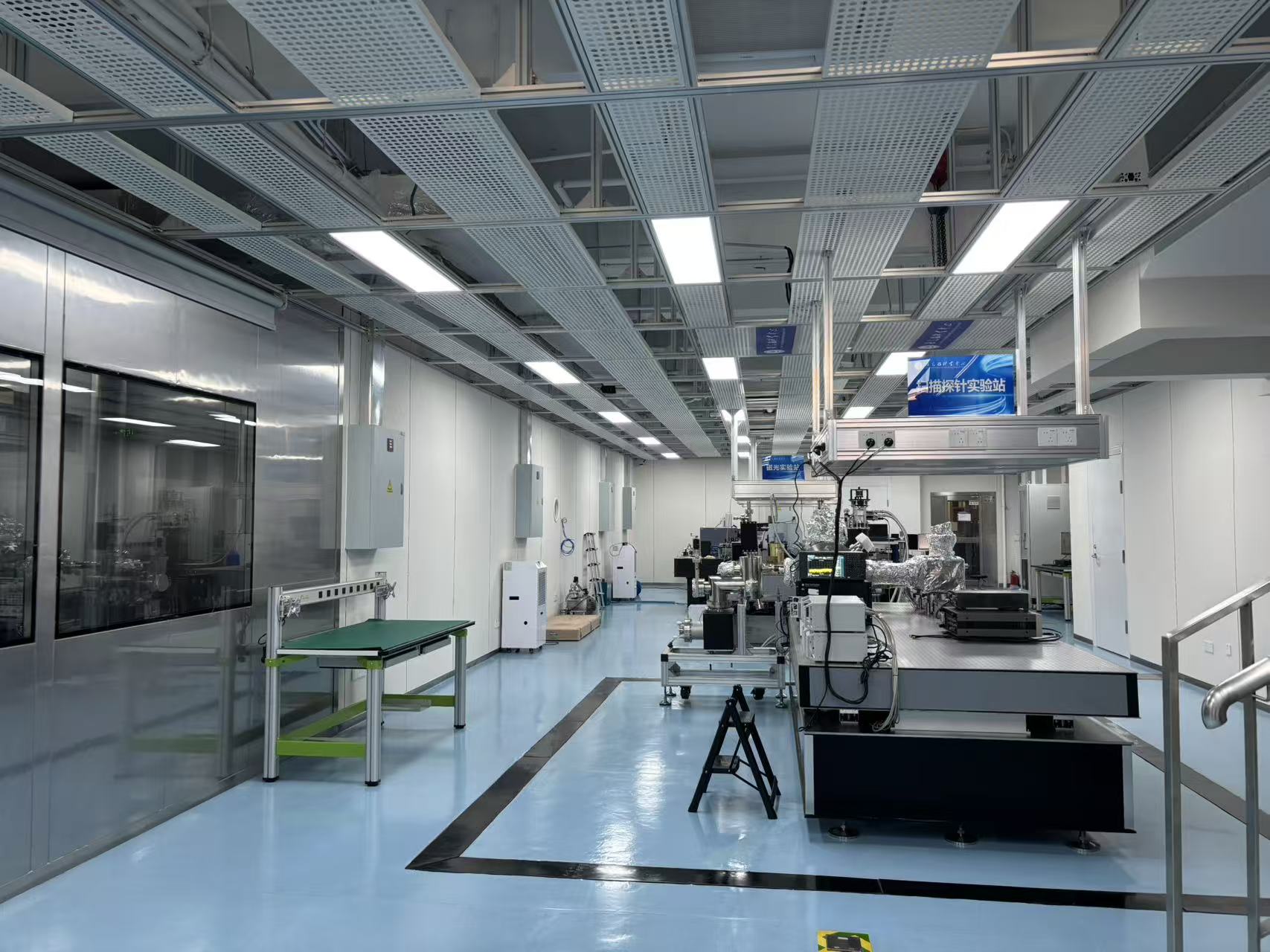
Koven Air designs clean room Air Handling Units for three capacity classes—each corresponding to the Cleanliness Classes and process loads the AHU was actually sized for, not just a standard frame extended to cover all situations. Each comes standard as a combination AHU (horizontal or vertical), complete with G4-H14 filtration staging, EC Fans and VFD, and a Siemens PLC/BMS-ready control system.
It’s important to make a key architectural decision before selecting an AHU: will the clean room air be centralized (meaning the ducted AHU located in a plant room serves several clean rooms) or decentralized (individual fan-filter units in each room)? A decentralized configuration is appropriate for small, single-room labs. Centralized AHU construction—Koven Air’s specialty—is standard in full GMP facilities, because a single controlled air source makes pressure-cascade validation, energy recovery, and BMS integration dramatically simpler to document and defend during an audit.
It is essential that this aspect is engineered rather than a guess: although ISO 7 (Grade C) clean rooms are typically spec’d for 20 air changes per hour (ACH), that figure is merely “typically acceptable” in FDA guidance, not a mandate. A 2022 peer-reviewed study found 10 ACH sufficient to maintain ISO 7 levels, provided appropriate gowning was maintained [3]. Koven Air’s ACH selection is determined by your actual process needs and risk profile, ensuring you do not pay for excess capacity.
| Tier | Cooling Capacity | Airflow | Cleanliness Class | Typical Application |
|---|---|---|---|---|
| Compact | 8.5–150 kW | 1,500–18,000 m³/h | ISO 7–8 (Grade C–D) | QC labs, small compounding suites |
| Mid-Range | 150–600 kW | 18,000–80,000 m³/h | ISO 5–6 (Grade B–C) | Aseptic filling lines, biologics suites |
| Large GMP | 600–1,843 kW | 80,000–200,000 m³/h | ISO 5 & below (1–4 opt) | Full-scale GMP plants, semiconductor cleanrooms |
Filtration & Cleanliness, EN 1822 Filter Class to ISO/GMP Grade Mapping
Filter class, ISO Cleanliness Class, and GMP Grade are not interchangeable synonyms—each is a unique rating that must be considered collectively to ensure proper qualification. Below is a table illustrating how Koven Air’s standard Filtration Stages correlate to standard filter classes, resulting ISO 14644-1, typical GMP grade and associated ACH requirements.
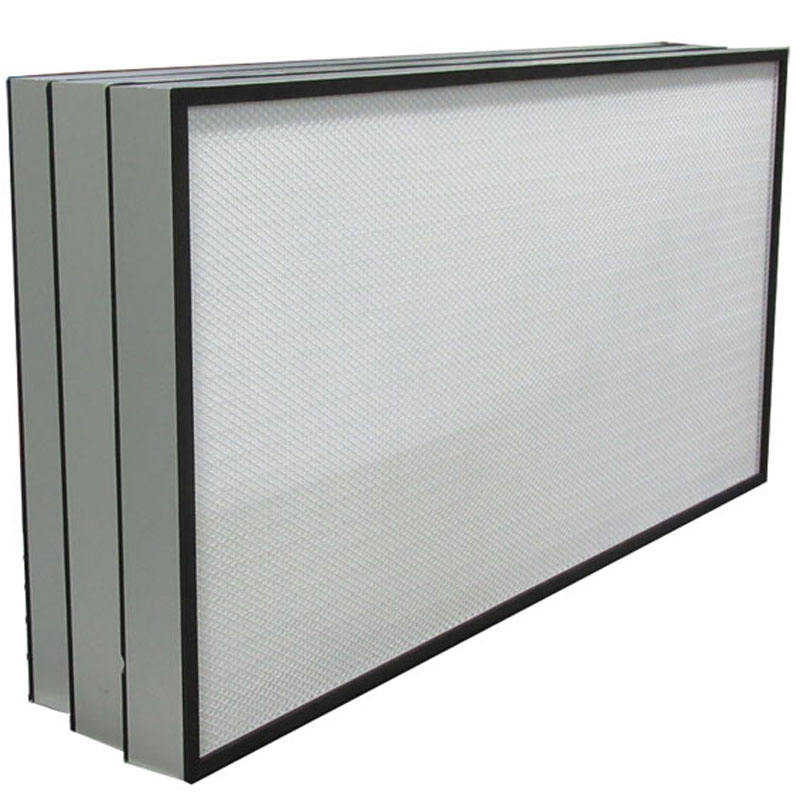
For a Grade A monoclonal-antibody filling line, a standard two-tier solution would place terminal U15 ULPA directly on the filling hood with H14 HEPA on the AHU room discharge; the room-level HEPA filters general background particulate, while the hood’s internal ULPA stage filters the critical filling zone exclusively rather than attempting to bring the entire room up to a ULPA-equivalent energy-consuming filtration standard. Additional sterilization add-ons like UV-C lamps, photocatalytic modules, ozone generators, or electrostatic purifiers can be placed in either tier without altering the base filtration, and are standard in Grade A/B aseptic environments producing live biologics or sterile injectable dosage forms. Unbiased industry estimates suggest an H13/H14 HEPA filter has an expected service life of between 7-10 years compared to a ULPA filter at 5-8 years. While a ULPA filtration installation will cost between 45-60% more initially, and cost between 40-50% more to operate in terms of energy for the additional filtering benefit[4] – a tradeoff to consider carefully when comparing the total cost of ownership to the specific footprint of your Grade A/B zones rather than specifying ULPA across the entire facility.
SPECIFICATIONS MATRIX
| Filter Class | Efficiency | ISO 14644-1 | Typical GMP Grade | ACH |
|---|---|---|---|---|
| H13 (HEPA) | ≥99.95% | ISO 6–7 | Grade C–D | 60–120 |
| H14 (HEPA) | ≥99.995% | ISO 5–6 | Grade B | 120–240 |
| U15 (ULPA) | ≥99.9995% | ISO 4–5 | Grade A | 240–360 |
| U16–U17 | ≥99.99995% | ISO 1–4 | Semiconductor | 360–700+ |
Engineering Note, Filter Qualification Doesn’t End at Installation
ISO 14644-2:2015 dictates a 6 month requalification schedule for ISO class 5 and better and annual for ISO class 6-8.[6] Koven Air filters each terminal filter with a 100% PAO/DEHS leak test at the media, seal, and frame prior to installation, rather than simply spot testing a section of a bank of filters, as a leak in the gel seal on just one H14 filter could cause the entire background of a Grade B zone to be out of specification at the next audit and it may not be sampled out. Prolonged shutdown of clean room air systems reduces the life of the filter due to filter load: a shut-down AHU allows for re-absorption of ambient moisture and particles which a consistent Airflow level of ventilation would otherwise be flushing out, which contributes to minute cracking in the media that leads to a detectable leak upon recommissioning; Koven Air uses standby mode ventilation instead of a hard shut-down on the AHU logic for this very reason.
Need the exact filter stack for your GMP grade? Match Your GMP Grade to a Filter Class →Koven Air vs. Traditional Cleanroom AHU, Performance Comparison
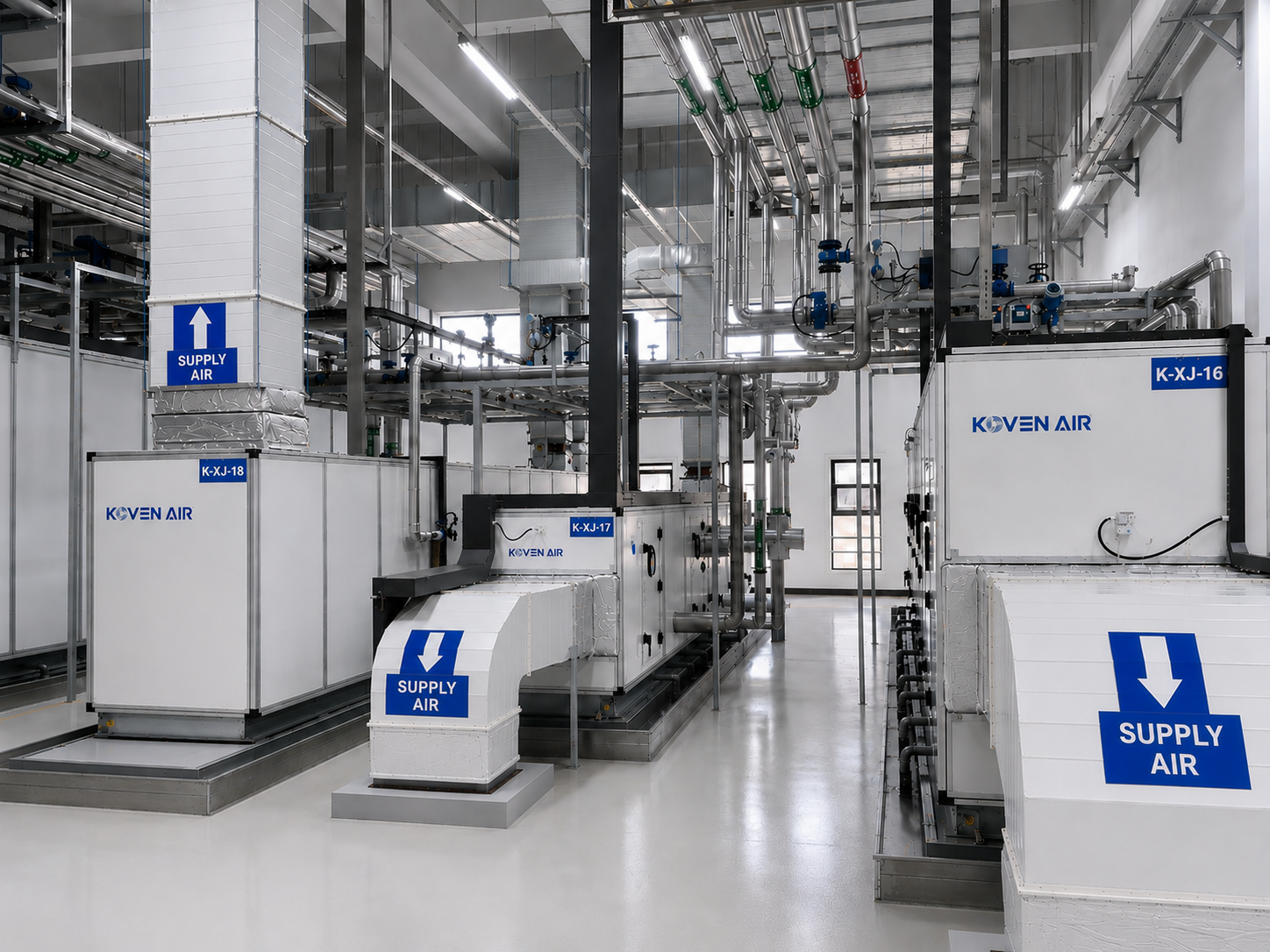
The efficiency difference between a traditional AC-motor powered Cleanroom HVAC and Koven Air’s EC-motor system is far more than marketing jargon. The chart below compares them based on what matters most in total life-cycle costs.
And that difference is observed on the floor, as well. Having issues maintaining comfortable working conditions in a cleanroom because all HEPAs are running at maximum fan speed is a complaint engineers have raised often, and it traces to the same root cause: a fixed-speed bank of HEPA fans all run at full capacity to compensate for worst-case load conditions. EC-fan controlled systems that maintain optimal Airflow levels and pressures, without running every fan at 100% just to meet the worst case, are much more pleasant to work under and considerably quieter to be around during a full work day. It’s an expensive habit, too — a fixed-speed fan sized to avoid the risk of under-cooling during a rare worst-case load spends most of its life running harder than the room actually needs, burning energy for a scenario that occurs only occasionally.
The efficiency differences stand up to independent data for both EC-fan and VFD retrofit applications. According to third party industry sources, VFD retrofits offer a 30-50% fan savings and a 1.5-2.5 year payback, while EC-fan retrofits yield a 20-35% savings and a 3.5-5.5 year payback[5] – both of these ranges fall on either side of Koven Air’s own 40% catalog claim, as well as the 38% average annual savings achieved in the GMP retrofit below.
38%
Annual energy cost reduction
GMP aseptic-injectable retrofit, EC fan + VFD conversion
> Source: Koven Air project data, pharma group GMP retrofit (see Case Studies below)
| Metric | Traditional AC-Motor AHU | Koven Air EC Fan + VFD |
|---|---|---|
| Fan motor efficiency | ~60% | >90% |
| Airflow speed control | Fixed or staged | Stepless 0–100% |
| Annual energy cost impact | Baseline | Up to 40% lower |
| Cabinet air leakage rate | Rarely tested | 0.16% (tested) |
| Panel insulation density | Varies | ≥48 kg/m³ polyurethane |
| Thermal bridge performance | Unrated | TB1 / T2 (EN standard) |
Verified Results: GMP Pharma & Biotech Case Studies
Examples of three different applications of Koven Air Cleanroom AHU installations for aseptic injectable drug manufacturing, university laboratory and heat recovery retrofits.
KOVEN AIR // CASE ARCHIVE
GMP Aseptic-Injectable Retrofit · China
280,000 m² Pharma Group Facility, Grade C Background with Grade A/B Laminar Zones
This lyophilized-powder-injectable antibody drug filling operation retrofitted a ~45,000 m² cleanroom facility with a combination AHU (320 kW cooling / 280 kW heating) plus a horizontally mounted DX unit, staged G4→F8→H11→terminal H14 filtration using gel-seal filter frames.
100%
PAO leak-test pass rate
±0.5°C
Steady-state temp (±1°C trans)
±3% RH
Steady-state RH (±5% trans)
10–15 Pa
Pressure cascade
38%
Annual energy savings, EC fan + VFD
Interior surfaces of the AHU were upgraded to mirror-polished 316L stainless steel (Ra ≤0.8 µm) with a VHP-compatible finish and a data-log compatible with 21 CFR Part 11 / EU GMP Annex 11 electronic-record expectations.
University Cleanroom Lab · Hefei, China
Multi-Lab Retrofit Fixing Chronic Negative Pressure & RH Instability
The 350,000 m² university’s 20-100 m² cleanroom laboratory units, which suffered chronic negative pressure fluctuations and poor humidity control, were retrofitted with a combined AHU plus horizontally mounted DX unit (180 kW cooling / 210 kW heating).
±0.5°C
Steady-state temp control (±1°C transient)
±3% RH
Steady-state humidity control (±5% transient)
4 months
R&D-to-commissioning cycle
Pharma Factory Heat-Recovery Retrofit · Shenyang, China
4,000 m² Plant, Heat-Recovery AHU with Steam Humidification
Integration of high-efficiency heat recovery wheels specifically designed for strict pharmaceutical segregation requirements, significantly lowering boiler loads.
Fresh-air and supply handled at 10,000/10,000 CMH and 1,000 Pa of external static pressure with 143 kW of cooling, 96 kW of steam preheat and 74 kW of steam heating at 0.3 MPa, and 80 kg/h steam humidification. Dual, redundant, humidity/temperature sensors (one for control, one for display only) feed a fire/interlock failsafe control chain covering fire-damper shutdown and supply/exhaust fan interlocks.
Certifications & Compliance
- ISO 9001:2015 Quality Management
- ISO 14001:2015 Environmental Management
- ISO 45001:2018 Occupational Health & Safety
- CE EU Conformity
- DIN 1946 Hygienic Ventilation Directive
Compliance for Cleanroom AHUs isn’t merely a report that you file – it’s the ability of the Pressure Cascade, particle count data and monitoring logs to withstand the scrutiny of a US FDA or European GMP inspection. The 2022 revision of EU GMP Annex 1 (effective August 2023) specifies explicitly: the minimum differential pressure between adjacent rooms of differing grade should not be less than 10 Pa [4.14] and any pressure differential that has been designated as critical should be monitored continuously, with recording and alarming capabilities [4.16], including delay times that must be justified within the facility’s Contamination Control Strategy [2]. Koven Air’s PLC/BMS control logic was engineered to precisely meet that need – providing continuous differential pressure feedback, logged alarm history, and individually settable per-room alert thresholds rather than infrequent manual checks.
GMP ANNEX 1 PARAMETERS
| GMP Grade | ISO 14644-1 Equivalent | ≥0.5µm Limit (at-rest / operational, per m³) |
|---|---|---|
| Grade A | ISO 5 | 3,520 / 3,520 |
| Grade B | ISO 5 (rest) / ISO 7 (op.) | 3,520 / 352,000 |
| Grade C | ISO 7–8 | 352,000 / 3,520,000 |
| Grade D | ISO 8 | 3,520,000 / — |
Particle limits per EU GMP Annex 1 (2022), §4 — official European Commission text.[2]
What Auditors Actually Check on Data Logging
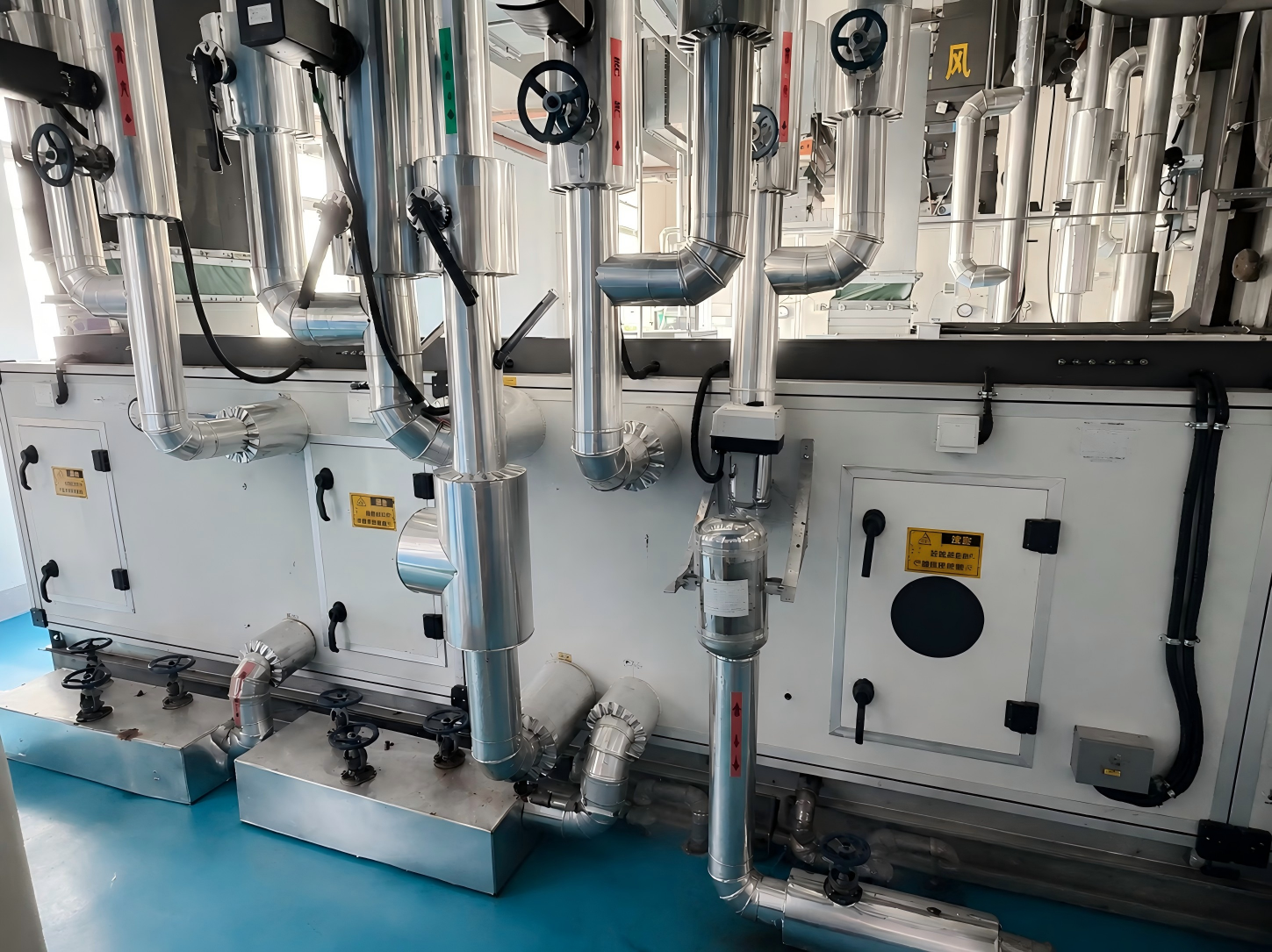
An EU GMP Annex 1 inspection goes beyond checking if particle count and pressure are within limits when somebody looked – it looks at the trustworthiness of the record at 2am just as at 2pm. That means data logging that conforms to the ALCOA+ principles auditors insist on: attributable, legible, contemporaneous, original, accurate, complete, consistent, enduring and available.
A cleanroom facility using just Magnehelic gauges doesn’t have a record in between inspections – a pressure excursion during the night won’t show up in a log reviewed the next day, and that gap in continuous logging is exactly what’s repeatedly observed in FDA 483 inspections and warning letters. Koven Air’s BMS/PLC integration automatically logs continuous readings of pressure, temperature, and humidity as standard, not as an optional bolt-on module purchased after initial commissioning.
Advanced Engineering Tools & Calculators
Accelerate your cleanroom AHU sizing, energy forecasting, and compliance verification with Koven Air’s technical utility suite.
SYS.01
GMP Grade Filter Matcher
Select and verify appropriate terminal and pre-filtration stages to meet EU GMP Annex 1 guidelines for Grade A–D environments.
Access Matcher →
SYS.02
EC Fan Energy Savings Calculator
Estimate ROI, kW reduction, and lifecycle carbon savings by upgrading to electronically commutated plug fan arrays.
Calculate Savings →
SYS.03
EN 1822 Filter Reference Lookup
Quick technical reference for HEPA/ULPA efficiency ratings and Most Penetrating Particle Size (MPPS) specifications.
View Lookup →
SYS.04
Cleanroom AHU Capacity Estimator
Determine required operational airflow (CFM/CMH) based on facility ISO class targets and baseline Air Changes per Hour (ACH).
Estimate Capacity →Koven Air // Technical Support
Frequently Asked Questions
Detailed engineering specifications and comparisons available upon request.
Detailed engineering specifications and comparisons available upon request.
Detailed engineering specifications and comparisons available upon request.
Detailed engineering specifications and comparisons available upon request.
Detailed engineering specifications and comparisons available upon request.
ACH – also written ACPH in some specs – standards rise with Cleanliness Class and Airflow pattern. ISO 7/8 or C/D spaces require approximately 20-60 ACH in non-unidirectional flow, though the process-risk rationale (not just a number) is a must. ISO 5 or A/B unidirectional spaces are never specified in ACH, but face velocity, with standard requirements from 0.36-0.54 m/s across the entire face of the filter array, because true laminar flow relies on one-pass contaminant sweeping rather than dilution through repetition.


![Liquid Desiccant Dehumidifier: How It Works [2026 Guide]](https://kovenair.com/wp-content/uploads/2026/07/liquid-desiccant-dehumidifier-guide-featured-150x150.png)


