Get in Touch with Koven Air Company

ISO Certified
DOAS Rooftop Unit
Dedicated Outdoor Air System (DOAS) Rooftop Units for 100% Outdoor-Air Ventilation
A dedicated outdoor air system conditioning 100% of the ventilation air that a commercial building breathes ensures your zone air conditioning doesn’t battle against the latent load. Koven Air KA-doas rooftop units maintain leaving-air dew point of 55°F (12.8°C) in the AHRI 920 Condition A line through its 10- to-80-ton cooling-capacity range, then they provide solid heating to -12°C outside. Find the model ladder, the spec information, a sincere comparison and a commissioned-project score card on this page to aid any specifying engineer or buyer as they build a shortlist of the ideal DOAS rooftop units for your project.
- -12°C Verified cold-climate heating
≤55°F
Leaving-air dew point
Leaving-air dew point
(AHRI 920 Cond. A test method)
10–80
Tons cooling capacity
Tons cooling capacity
(35.17–281.36 kW)
1,550–12,050
CFM outdoor airflow
CFM outdoor airflow
MERV 8–16 + HEPA H13/H14 options
-29%
Energy vs prior system
Energy vs prior system
(18,000 m² campus case)
Why Recirculating Rooftop Units Lose the Humidity Battle at Part Load
Insider note, why “just size it bigger” backfires
It’s just that doas airflow doesn’t operate on the same metrics as comfort cooling. “The CFM per ton on doas units are way lower than what you’d see on your conventional 400 CFM per ton system that re-circulates,” practitioners will explain. That’s because a DOAS runs on a higher air-side temperature and moisture drop per unit of airflow – precisely how it’s capable of achieving a 55°F leaving dew point. In other words: Koven Air designed its KA-DOAS line with this decoupling challenge at its core since a 61%RH drift shouldn’t be treated as an operational problem but as a design problem – this means each model has been proven on our test bench – unlike some manufacturers spec sheets that quote a single rating point. For the average building owner on a 30-ton installation, it feels as steady humidity from -12°C through 35°C through out the season, not as an unseasonable summer shock.
The KA-DOAS 10-Model Rooftop Selection Ladder: 10–80 Tons, 1,550–12,050 CFM
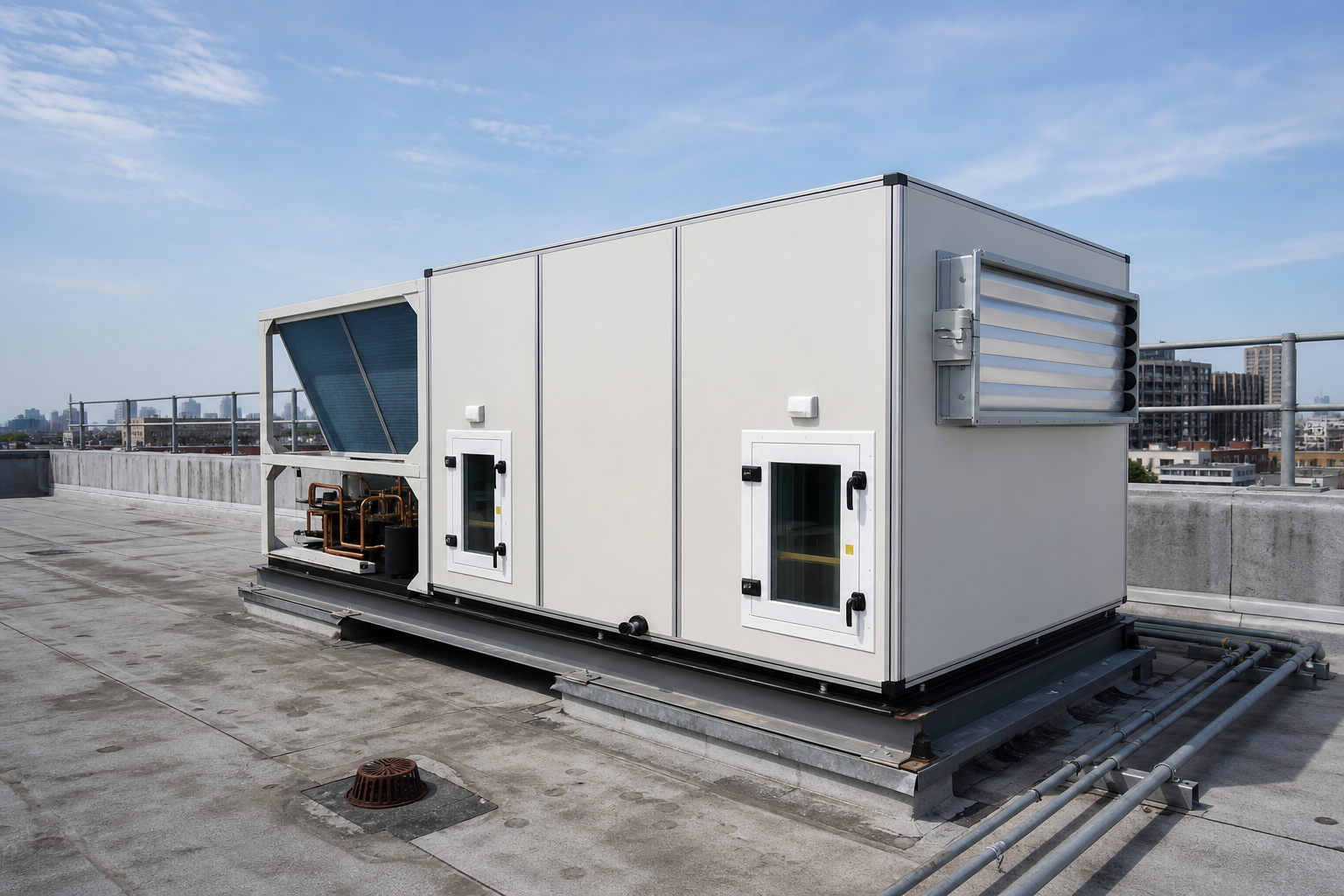
The Ten packaged roof models provide the range that’s populated by virtually all commercial and controlled-environment project needs. Every model conditions 100% outdoor air, offers the identical filtration and reheat option packages, and are dehumidification-rated against identical conditions. Choose the line for your design-day outdoor airflow and cooling capacity; should the airflows approach or exceed our single package limitations, we use multiple packages rather than “selling up” a single larger box.
100% OA Conditioning
AHRI 920 Certified
| Model (KA-) | Cooling (ton) | Cooling (kW) | Heating (kW) | Outdoor Air (CFM) | Outdoor Air (m³/h) | Typical Best Fit |
|---|---|---|---|---|---|---|
| DOAS-010 | 10 | 35.17 | 37.28 | 1,550 | 2,635 | Clinic wing / small office floor |
| DOAS-015 | 15 | 52.75 | 55.92 | 2,250 | 3,825 | Restaurant / boutique retail |
| DOAS-020 | 20 | 70.34 | 74.56 | 3,050 | 5,185 | School wing / gym annex |
| DOAS-030 | 30 | 105.51 | 111.84 | 4,700 | 7,990 | Campus block (proven — see case) |
| DOAS-040 | 40 | 140.68 | 150.53 | 7,400 | 12,580 | Mid-rise office / lab suite |
| Model (KA-) | Cooling (ton) | Cooling (kW) | Heating (kW) | Outdoor Air (CFM) | Outdoor Air (m³/h) | Typical Best Fit |
|---|---|---|---|---|---|---|
| DOAS-045 | 45 | 158.27 | 169.34 | 6,700 | 11,390 | Deep-dehumid lab (low CFM/ton) |
| DOAS-050 | 50 | 175.85 | 188.16 | 7,450 | 12,665 | Hospital ward / clean process |
| DOAS-060 | 60 | 211.02 | 225.79 | 9,100 | 15,470 | Large office tower floor-plate |
| DOAS-070 | 70 | 246.19 | 263.42 | 10,400 | 17,680 | Assembly / large gathering space |
| DOAS-080 | 80 | 281.36 | 301.06 | 12,050 | 20,485 | Single-package ceiling — stage above this |
| Parameter | Specification |
|---|---|
| External static pressure | 100–700 Pa (300–700 Pa on 40–80 ton) |
| Supply-air fan | Dual-inlet centrifugal / EC plug fan / direct-drive plenum |
| Compressor | Hermetic scroll compressor, staged / variable-speed capacity control |
| Refrigerant | R-410A |
| Power supply | 380 V / 415 V / 460 V, 50/60 Hz |
| Filtration options | MERV 8 pre / MERV 11–13 / MERV 14–16 / HEPA H13–H14 |
| Reheat options | Electric / steam / hot-water |
| Heat recovery | Energy-recovery wheel / plate heat exchanger / heat-recovery coil |
| Air disinfection | UV-C lamps / coil-surface UVGI (optional) |
| Casing / drain | Rain- and corrosion-resistant weatherproof casing / DN32 condensate |
The airflow rating is a dehumidification-rated outdoor airflow for each configuration; it isn’t a comfort-cooling 400 CFM/ton value. Models with a lower CFM per ton (such as a doas-045) trade airflow for a deeper moisture drop – this is why higher tonnage models may carry a lower rated CFM. All are rated according to AHRI 920 Condition A when appropriate.
There’s a trade-off designed into that table, and this is where the factory engineering for Koven Air really shows up. They use multiple stages of R-410A hermetic scroll compressors with capacity control on each model to allow it to ride the bottom of its dew point cycle rather than hunt and cycle the way a recirculating box will. These ship to your site as full production assemblies from a ISO 9001 line that features in-house heat pump testing, and the numbers in the data sheet are bench verified, not catalog inspired. These are built with up to 700 Pa of external static pressure to be able to push the conditioned air through real world rooftop ductwork without an additional booster fan.
“We tune the DX coil circuiting and reheat sequence separately for each tonnage step so the leaving-air dew point stays at or below 55°F across the whole ladder, not just at the one rating point. On the low-CFM-per-ton models we accept a smaller airflow on purpose, because a slower pass over a colder coil is what gets the moisture out.”
Koven Air Application Engineering, DOAS Product LineAuthority reference: U.S. DOE 10 CFR 431, the federal energy-conservation standard covering DX-DOAS equipment.
DOAS vs RTU vs ERV vs Makeup Air: A 4-Way Equipment Decision
Four kinds of equipment get pitched for the fresh-air problem, and they aren’t interchangeable. The common mistake is specifying a recirculating rooftop unitthe RTU option we cover separatelyfor a task that need latent decoupling, or bolting on an energy recovery ventilator (ERV) that saves energy but never actively dries the air. Below is the honest split on the numbers that separate them, including a DOAS-versus-plain-AHU breakdown that catches many specs off guard.
Hook B — 4-Way 100% Outdoor-Air Equipment Decision Matrix
| Dimension | DOAS (KA-DOAS) | Packaged RTU | ERV / HRV | Makeup Air Unit |
|---|---|---|---|---|
| Air stream conditioned | 100% outside air | Mostly recirculated + trickle OA | OA + exhaust (passive) | 100% outdoor (kitchen/process) |
| Active dehumidification | Yes — to ≤55°F DP | Only at design sensible load | No active drying | Usually tempering only |
| Part-load humidity control | Holds dew point | Drifts to ~61% RH | Follows outdoor air | Not a humidity device |
| Latent decoupling from zones | Full | None | Partial (energy only) | None |
| Energy recovery available | Wheel / plate / coil | Add-on ERV needed | Core function | Optional |
| Filtration ceiling | HEPA H13/H14 | Typically MERV 8–14 | MERV 8–13 | Grease/pre-filter |
| Cold-climate heating | Heat pump to -12°C | Gas/DX, varies | Recovery only | Gas-fired common |
| Best when you need… | Dry ventilation air, decoupled | Low first cost, one box | Cheap energy recovery | Exhaust makeup only |
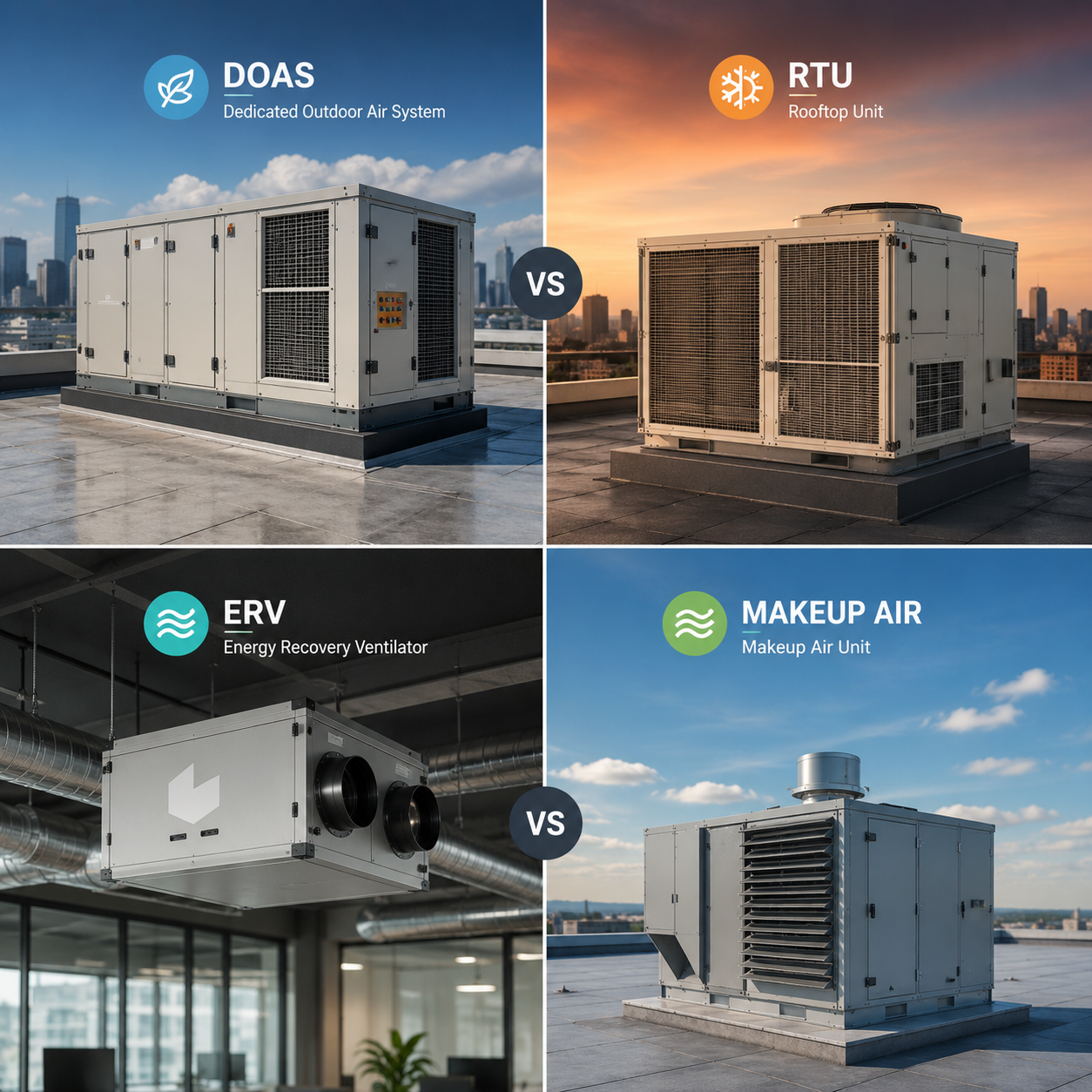
Comparison Dimensions by AHRI 920 dew-point rating, Trane part-load humidity data and ashrae 62.1 ventilation framing. To go deeper into dehumidification or very-low-dew-point applications beyond the integral DX coil, consider adding a liquid-desiccant dehumidifier or a rotary-desiccant unit to your DOAS. Which is the honest answer to “DOAS vs ERV” – an ERV is a recovery device, not a dehumidifier.
-29%
Energy vs prior system
750–850
ppm CO₂ (from 1,400–1,800)
<35
µg/m³ indoor PM2.5
≤38
dB(A) indoor (~-50% noise)
DOAS SYSTEM
How the Integral DX Coil Holds a ≤55°F Leaving-Air Dew Point
The whole promise of a doas rests on one number holding under load: the leaving-air dew point. Here’s the four-link chain behind it. The pain: almost 40% of the energy in a typical hvac system goes to dehumidification, and if the ventilation air arrives wet, every downstream zone inherits the moisture problem. The root cause: to wring water out of humid outdoor air you’ve to drive the coil’s apparatus dew point well below the target space dew point – you can’t dehumidify to 55°F with a coil running at 55°F. The solution: the KA-DOAS DX coil is engineered to cool and dehumidify entering outdoor air (95°F DB / 78°F WB at AHRI 920 Condition A) down to a leaving-air dew point of 55°F (12.8°C) or lower, then reheat to a neutral 70-75°F supply when the space calls for it. The proof: under the AHRI Standard 920 test method, a DX-DOAS is rated by Integrated Seasonal Moisture Removal Efficiency (ISMRE2) – a metric that exists precisely to compare how efficiently a unit reaches that dew point year-round. In Trane’s published analysis of the method, a unit with ventilation energy recovery illustrates a markedly higher ISMRE2 (on the order of 5.0) than one without (around 3.8); those are illustrative figures from that analysis, not fixed AHRI constants, and they’re why we specify energy recovery on most selections.
Matching filtration to the room, not the brochure
Dew point controls moisture; the filter train control particulate. The KA-doas filter ladder is selected per application rather than fixed: merv 8 as a protective pre-filter, MERV 11-13 for general commercial indoor air quality, MERV 14-16 where PM2.5 matters, and HEPA H13/H14 for healthcare, labs, and clean processes. Optional UV-C lamps or coil-surface UVGI add microbial control on the wet coil. For general patient spaces the target indoor dew point is about 55°F, dropping toward 46°F in operating rooms – where you specify the deepest filtration tier and, if the latent target goes below the integral DX coil’s comfortable range, pair the DOAS with a commercial desiccant dehumidifier for the last few grains of moisture.
Trade-off we’ll state plainly
An integral DX coil is the right tool down to a 55°F leaving dew point and is the sweet spot for the vast majority of commercial ventilation. The honest limit: if your process genuinely needs a supply dew point in the 40s°F or lower – deep clean-room or pharma drying – a DX-only doas is working against physics, and a desiccant stage belongs in the design. Koven Air will tell you which side of that line your application sits on before you buy, because a mis-specified unit is a risk you inherit for 15 years.
Standards, Listings & Controls: What to Verify Before You Specify
Where DOAS Rooftop Units Fit Best: A Controlled-Environment Application Map
A doas earns its premium wherever fresh-air volume, humidity control, or filtration is non-negotiable – which is a specific list, not “everywhere,” and getting that wrong is a costly mistake. Match your building type to the row:
Hook D — Controlled-Environment (commercial-primary) Application Map
Application
Why DOAS wins here
Typical model
Key spec driver
Schools & campuses
Dense occupancy, CO₂ & IAQ targets, all-day use
DOAS-020 → 030
High OA per person, CO₂ reset
Hospitals & clinics (medical)
Infection control, low dew point, HEPA
DOAS-030 → 050
HEPA H13/H14, ≤55°F DP (46°F OR)
Labs & clean process
Deep dehumidification, particulate control
DOAS-045 → 060
Low CFM/ton, MERV 14–16
Offices & business centers
Part-load humidity control, comfort
DOAS-040 → 060
Decoupled latent, energy recovery
Assembly & gyms
Variable high-occupancy fresh-air spikes
DOAS-060 → 080
VFD airflow, high CFM
Data / equipment rooms
Tight humidity band, continuous duty
DOAS-030 → 050
Stable dew point, redundancy
Advanced DOAS Engineering & Planning Tools
01
KA-DOAS Sizing & Selection Calculator
Enter your ventilation airflow (or estimate it from area and occupancy) to match the right dedicated outdoor air system model. Sizing is on outdoor-air load, not floor area.
Access Calculator
02
DOAS vs RTU: 5-Year Cost & Payback Estimator
A directional model of first-cost premium versus energy savings, built from the NEEA/BetterBricks DOAS economic analysis. It is a planning estimate, not a quotation.
View Estimator
03
DOAS Dew-Point & Desiccant-Stage Advisor
Tell it the space condition you have to hold. It computes the space dew point and tells you whether an integral-DX dedicated outdoor air system (rated to a ≤55°F leaving-air dew point) can carry it, or whether the design needs a desiccant stage. Psychrometrics run in your browser; nothing is sent anywhere.
Launch Advisor
FAQ: DOAS Rooftop Unit Buyer Questions, Answered
Explore technical insights, sizing guidelines, and core differences to ensure the optimal dedicated outdoor air system for your next project.
The difference between an RTU and DOAS, and the difference between DOAS and AHU, comes down to one thing: how each handles outdoor air. A dedicated outdoor air system conditions 100% outside air on its own coil and dries it to a low dew point, then hands it to the space. A standard rooftop unit recirculates mostly return air and pulls in only a trickle of outdoor air, so it controls humidity only at its design sensible load; a plain air-handling unit (AHU) may not actively dehumidify at all. The purpose of a DOAS unit is to decouple ventilation and dehumidification from the zone equipment, so humidity holds at part load instead of drifting.
KA-DOAS units cool and dehumidify entering outdoor air to a leaving-air dew point of 55°F (12.8°C) or lower at AHRI 920 Standard Rating Condition A (95°F DB / 78°F WB entering). Rating follows the AHRI Standard 920 test method for DX dedicated-OA units, using the ISMRE2 moisture-removal-efficiency metric. For process spaces that need a supply dew point in the 40s°F or lower, we pair the DOAS with a desiccant stage.
No, and this trips people up. Engineers on r/MEPEngineering note you should “size the DOAS for a worst-case DB/WB condition” (for example 92/80 in humid regions), and practitioners point out that DOAS runs a far lower CFM-per-ton than the ~400 CFM/ton comfort-cooling rule of thumb. Size on outdoor-air load and worst-case dew point, not on floor area. Send us your design-day numbers and we’ll return a selection.
The opposite. As HVAC forums put it, “an oversized unit will cool the room too fast to effectively remove the humidity” — it short-cycles and leaves moisture behind, and oversizing is a common cause of mold in otherwise well-built spaces. A DOAS sidesteps the problem by giving the ventilation air its own right-sized coil and running “low and slow” over a colder surface, which is what actually pulls water out.
Not necessarily, this is the counter-intuitive part. With energy recovery, a DOAS can increase ventilation above code minimums without increasing energy bills, because recovery cuts the cooling load by about 28% versus a DOAS without it. Independent economic analysis found DOAS scenarios delivered positive net present value versus an RTU heat-pump baseline, with energy savings up to 50% and payback of 4–9 years in high-efficiency, colder-climate cases.
We rate performance using the AHRI Standard 920 test method and Condition A rating point, but that’s a statement about method and conditions, not a claim that a given model is currently listed in the AHRI Certification Directory. If your spec requires a directory listing, tell us the model and voltage and we’ll confirm in writing exactly what’s and isn’t listed. On the disadvantages of DOAS: higher DOAS unit cost upfront and a certification path to manage for imported units, both handled in procurement, not physics.
The single-package ceiling in the KA-DOAS line is the DOAS-080 at 80 tons and 12,050 CFM. Above that, we stage multiple units rather than pushing one box past its rating, which also buys you redundancy. For very large single-stream airflows beyond that range, large custom-AHU OEMs may be the better fit, and we’ll say so.
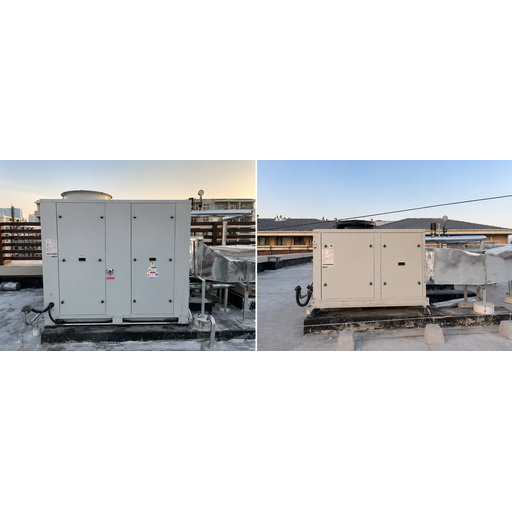
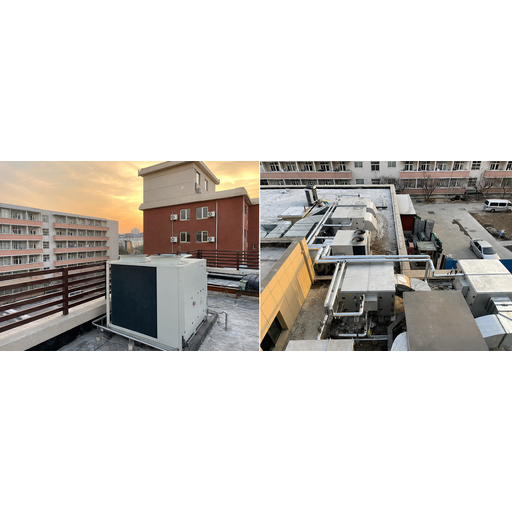
Yes. On the 18,000 m² campus project the KA-DOAS-030 heat pumps carried the heating load through a -12°C winter with no pipe-freeze events, one of the main reasons the client moved off their old water-based system. Cold-climate heating capacity is selected per project; share your winter design temperature and we’ll confirm the heating performance for your climate.
Lead time, MOQ and warranty are quoted per project because they depend on model, filtration, reheat, controls and destination. Koven Air is a direct manufacturer with an in-house test lab, and we provide written warranty terms, spare-parts availability, and installation-and-commissioning guidance per contract. Send your six sizing inputs (model, filtration, reheat/recovery, climate, controls, certification path) for a written quotation.