Get in Touch with Koven Air Company

Koven Air · Factory-Direct HVACR Manufacturer · Since 2007
Centrifugal Chillers, Oil-Free Magnetic Bearing & VFD Systems | Koven Air
Factory-direct custom cooling 170-1250 RT, with oil-free magnetic bearing compressors and full published AHRI condition IPLV data – the numbers most brands keep off the datasheet. Made in a 20,000 sq meter plant, and shipped to 35 countries.
170–1250 RT
595–4395 kW cooling capacity
COP 6.42–6.86
Full-load, W/W
IPLV 10.1–12.1
At AHRI 550/590 conditions
R-134a / R-513A
Standard + low-GWP option (GWP 573)
35 countries
Installed base since 2007
Where a Chiller Plant Loses Money, and How Centrifugal Design Wins It Back
Part-load: the problem hiding in your energy bill
Cooling plants rarely operate at 100% design load. According to the industry’s standard for determining part-load performance (AHRI 550/590), operation is weighed: 1% at 100%, 42% at 75%, 45% at 50%, and 12% at 25%. Most of a cooling plant’s operating hours typically fall into the 50-75% range. Thus, a machine that’s only efficient at full-speed efficiency is a money pit during the majority of its annual hours.
Where fixed-speed and oil-lubricated designs bleed energy
Fixed-speed compressors modulate their capacity using only inlet guide vanes – the motor power stays relatively high even when the building only need 50% of its cooling capacity.
Oil lubricated bearings have the added benefit of laying down an oil film across the evaporator and condenser tubes, lowering the performance of the heat exchanger and steadily increasing the kW per ton number in a way that most people don’t hear.
The additional hardware associated with oil management – pumps, separators, oil heaters – introduce another element of mechanical complexity, increasing cost and potential points of failure for the refrigeration system.
Variable-speed drives (VSD) change that math across the refrigeration cycle, where a slower impeller adds less enthalpy per pass. When the centrifugal compressor operates below full speed in accordance with the affinity laws (flow is proportional to speed, pressure ratio is proportional to the square of speed, and shaft power is proportional to the cube of speed), reducing its speed reduce power consumption at a much faster rate than output, unlike fixed-speed machines that hold full motor draw at part-load.
Real risk: not country of origin, but unverified performance
Many are afraid of Chinese built chiller but are reassured by familiar brand names. In our opinion the real risk come in the form of an incomplete datasheet-a high number for COP means very little if the corresponding IPLV figure is missing. Koven presents full IPLV ranges for every KALXCWG model at AHRI conditions and verifies it in our own in-house testing facility. The performance you purchase is the performance you can confirm.
U.S. Department of Energy’s FEMP program data reports up to 40% more efficiency for oil-free magnetic bearing compressors than oil-lubricated designs, with much of this advantage showing up at part-load where most annual hours occur. (Read the FEMP technology brief at energy.gov, and the context on HFC phasedown at epa.gov).
Koven Centrifugal Chiller Range: VFD, Magnetic Bearing & Water-Cooled Models
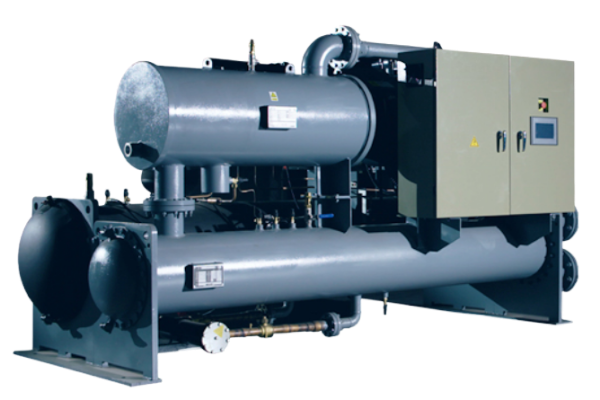
We’ve three product families for this range from 170 RT computer room applications up to 1250 RT district heating plants, all based on the KALXCWG platform. You select the drive technology and bearing type to fit your operating load, then choose your machine size from the table below.
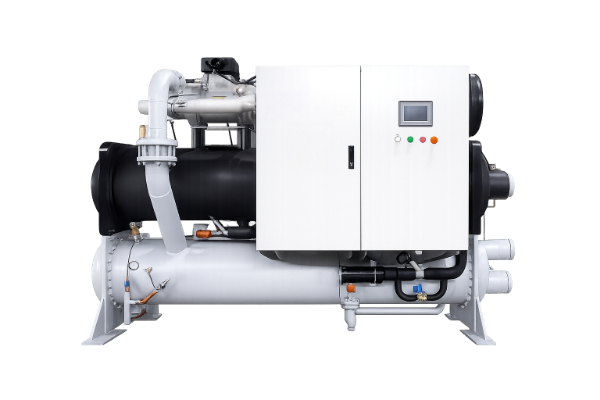
VFD Water-Cooled Centrifugal Chiller
170–1250 RT · gearbox-free direct driveVariable-speed operation over the entire load band, where IGVs and VFD work in tandem so the impeller inside the volute casing tracks the load rather than fights it – ideal for high load swings.
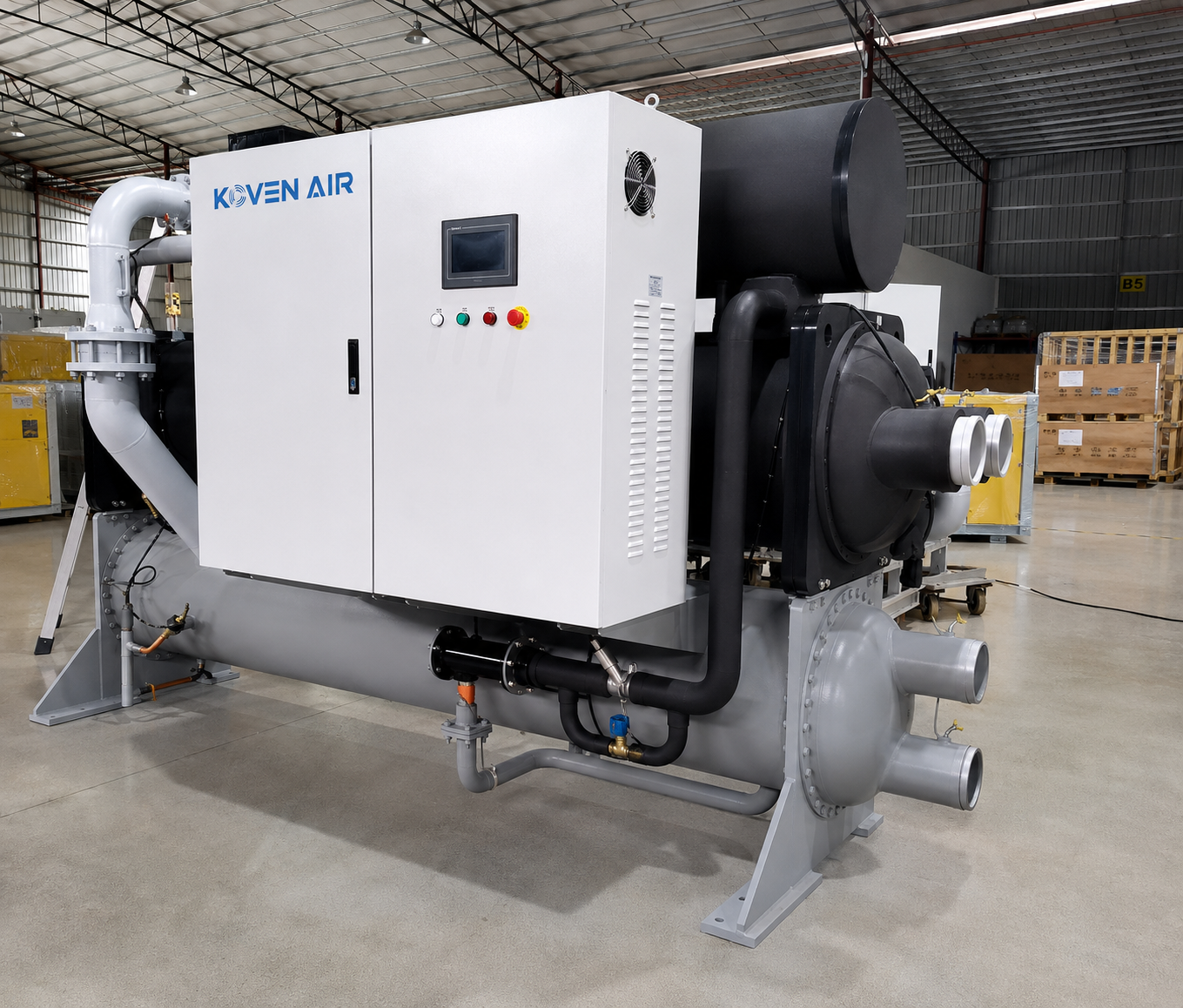
KALXCWG Magnetic-Bearing Oil-Free Chiller
Oil-free · IPLV to 12.13 W/WOil-free, magnetic bearing suspension eliminating oil circulation, oil films on the heat exchanger, moving parts, and the best service interval on this scale. It’s a no-compromise choice for the modern data center and for any other uptime-sensitive application.
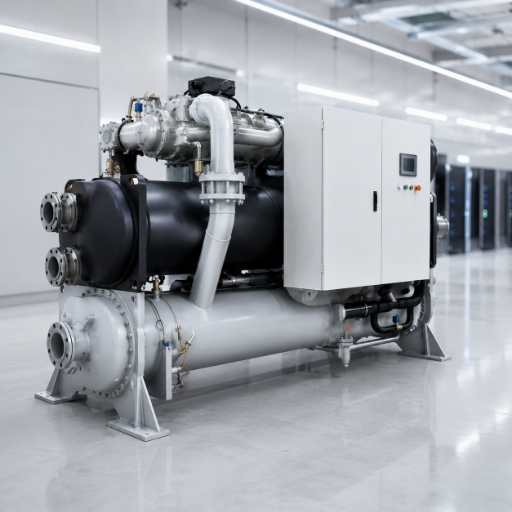
Centrifugal Water-Source Heat Pump
Simultaneous heating + coolingOur standard centrifugal compressor platform configured for Heat Recovery. Here it captures condenser heat and delivers water to a heating loop for process or space heating, all while making chilled water.
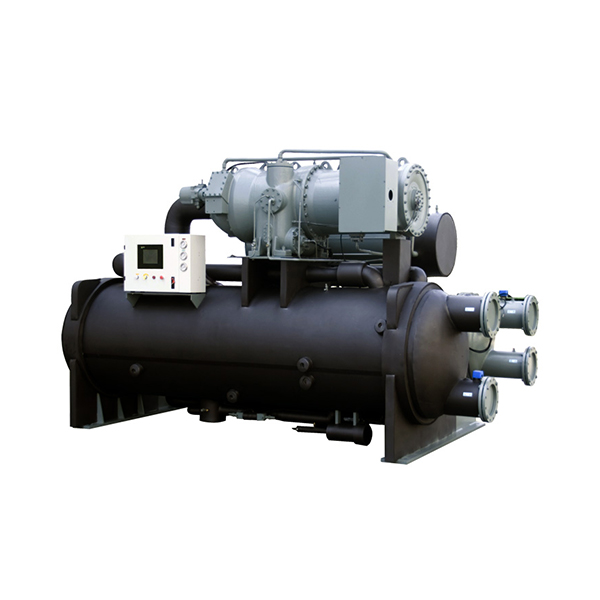
KALXCWG spec table, representative sizes (170EV to 1250EVT)
Source: KALXCWG factory data. COP at full load; IPLV rated at AHRI 550/590 conditions. Full 26-size table available on request; third-party verification on request.
| Model | Cap (RT) | Cap (kW) | COP | IPLV | Motor | dB(A) | DN |
|---|---|---|---|---|---|---|---|
| 170EV | 170 | 595 | 6.42 | 10.08 | 1×150kW | ≤72 | DN150 |
| 250EV | 250 | 880 | 6.58 | 10.86 | 1×220kW | ≤74 | DN150 |
| 400EV | 400 | 1407 | 6.75 | 11.42 | 1×355kW | ≤76 | DN200 |
| 500EVD | 500 | 1760 | 6.77 | 11.86 | 2×150kW | ≤78 | DN200 |
| 700EVD | 700 | 2461 | 6.86 | 12.13 | 2×250kW | ≤80 | DN250 |
| 1000EVT | 1000 | 3515 | 6.81 | 11.55 | 3×280kW | ≤82 | DN300 |
| 1250EVT | 1250 | 4395 | 6.58 | 11.57 | 3×280kW | ≤82 | DN300 |
Note the range: peak efficiencies (6.86 COP, 12.13 IPLV) land around the 700EVD, where a two-compressor design sheds a stage at part-load while smaller sizes run on a single compressor. Our largest three-compressor sizes give up only a little on those peaks in exchange for high cooling capacity, so a 500-ton chiller and a 1250EVT alike stay on verified AHRI test data, never a rounded approximation.
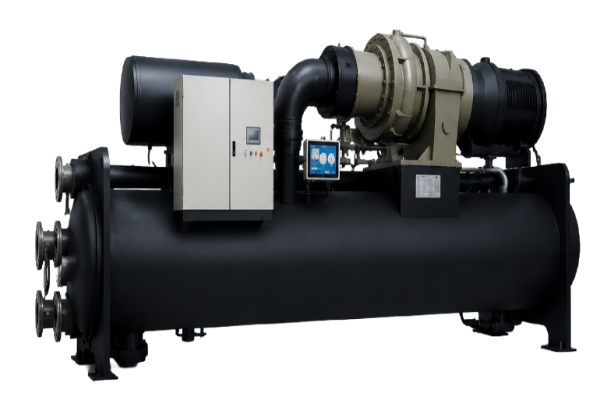
Named framework #1: The Part-Load Efficiency Ladder
Your chiller efficiency at part load depends heavily on the compressor design and drive type. This ladder show how each configuration (from legacy to modern oil-free) stacks up, allowing you to compare a magnetic-bearing centrifugal to a screw or a fixed speed unit.
Typical AHRI-condition industry bands for water-cooled machines; ranges vary by size and manufacturer. Koven KALXCWG row per factory data. See ISO 9001 quality-management basis at iso.org.
| # | Compressor / drive type | Full-load COP (W/W) | IPLV band (W/W) | Oil system |
|---|---|---|---|---|
| 1 | Fixed-speed reciprocating | 4.0–4.6 | 4.5–5.5 | Oil charge + heater |
| 2 | Fixed-speed screw | 5.0–5.6 | 5.5–6.8 | Oil charge + separator |
| 3 | Fixed-speed 1-stage centrifugal | 5.5–6.0 | 6.0–7.5 | Oil charge + pump |
| 4 | Fixed-speed 2-stage centrifugal | 5.8–6.3 | 7.0–8.5 | Oil charge + economizer |
| 5 | VFD screw | 5.3–5.9 | 7.5–9.0 | Oil charge + separator |
| 6 | VFD 1-stage centrifugal | 6.0–6.5 | 8.5–10.5 | Oil charge + pump |
| 7 | VFD 2-stage centrifugal | 6.2–6.7 | 9.5–11.5 | Oil charge + economizer |
| 8 | Magnetic oil-free, 1-stage | 6.3–6.8 | 10.0–11.5 | None — oil-free |
| 9 | Magnetic oil-free, 2-stage | 6.42–6.86 | 10.08–12.13 | None — oil-free |

Decision Matrix, model band by application
| Application | Typical load | Suggested band | Target IPLV |
|---|---|---|---|
| Computer room / edge data center | 170–300 RT | 170EV–250EV | 10.1–10.9 |
| Hyperscale data center (N+1) | 500–700 RT | 500EVD–700EVD | 11.9–12.1 |
| Hospital / office tower | 250–500 RT | 250EV–500EVD | 10.9–11.9 |
| Semiconductor / battery plant | 700–1000 RT | 700EVD–1000EVT | 11.5–12.1 |
| Industrial park / district plant | 1000–1250 RT | 1000EVT–1250EVT | 11.5–11.6 |
This water-cooled centrifugal chiller range pairs a shell-and-tube evaporator and condenser with DN150–DN300 water connections, so the machine drops into an existing cooling tower and chilled water loop without a bespoke plant room. Our quality-management system follows ISO 9001:2015 (iso.org), which governs the process traceability behind every one of these numbers.
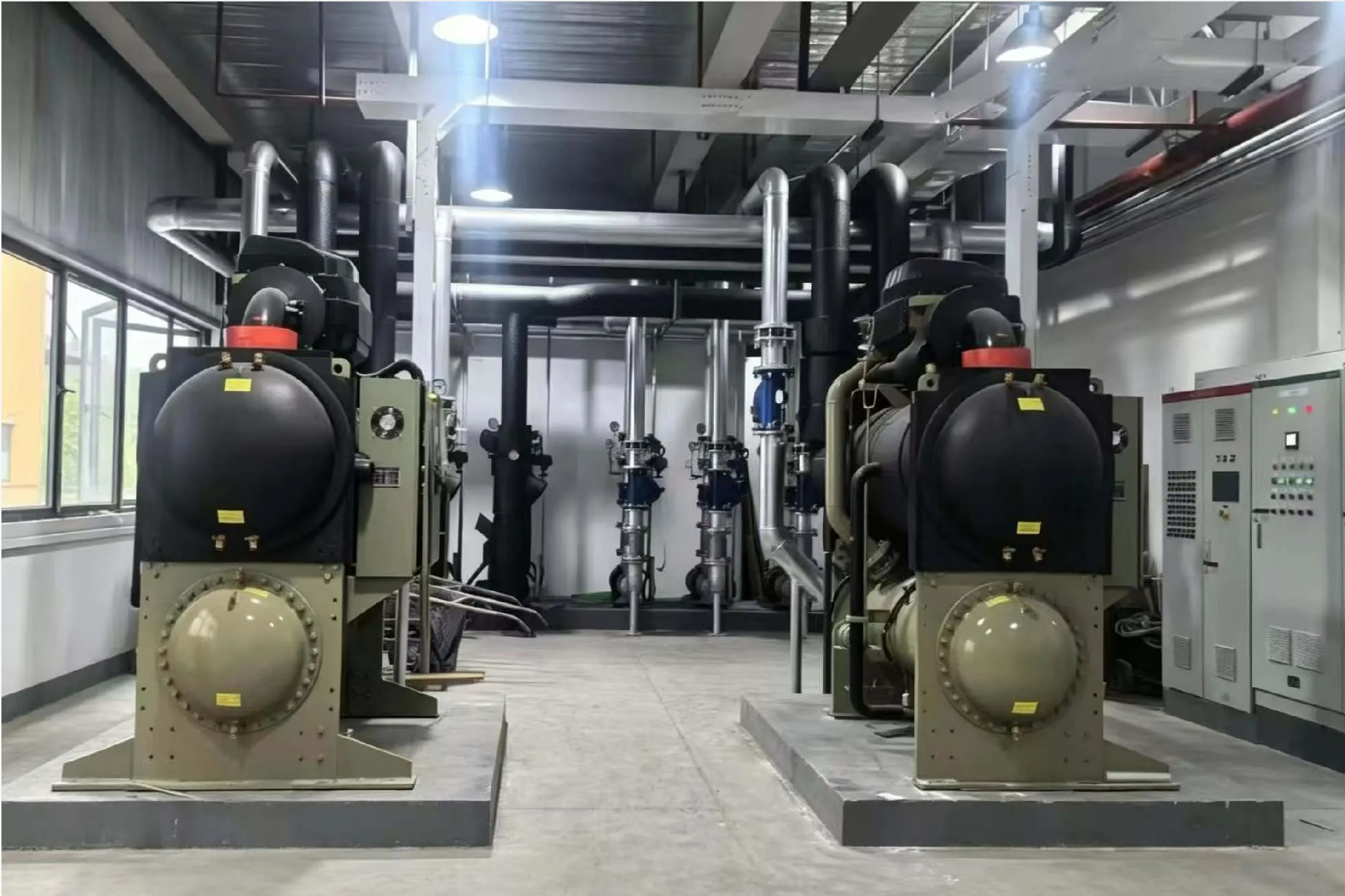
The selection risk buyers underrate
Choosing a centrifugal chiller that’s over-sized for the duty profile can be a recipe for surge and inefficiency. When a unit is specified just to meet the peak tonnage, it will spend many hours operating at throttled load, fighting the tendency to surge as the impeller attempts to control capacity by throttling instead of simply tracking the load demand.
Koven Air’s motor staging and impeller trimming are matched to your specific load profile, using the AHRI 550/590 part load points to achieve an IPLV of 12.13W/W. The part load performance data that’s included in your quote matches our published IPLV curves; we don’t hide performance behind high level numbers like a typical manufacturer’s spec sheet.
Sizing a plant and want the numbers checked against your load profile?
Get a detailed Chiller Sizing & Selection CalculationMagnetic Bearing vs Oil-Lubricated vs Screw: Part-Load Efficiency Compared
Many buyers of Chinese products incorrectly assume they compromise efficiency for lower initial cost, and will opt for a Western name. That decision, however, is driven by the technology, not the brand name – and Koven’s12.13 W/W AHRI IPLV exceeds that of a comparable York YK chiller, a Trane centrifugal chiller, or a Daikin Magnitude chiller. Our figures are hard, verifiable numbers, not ‘High / Medium / Low’ generalities.
Representative water-cooled figures at AHRI conditions; Koven column per KALXCWG factory data. Competing-type bands are typical industry values.
| Metric | Magnetic-bearing oil-free (Koven KALXCWG) | Oil-lubricated centrifugal | Screw chiller |
|---|---|---|---|
| Full-load COP (W/W) | 6.42–6.86 | 5.5–6.3 | 5.0–5.9 |
| AHRI-IPLV (W/W) | 10.08–12.13 | 6.0–8.5 | 5.5–9.0 |
| Oil system | None — oil-free | Charge + pump + separator | Charge + separator |
| Annual maintenance | No oil changes; bearing electronics check | Oil analysis + change; seal service | Oil + separator + rotor service |
| Noise dB(A) | ≤72–82 | 80–88 | 82–90 |
| Service life (design) | 25+ years, no wear at bearing | 20–25 years | 15–20 years |
Honest engineering nuance, a VFD alone does not guarantee part-load savings
Slapping a VSD on a centrifugal compressor doesn’t come free. Without condenser-water-temperature relief, the machine can’t capitalize on affinity-law savings, and under low load conditions it may surge unless the chiller controls sequence the inlet guide vanes (IGVs) and VSD together. We tune IGV/VSD coordination and condenser relief project by project – which is why IPLV is a field proven figure, not a theoretical number.
Why IPLV weighting matters more than a headline COP
AHRI 550/590 weightings for four load points are 0.01 / 0.42 / 0.45 / 0.12 at 100 / 75 / 50 / 25% load. With 100% load COP accounting for only 1% of the score, two machines with similar nameplate COP – say a two-stage compressor against a single-stage – may have drastically different real-world energy use. A higher IPLV number is not always the better pick until you match it to your real load profile, so compare IPLV against the headline COP.
Named framework #2
The 4-Factor Chiller Selection Framework
Trim a complex spec sheet to four decisions, and the right machine reveals itself – whether that is a magnetic-bearing centrifugal or one of the screw compressors better suited to a small duty. Work them in order: each one eliminates options before the next.
- Load profile. Map out hours of operation at 25, 50, 75, and 100% load. Erratic profiles suit a magnetic-bearing VSD; steady loads support simpler drives.
- cooling capacity. Choose a machine based on block load and redundancy; for instance, a pair of 700EVDs provides greater uptime reliability than a single 1250EVT.
- Heat-rejection medium. A cooling tower paired with a water-cooled machine offers the lowest kW/ton across ambient conditions – verify the condenser water temperature and flow ranges at the outset.
- Lifecycle cost. Compare the energy and maintenance expenses over a 20-year period to the initial purchase price – the oil-free penalty often recovers its cost in energy savings alone.
Use GSA’s evaluation of variable-speed magnetic-bearing chillers for a federal benchmark (gsa.gov). Here you can weigh the total cost of ownership in a centrifugal chiller vs screw chiller call, and settle a magnetic bearing chiller vs centrifugal question on bearing type.
Not sure which band fits your load profile?
Compare Models Side-by-SideCustomer Results: 30–40% Lower Energy Use in Data Centers, Hospitals & Plants
Across our 35-country installed base, one thing is clear: Replacing fixed-speed plants with oil-free, variable-speed centrifugal machines lifts energy efficiency and cuts annual energy consumption, largely because the vast majority of operating hours fall within the 30-80% part-load range where affinity-law savings are maximized. How far those savings go depends on your specific load and electricity tariff, so use these formulas to calculate your own without inventing a phantom ROI. Energy cost is the hidden line item in a 20-year chiller total, and the honest version of the math is the AHRI part-load figures, not the full-load COP a spec sheet leads with.
30–40%
Annual energy-use reduction vs fixed-speed, at 30–80% part-load — the majority of annual operating hours. [USER-DATA: VFD affinity-law operation]
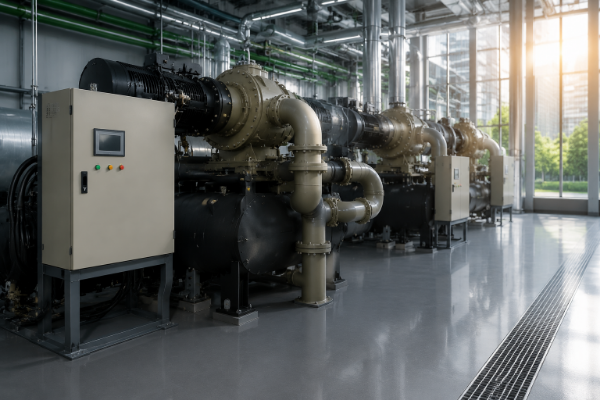
Transparent TCO method (run it on your site):
Annual energy (kWh) = chiller input kW x hours at part load. Savings ($) = (baseline IPLV kW – new IPLV kW) x hours at part load x electricity rate.
Assume 0.75 load factor, 10 hours/day for 150 days, with Western Australian grid electricity costs at $0.3158/kWh (2024). Savings will scale with part-load hours and electricity price.
Method grounded in real IPLV delta + AHRI 550/590 part-load weighting. No single ROI % is claimed; results depend on site load profile and electricity price.
Where these machines earn their keep
- Data centers and computer rooms rely on oil-free reliability and the high efficiency of part-load IPLV to cut the cooling energy contributing to their PUE under stable load.
- Hospitals need quiet operation (72-82 dB(A)) and ongoing service to ensure continuous cooling without interruptions.
- Semiconductor plants and lithium battery factories require ultra-tight chilled water temperature control for precise process cooling.
- Large, steady block loads in commercial buildings, automotive plants, subways, airports, and libraries can be served by multiple 1000-1250EVT machines and a single cooling tower.
“For a hospital retrofit, we replaced a pair of two fixed-speed centrifugal units with a pair of 500EVDs. The new oil-free bearings removed the oil analysis annual charge altogether, and we the building’s engineering staff noticed the greatestkW savings in the overnight shift, where the facility was at roughly 50% load, but the old units were operating at full bore.”
— Senior Application Engineer, Koven Air Engineering Team
Load Factor
0.75
Quiet Op
72-82dB(A)
Tariff Ref
$0.3158/kWh
Certifications, Testing & Performance Verification
Audit-ready evidence means the difference between a genuine manufacturer and a trading house. All the KALXCWG units are tested to AHRI 550/590 conditions, manufactured within a certified quality and environmental systems, and subjected to a fixed test regime before shipment.
ISO 9001
Quality management
ISO 14001
Environmental management
AHRI 550/590
Rating conditions
CE
EU conformity
Why a logo is not evidence
Suppliers advertise ISO but don’t have 3rd-party performance data to share when asked for at audit and that’s when a spec driven procurement stops. Koven Air operates each unit under ISO 9001 quality management and ISO 14001 environmental management because a certificate number means little without a test report matching your model. We provide actual IPLV data that meets AHRI condition, unlike some suppliers that display a logo but no performance data, we can even arrange independent validation if needed.
PROCESS / RESOURCES
What the factory actually does before shipment
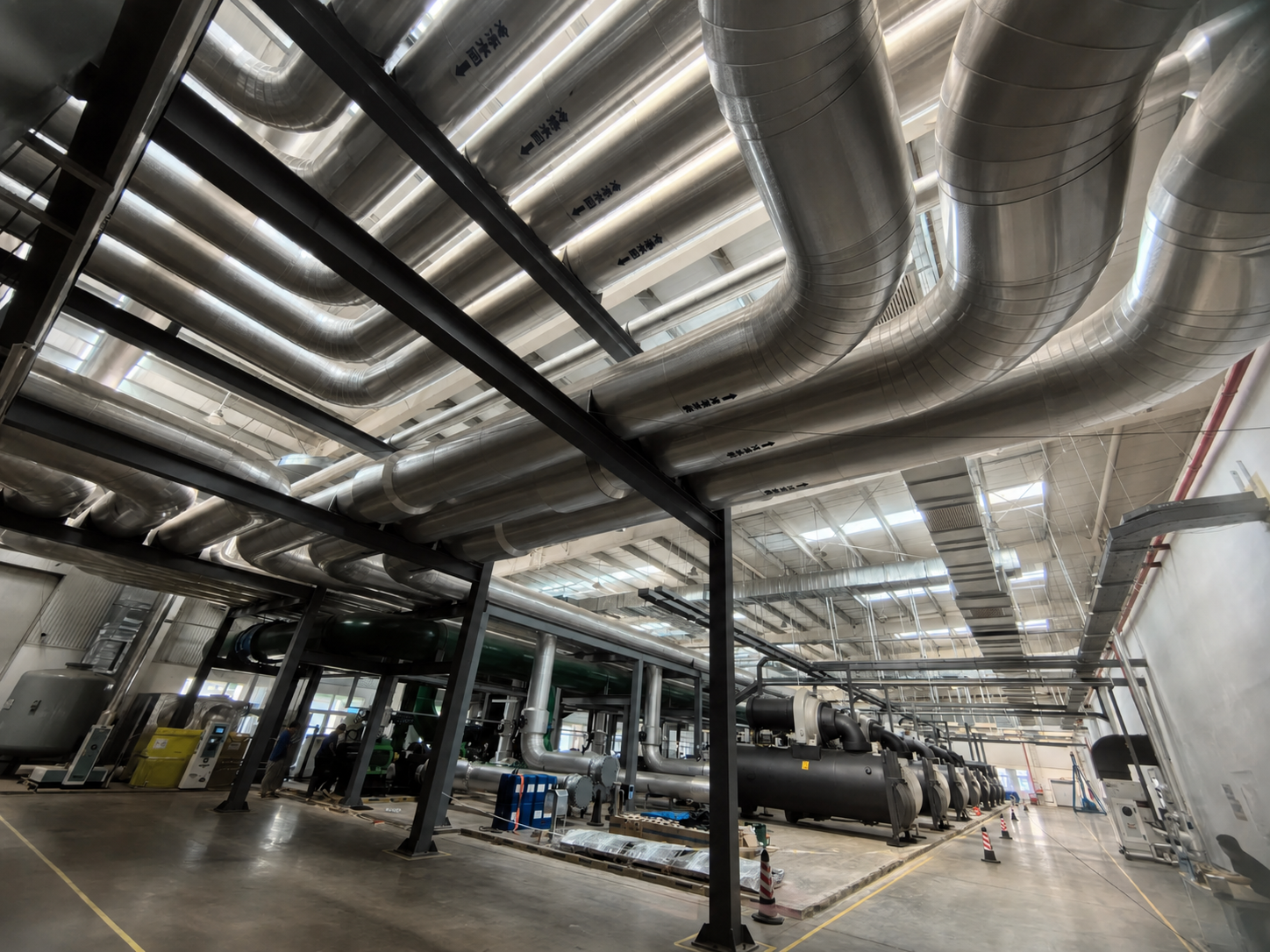
- plant area: 20,000m; the plant has 18 standard production procedures and 23 stations for sheet-metal precise machining.
- Intelligent robotic modular assembly with 400 process traceability points.
- We inspect 36 units in the factory, plus one 24-hour burn-in on each product.
- Lab and chiller and Heat Pump Testing Facility Testing for performance confirmation.
Straight talk on our IPLV numbers
IPLV & COP displayed above is KALXCWG factory data measured in accordance with AHRI 550/590 and is NOT an official certification stamp from AHRI. It IS NOT an “AHRI certified” label. Please request independent certification test data for your model of choice from our representatives; the actual report is furnished with our product shipment, under a complete environmental quality system based on ISO 14001.
Procurement Guide: Pricing Factors, Lead Time & Lifetime After-Sales
Pricing for chiller is just not visible every where in the marketplace, and a single figure displayed on a website won’t be meaningful to you without inputting your application specs. What we’ll provide is the true and actual set of cost inputs so you can have an accurate initial budget estimation.
What moves the price
-
01
cooling capacity in RT and kW is what’s going to dictate it. bigger is going to cost more as far as overall dollar figure but likely less per ton.
-
02
Type of compressor makes difference: Magnetic bearing oil free are more expensive than fixed speed but saved on energy and maintenance.
-
03
Material of heat-exchanger and evaporator/condenser tube spec shape all affect the cost and the heat performance.
-
04
Choice for refrigerant is from the standard R-134a to low-GWP option R-513A on AIM Act-facing projects.
-
05
Controls and redundancy (multi-compressor, N+1 layout), they cost more, but they buy uptime.
Hover to view more details ▾
Our pre-, in-, and after-sales process
Pre-sales:
Design your project and confirm/ select its parameters by means of calculation prior to you sign anything.
After-sales:
Production, factory test, pre-delivery on-site installation, commissioning instructions.
After-sales service:
technical service for life, timely service within warranty and technical training for your engineers/contractors regularly.
Lead time and commissioning, addressed up front
Long lead times and a lack of on-site commissioning for large centrifugal chillers transform an otherwise good machine into a stalled project. At Koven Air, we maintain firm build slots and fly our own engineers for on-site startup of the 35-country installed base because a chiller that’s fast to ship but not so fast to start up saves nobody money. Unlike suppliers who hand off at the port, we schedule every unit against our 20,000 m² line and stay on the job through commissioning, backed by lifetime technical service.
Hover to read full statement ▾
Magnetic bearings aren’t an extra electrical load nor do they present a stray field hazard because the field is small and fully contained within a shielded compressor housing. Koven Air’s oil-free design actually reduces power consumption and reaches an IPLV as high as 12.13 W/W, because by eliminating the friction of bearing and oil film the heat exchanger performance is significantly improved. In fact, since there’s no oil there are no evaporator tubes to foul.
For many plants running many hours per year at part-load, yes – an oil free chiller earns back its premium. The elimination of oil changes, oil analysis, and separator service on the maintenance budget, along with up to a 40% part load efficiency advantage (per DOE), generally more than pays the premium on energy costs alone. On a steady full-load or few operating hour applications, a less expensive VFD screw or centrifugal machine may have a longer payback – both cases are included in the selection calculations.
Ask anyone what a centrifugal chiller does and they’ll talk about the impeller: the centrifugal chiller working principle drives refrigerant gas to high speed, so the centrifugal chiller compressor delivers strong part-load efficiency at high cooling capacity, where the screw type chiller with meshing rotors are suited to small, oil-flooded duties. In a centrifugal chiller vs screw chiller comparison, the choice comes down to kW/ton and IPLV which favours the centrifugal machine above ~200-300 RT and the screw at the low end.
R-134a is standard and the right choice for large (above 300 RT), low-pressure large-impeller machines. R-513A is our low-GWP option, part of the industry shift toward ultra-low gwp refrigerants-an A1, non-flammable blend with a GWP of 573, about 60% lower than R-134a-for projects needing to comply with the HFC phasedown requirements.
The KALXCWG line covers 170 to 1,250 RT (595 to 4,395 kW) across 26 sizes to address data centres, hospitals, semiconductor plants, battery plants, automotive manufacturing plants, office complexes, subway systems, high-speed rail systems, airport facilities, school and library systems, and gymnasiums.
Because pricing depends on factors such as the cooling capacity, the compressor type, the heat exchanger specification, the refrigerant option, and the redundancy requirement, it would be misleading to provide a specific figure. Instead of a speculative quotation, we size your machine for your application parameters. Contact Koven for a detailed quotation.
Get Factory-Direct Centrifugal Chiller Pricing
Send us your load profile, chilled water and condenser water temperatures, and site tariff. We’ll size the machine, run the TCO math, and quote against your real parameters.



![Commercial Rooftop Unit Guide: Types, Sizing & Costs [2026]](https://kovenair.com/wp-content/uploads/2026/07/commercial-rooftop-unit-guide-featured-2-150x150.png)