Get in Touch with Koven Air Company

Commercial Air Handling Units (AHU) — Custom HVACR Manufacturer
Commercial air handling units decide whether a hospital operating room holds negative pressure, whether a 25,000 m² electronics line stays at 45% RH, or whether an 860,000 m² factory runs within ±1°C for twelve months straight. These units are built in-house across split DX, chilled water, and vertical product lines, sized to your actual load calculation, not picked off a catalog page.
1,500–200,000
Airflow Range (m³/h)
8.5–600
Cooling Capacity (kW)
DX / CW / HR
Configurations
2007
Manufacturing Since
ISO 9001 · CE
+ ISO 14001, DIN 1946
35+
Countries Served
When a Catalog AHU Doesn’t Fit Your Load — Engineering Around the Building You Actually Have
What’s an air handling unit? It’s a box that filter, heats, cools, and moves conditioned air into a building’s ductwork-but the type of failure that will cost you the most isn’t the box itself, it’s a mismatch between the box and its load.
One anecdote from a Mechanical Engineer on r/MEPEngineering-a guy approving an AHU submittal 2 weeks late and without a full review, only to discover “the unit was 30% short on capacity”-encapsulates exactly why anyone who’s experienced an AHU purchase disaster quickly transitions from asking “which brand” to asking “who verifies the numbers before I sign.”
EXPLORE ADDITIONAL INSIGHTS & NEXT STEPS
In the words of one HVAC Technician, commenting on the recurring phenomenon, “The best equipment brand is the one that you get the best support from suppliers in your area.” (Brand isn’t always the number one thing to worry about).
In the subsequent sections, you can learn more about our product families, our approach to configuring AHUs for specific needs, real-world cost comparison of custom vs. off-the-shelf units, four project case studies, our rigorous certification and quality control measures, and how purchasing directly from the factory simplifies lead times, pricing and overall process.
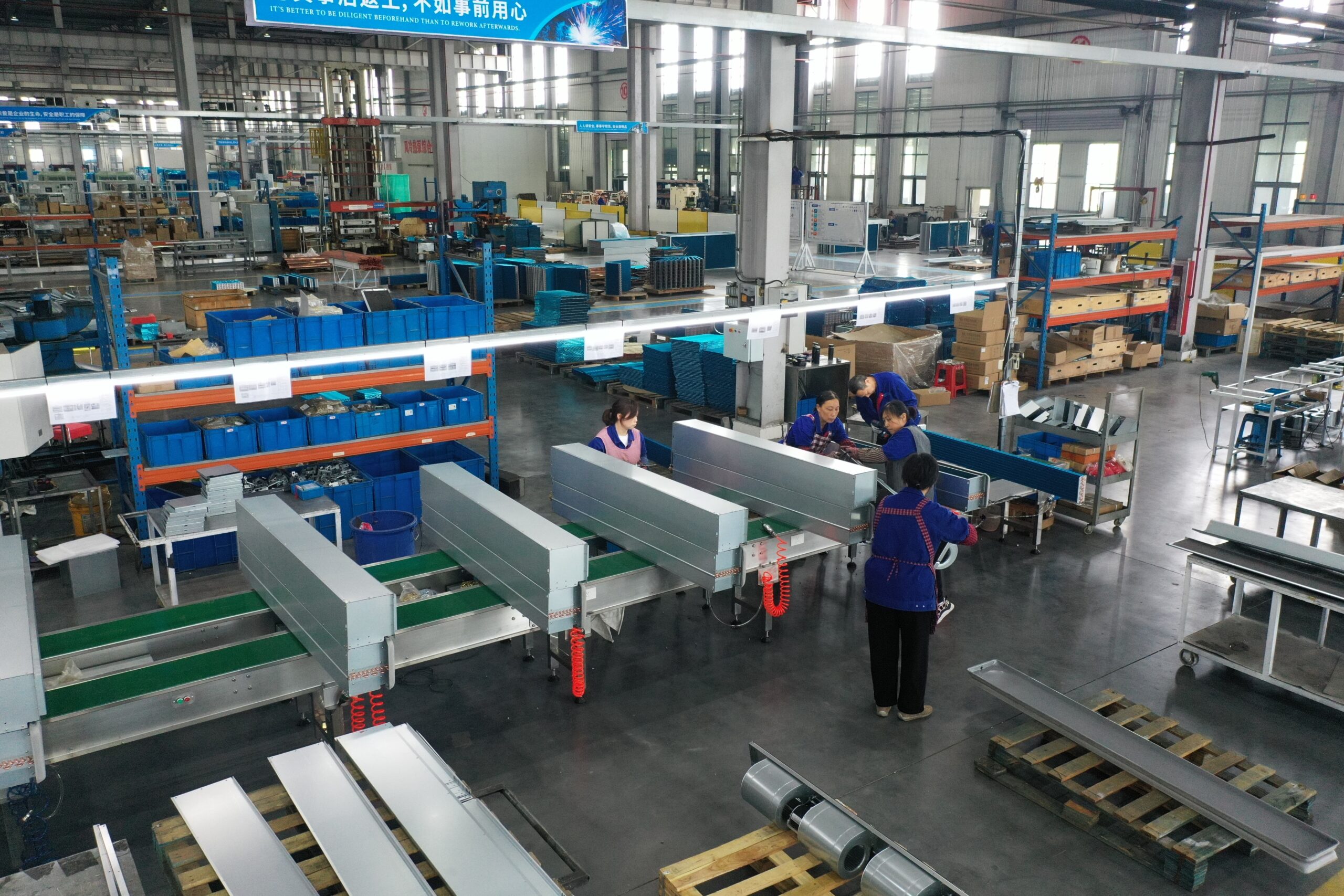
ENGINEERING AROUND THE BUILDING
PRE-SALES PROCESS / KOVEN AIR
The pre-sales process here at Koven Air was designed to bridge that very gap. We accurately calculate the unit based on your true airflow, static pressure, and thermal load prior to submitting any proposal, backed by in-house manufacturing in three product families, our proven 4-step quality assurance process, and after-sales engineering support for the entire lifespan of your system.
REQUEST PARAMETER CALCULATIONKoven Air Commercial AHU Product Line — Configurations & Specifications
Selecting the wrong product family will leave you with a refrigerants system that’s unserviceable on your site, or a chilling loop for which your plant was never designed-costly errors of the same order as the 30%-short unit, often only uncovered after commissioning, not before. Koven Air’s families of commercial AHUs are engineered to minimize those risks, with each family addressing a distinct type of plant-room limitation rather than squeezing one into a generalized “commercial AHU.” Our design begins by matching compressor type, coil configuration, and cabinet layout to your specific installation-a level of tailoring far beyond what a catalog item can provide.
KAZKW (indoor) / KASW (outdoor)
Split DX AHU — Fresh Air & Return/Mixed Air, Inverter Compressor
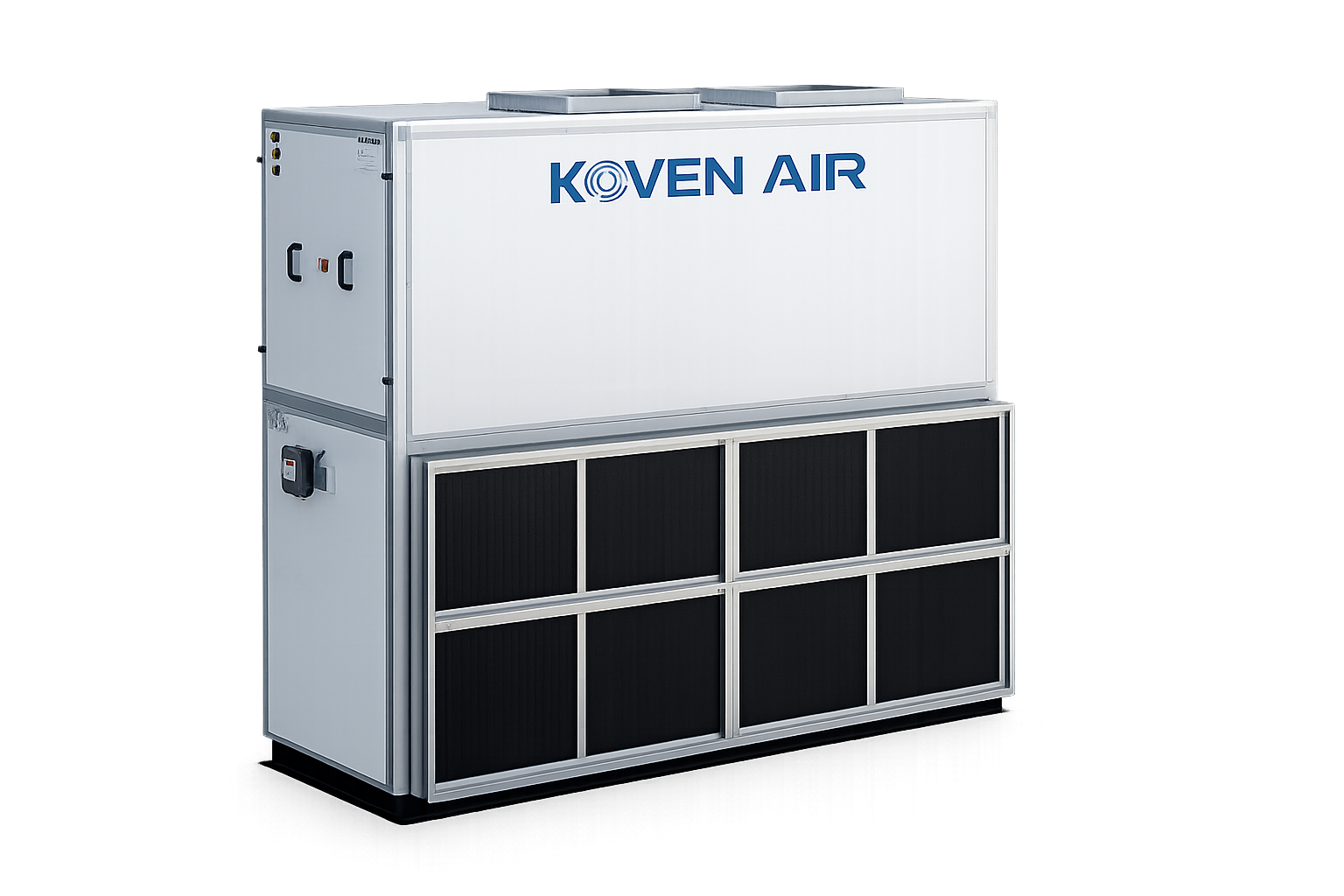
Our split DX KAZKW007 to KAZKW360/330 indoor units can be paired with outdoor condensing units from KASW035AR through KASW500ARPC for applications that don’t have an existing chiller plant, as the compressor is housed within the outdoor unit, eliminating the need for a central chilling loop. Units are equipped with R410A refrigerant cooling and available with electric, hot water, steam, or heat recovery heating.
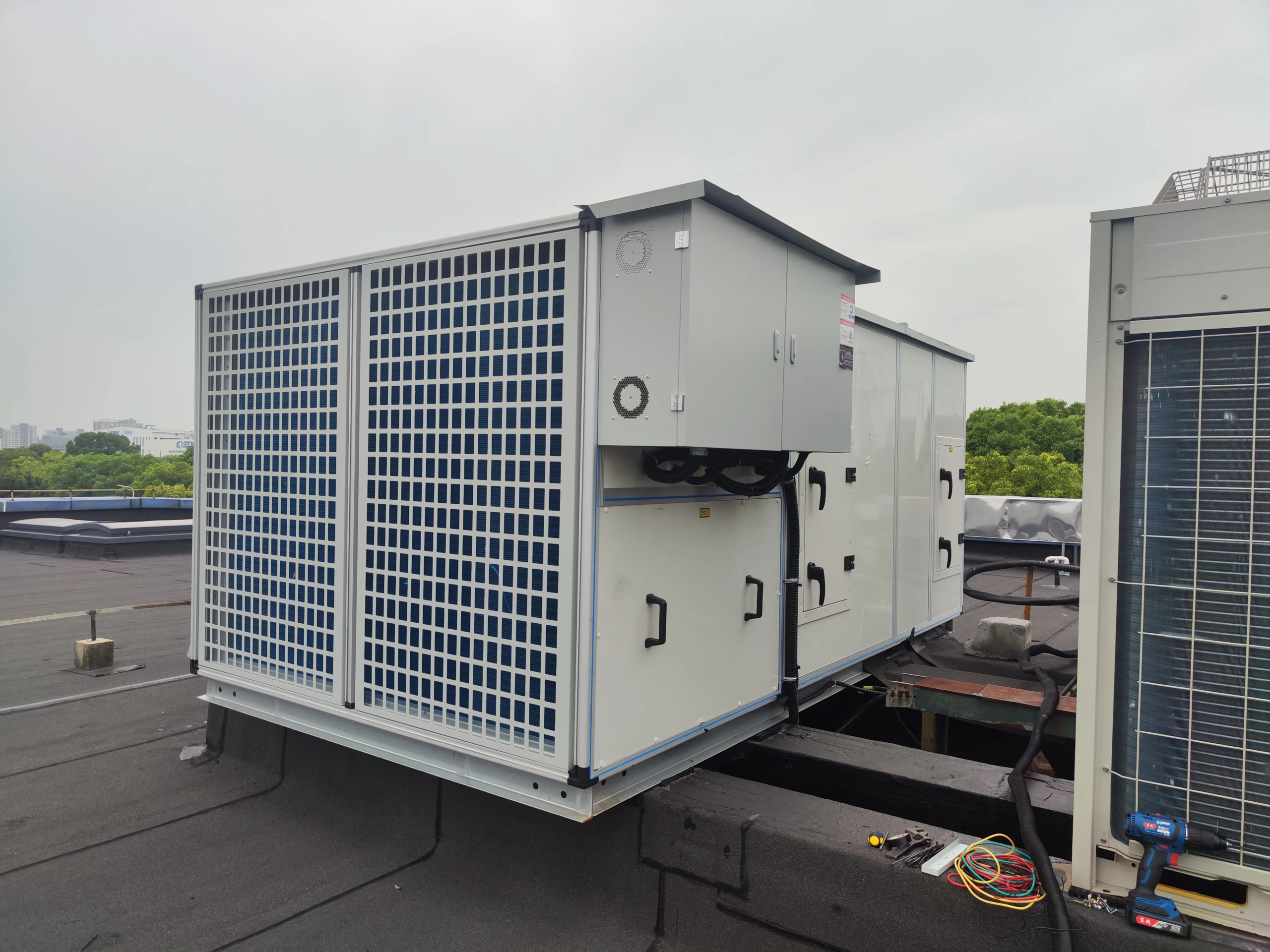
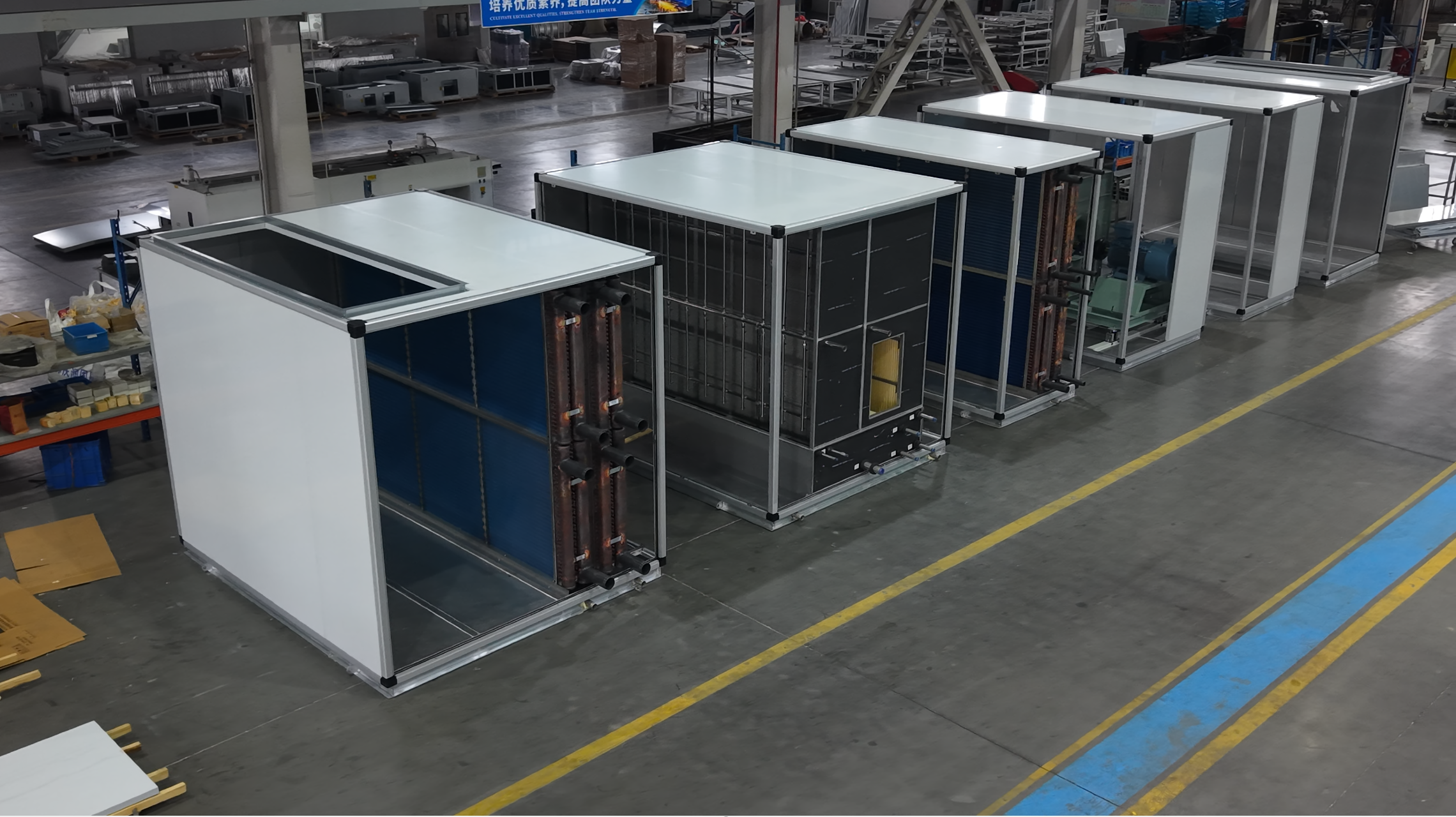
KAW03-JT through KAW50-JT
Chilled Water AHU — 4/6/8-Row Coil Options
For the building that already has a central chilled water plant (hospital, data center, multiple zone factory, etc.), the chilled water unit eliminates the refrigerant circuit per air handler – and that goes a long way when you’re running dozens of units off a single plant. The coil section (4, 6, or 8 rows) is specified to meet your leaving/entering water temp and required latent/sensible split, not selected to match a single default default value.
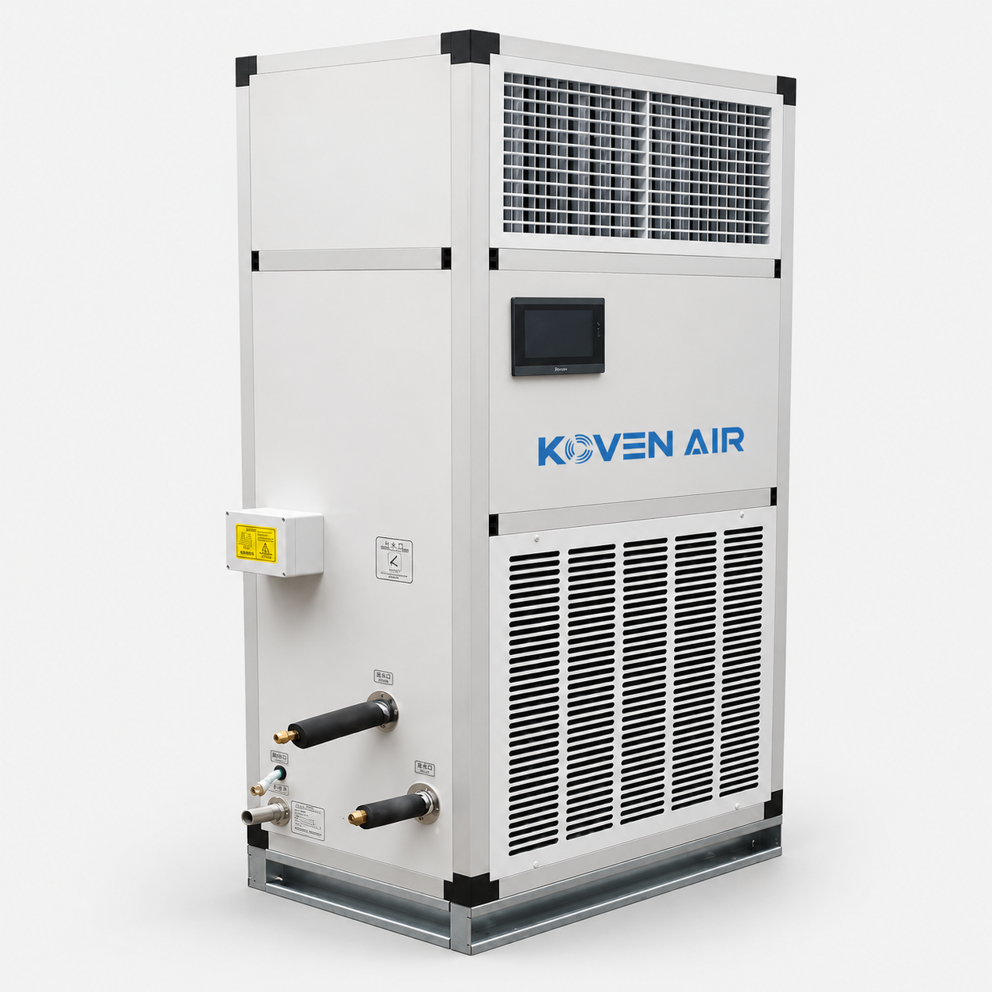
ZKL020 through ZKL200 — Three Cabinet Types
Vertical Air Handler — Chilled Water Only
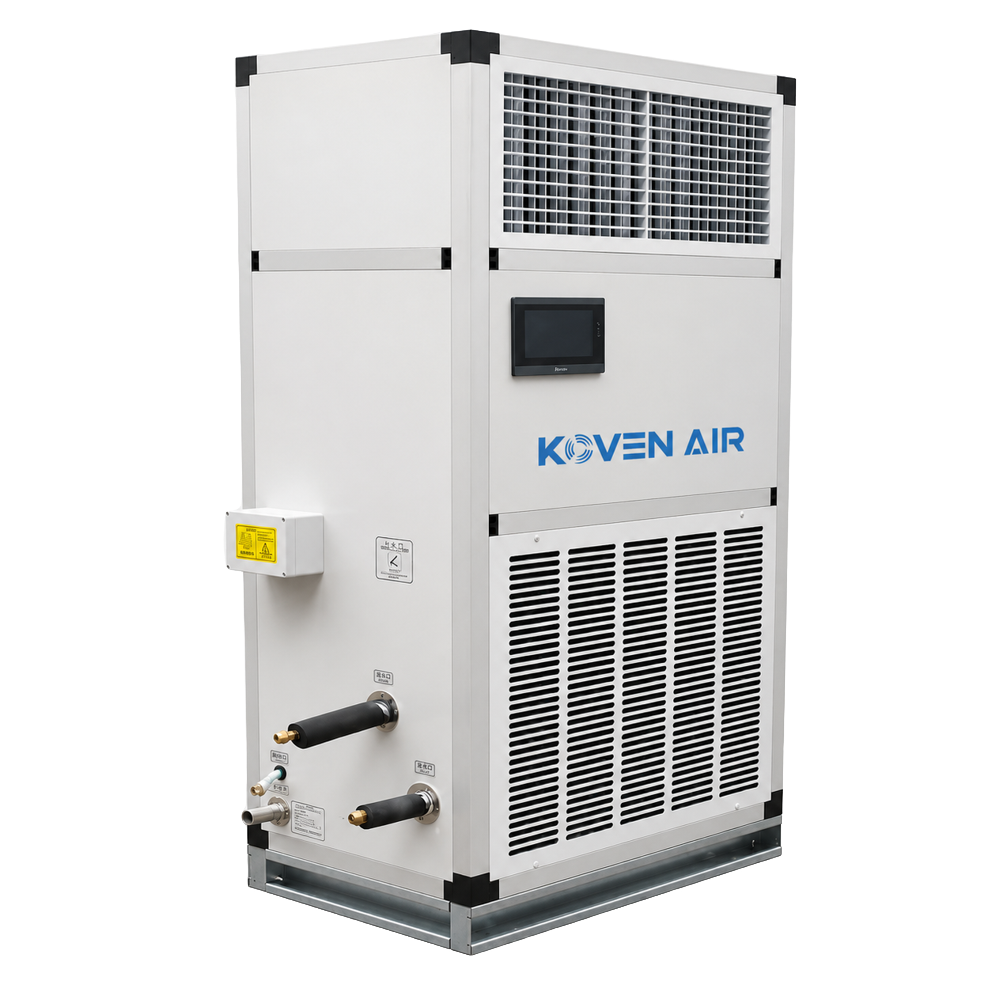
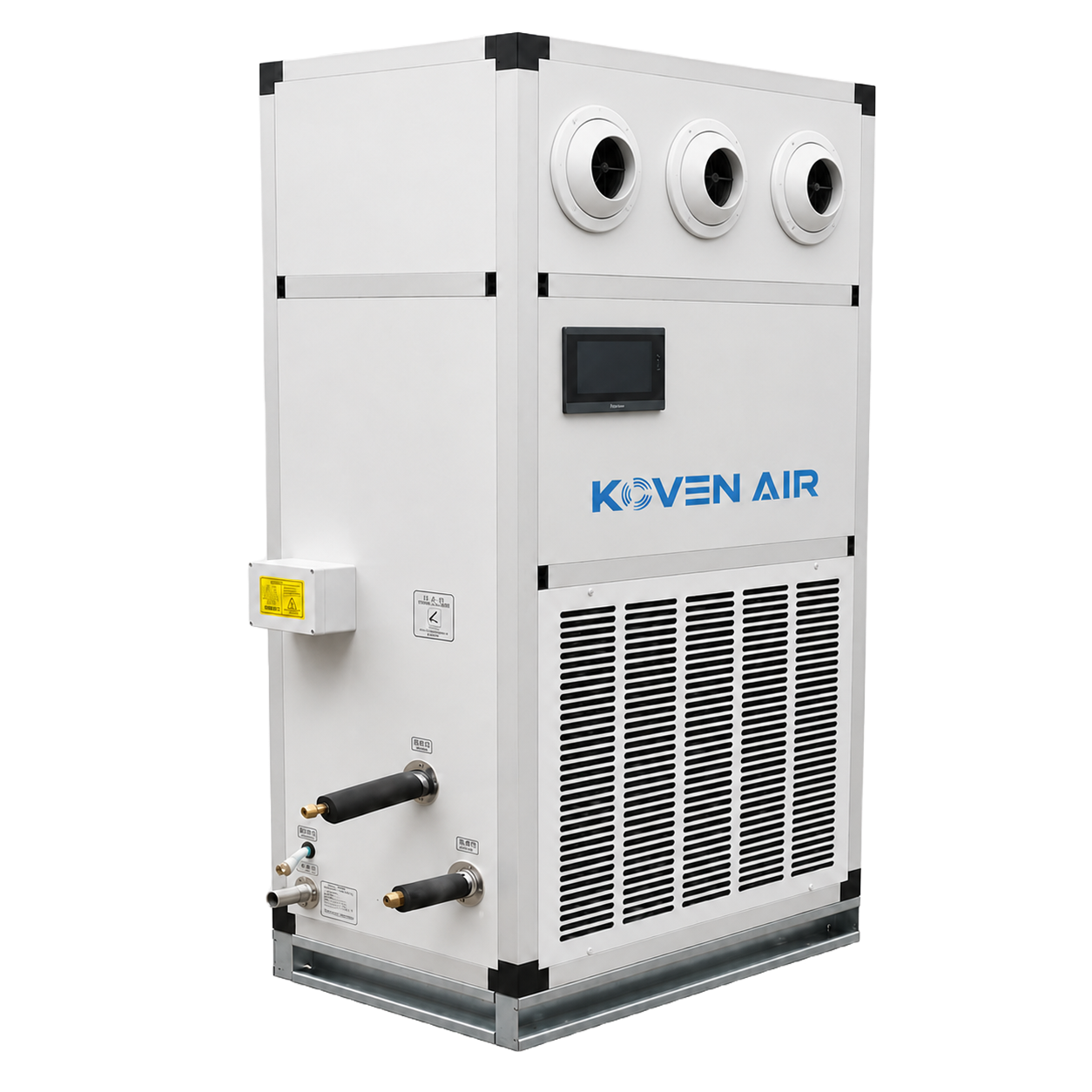
In the event that mechanical room floor space is the bottleneck, the vertical line offers three cabinet geometries based on the same chassis, from the 2,000–20,000 m³/h ZKL020-ZKL200 line: The standard Regular Straight Blow unit has a frontal outlet grille and the shortest floor footprint. It’s followed by the Long-range Jet (a high static fan with a nozzle manifold to blast conditioned air across an open span without ducts) and the Ducted version (a high static fan with a discharge plenum for multiple zone ducted distribution). These three designs share the same chilled water coil, condensate tray and fan core; the only variation is in the discharge section of the cabinet. As a result, one chassis can be ordered in three different designs rather than carrying three different lines of equipment.
Configuration Reference — Airflow Paths
All Koven Air commercial AHUs come standard with one of four internal air configurations (to be selected according to application): The Regular Chilled Water AHU (a mixture of return and fresh air is drawn across a chilled water coil) is standard for commercial applications. A Full Fresh Air AHU provides 100% outside air and is often found in hospital and lab applications where recirculation isn’t permissible — for pharmaceutical and biotech spaces requiring ISO 14644-1 cleanroom classification specifically, see our dedicated Cleanroom AHU line. The Regular DX AHU has a direct-expansion evaporator coil, is usually matched with an outdoor condensing unit and uses a mixture of return and fresh air. The Full Return Air AHU uses a minimal amount of fresh air and operates in a closed loop to tightly control temperature and humidity, typical in process environments. Fan motor capacity ranges from 0.8 to 22 kW (1 to 30 hp), filtration from G1 (pre-filter) up through M5 (medium) and F9 (fine), and maximum COP of 3.5 (on the standard line).
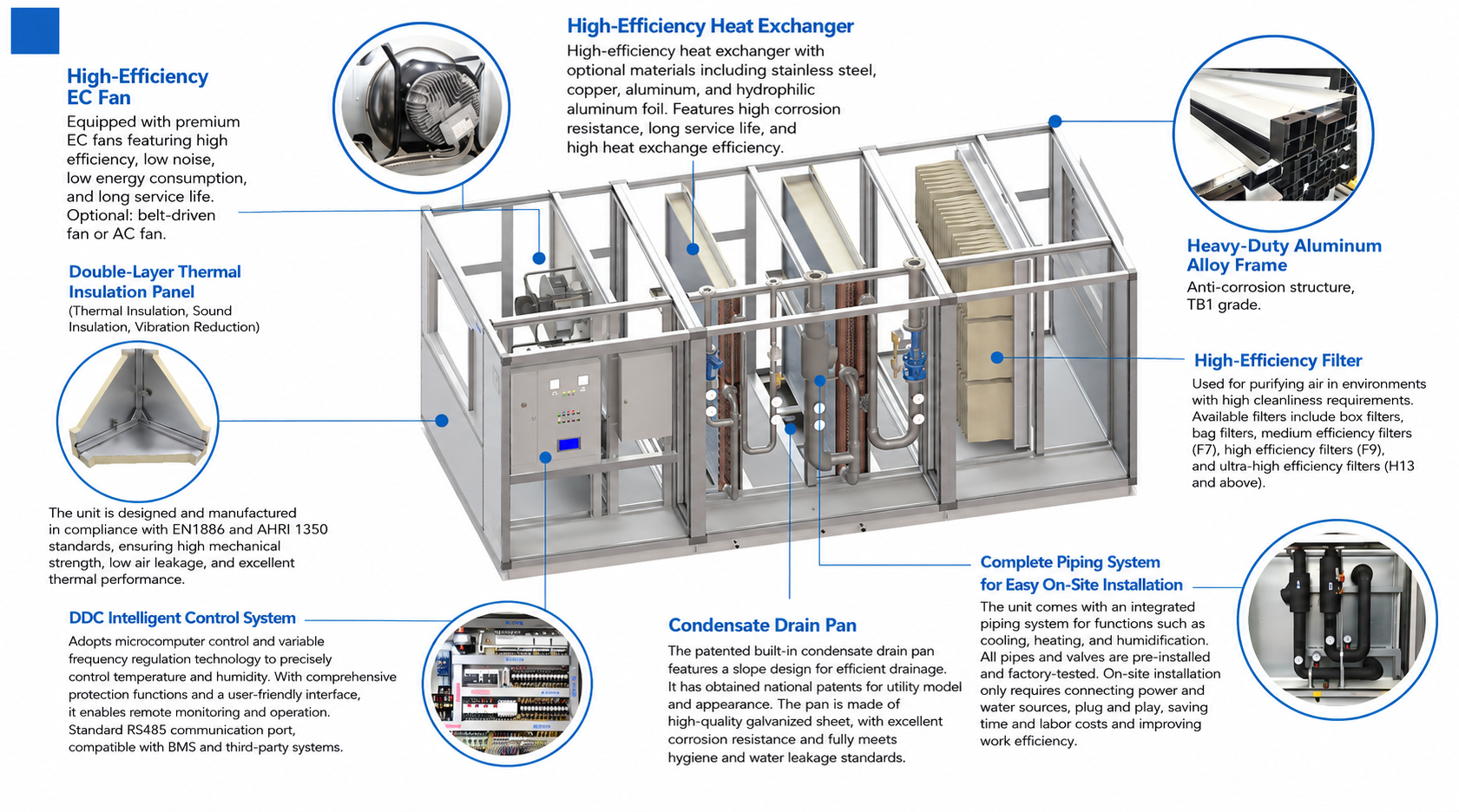
Decision Matrix — Which Configuration Fits Your Site
| Configuration | Best-Fit Constraint | Airflow Range | Cooling Method |
|---|---|---|---|
| Split DX (KAZKW/KASW) | No chilled-water plant on site | 1,500–200,000 m³/h | R410A DX |
| Chilled Water (KAW-JT) | Central plant exists; 24/7 continuous load | 1,500–200,000 m³/h | Chilled water, 4/6/8-row coil |
| Vertical Straight Blow (ZKL) | Minimal mechanical-room footprint | 2,000–20,000 m³/h | Chilled water |
| Vertical Long-range Jet (ZKL) | Open span, no ductwork budget | 2,000–20,000 m³/h | Chilled water |
| Vertical Ducted (ZKL) | Multi-zone duct distribution required | 2,000–20,000 m³/h | Chilled water |
Not sure which configuration fits your specific site?
Request a Configuration Recommendation →Custom-Engineered vs Off-the-Shelf AHUs — Why Specifying Engineers Go Custom
It’s a classic case of: you save on purchasing a stock unit compared to an engineered one but spend that money (and more) twice over if it isn’t sized correctly to begin with. A low-end system properly installed is almost always better than a high-end system that’s installed poorly – sizing is more important than sticker price.
Packaged Benchmark
≈ $5/cfm
Custom-Engineered
≈ $7/cfm
Install Base
≈ $5/cfm
Add approximately $5/cfm for installation for either – the cost premium for an engineered unit is well within reason to avoid the pitfalls of an incorrectly sized unit. That load calculation is how Koven Air’s process is designed. A stock unit with a catalog SKU can’t be changed once it leaves the factory: unlike a packaged AHU, which fixes cabinet size and coil count during production, an engineered unit is flexible; airflow, filtration, and coil rows can be changed as needed to match the room’s requirements.
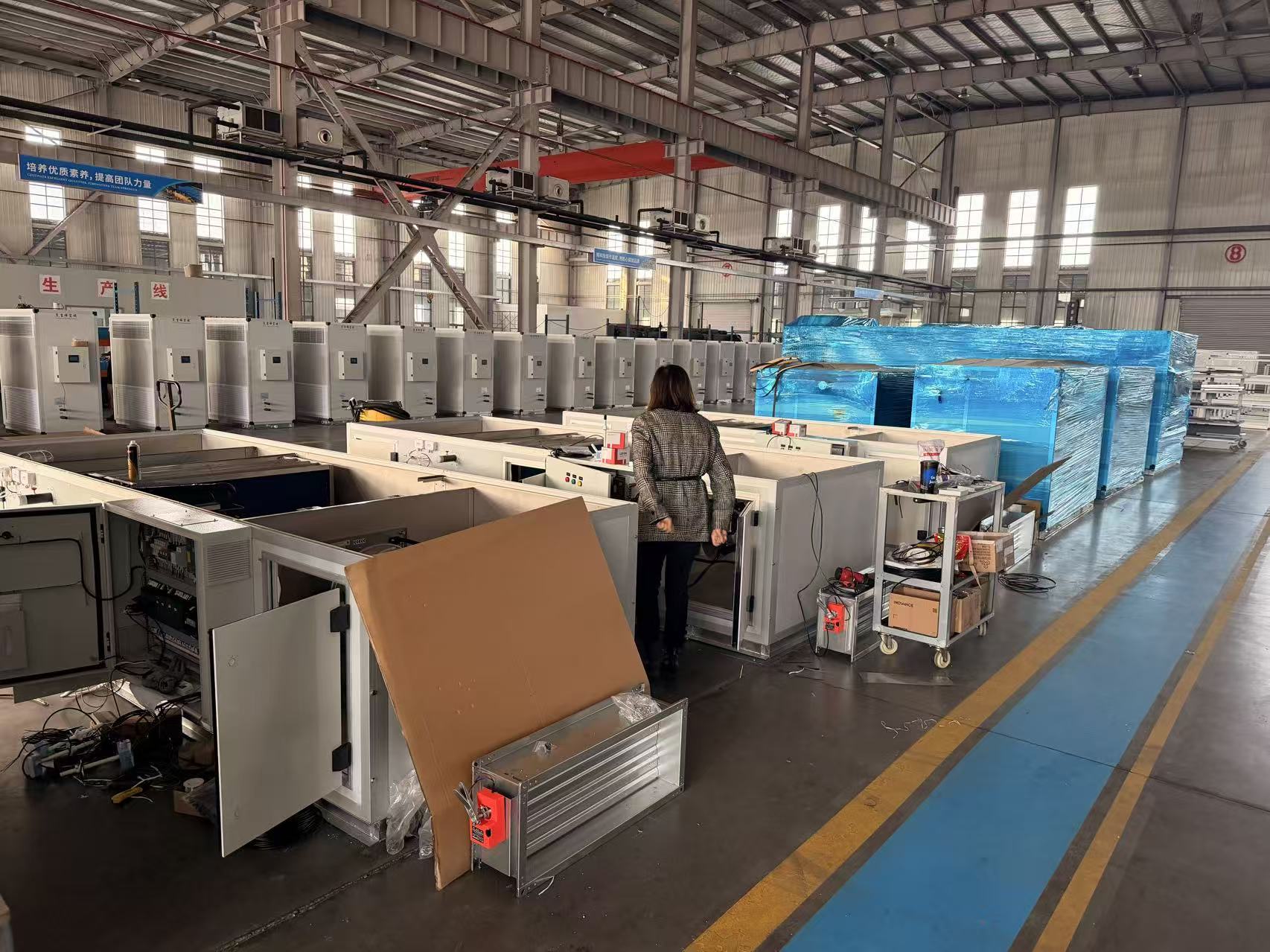
FLEXIBLE CABINET & COIL CONFIGURATION
Factor
Off-the-Shelf / Packaged AHU
Koven Air Custom-Engineered AHU
Capacity match
Fixed cabinet sizes — nearest catalog break point
Sized to your load calculation before quoting, not after
Configuration
Single fixed refrigerant/coil type per SKU
DX, chilled water, or configuration-specific (Full Fresh Air, Full Return) per application
Typical equipment cost*
≈ $5 / CFM (modular/packaged benchmark)
≈ $7 / CFM (custom-engineered benchmark)
Installation cost*
≈ $5 / CFM, largely independent of packaged vs. custom
≈ $5 / CFM, largely independent of packaged vs. custom
QC verification before ship
Manufacturer-dependent, not standardized
4-step process: appearance, control logic, performance, ≥72-hour aging test
*Source: Cost per CFM benchmark is an average figure taken from a ILAPPA/APPA facilities management presentation, Mechanical Sales Inc. This isn’t Koven Air’s price for their AHUs. Please request a custom quotation as your final cost will vary depending on coil rows, filtration stages, configuration and site conditions.*
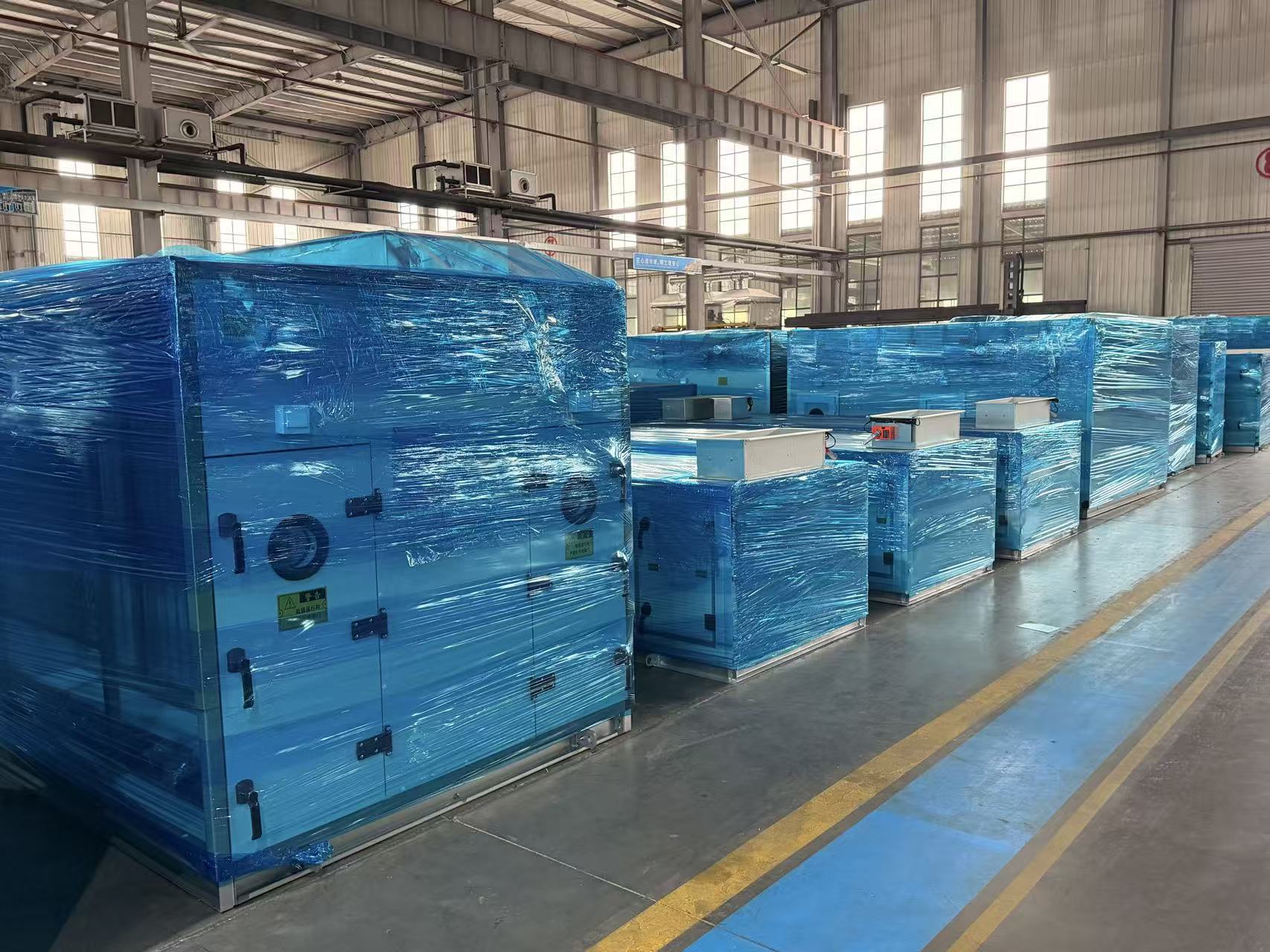
≥72-HOUR FACTORY AGING TEST
Certification status is a related but separate question buyers conflate with quality. As Systemair’s own AHU product-area director has put it publicly, being certified “doesn’t guarantee a high-quality AHU, it simply proves that the manufacturer’s catalogue data… are correct” — a certificate confirms the paperwork matches the test, not that the unit on your loading dock matches the paperwork. That’s precisely why our quality control process below exists: to ensure verification happens on your specific unit, at the factory, before it ships, not just once, on a sample, for the certificate.
Ready to see how a custom configuration compares for your load?
Request a Custom Comparison →Proven in the Field — Real Project Results
Four of Koven Air’s case studies are featured below; Each represents a different product line and a unique challenge where a customer needed our custom engineering solution.
01
Tesla Gigafactory
Tesla Shanghai Gigafactory · Shanghai, China · 860,000 m² · Commercial AHU
Hundreds of Units, Year-Round Duty, ±1°C Control
CHALLENGE
a plant footprint large enough to require hundreds of individual AHU units running cooling in summer and heating in winter, with power consumption and long-term durability under continuous duty as the binding design constraints.
KOVEN AIR’S APPROACH
whole-plant airflow was modeled with CFD simulation before installation to plan airflow paths that avoid localized heat buildup across the factory floor.
RESULTS
panel air-leakage rate at Class L1, a cold-bridge-free structural design rated at thermal-bridging Class TB1, temperature control accuracy of ±1°C, and measured energy performance 20% above a standard AHU on the same duty.
02
Hospital ORs
Hospital Operating Rooms · Indonesia · Heat Recovery AHU
Coastal Humidity, Mandatory Heat Recovery, Six-Month Commissioning
CHALLENGE
Two operating rooms (56 m² each) roughly 200 meters from the coastline meant year-round humidity above 80% and corrosive salt-laden air, and the client’s specification mandated a heat-recovery AHU only, on energy-saving grounds, ruling out a simpler design. Koven Air’s engineering team spent six months on system design and control-logic tuning before commissioning, given the complexity of the automatic air-conditioning control sequence required.
RESULTS
operating-room cleanliness grade achieved on handover; temperature held at 19–24°C and relative humidity at 50–60%; formaldehyde (HCHO), PM2.5, and CO₂ brought under automatic control; indoor positive/negative pressure control verified per OR zone.
03
Electronics Line
Electronics Factory · Ningbo, China · 25,000 m² · Make-up Air Unit
100% Fresh Air, No Electric or Steam Heating Allowed
CHALLENGE
A constant-temperature, constant-humidity electronics line running 100% outdoor air, 24/7, hit an unusual constraint: electric heating, direct hot-water heating, and heat-recovery heating were all disallowed on the client’s energy-efficiency policy, and the site couldn’t accommodate transport of large pre-assembled equipment. Koven Air’s solution was a modular design shipped in sections and field-assembled on site, with heating delivered through municipal steam via an internal plate heat exchanger.
RESULTS
heating method measured 50% more energy-efficient than the traditional heating approach it replaced; humidity held at a controlled 45%.
04
Manufacturing
Manufacturing Factory · China · 15,000 m² · Ceiling Mounted Air Handler
Long-Throw Delivery Across a Large-Span Plant Floor
CHALLENGE
A factory floor large enough that even airflow distribution required long-distance air delivery, with some zones (including a welding area) generating heat loads well above the plant average, and chilled-water piping running long distances to machinery, where a leak could damage production equipment. Jet/induction airflow technology was specified for a maximum throw distance of 30 meters, cooling capacity was varied zone-by-zone (higher capacity over the welding area), and triple waterproofing treatment was applied across all units and piping.
RESULTS
three years of operation with zero piping leaks; uniform cold-air coverage verified across the entire plant floor.
20%
MORE ENERGY-EFFICIENT
than a standard AHU on the same duty — measured on the Tesla Shanghai Gigafactory installation (860,000 m², multi-unit, year-round operation)
Source: Koven Air project case file. Industry context: a DOE/ENERGY STAR-documented commercial cooling-system efficiency retrofit achieved a 15-month simple payback and $300,000/year in verified utility savings on a comparable-scale facility — see References. Exact payback for your project depends on baseline equipment, utility rate, and load profile; request a project-specific analysis.
Certifications & Manufacturing Quality — From Sheet Metal to a 72-Hour Aging Test
A certificate confirms that catalogue data matches a lab test – it does not, by itself, confirm that the specific unit shipped to your site matches the certificate. A sourcing consultant who has run QC inspections on overseas manufacturers put it plainly: buyers should ask “was their QMS well implemented? Are your products included in the scope of the certification?” rather than treating a certification logo as the end of due diligence. Koven Air holds ISO 9001, ISO 14001, CE, and DIN 1946, and backs them with a per-unit factory QC process rather than sample-only certification testing.
ISO 9001
Quality Management
ISO 14001
Environmental Management
CE
EU Conformity
DIN 1946
Ventilation & AC Systems
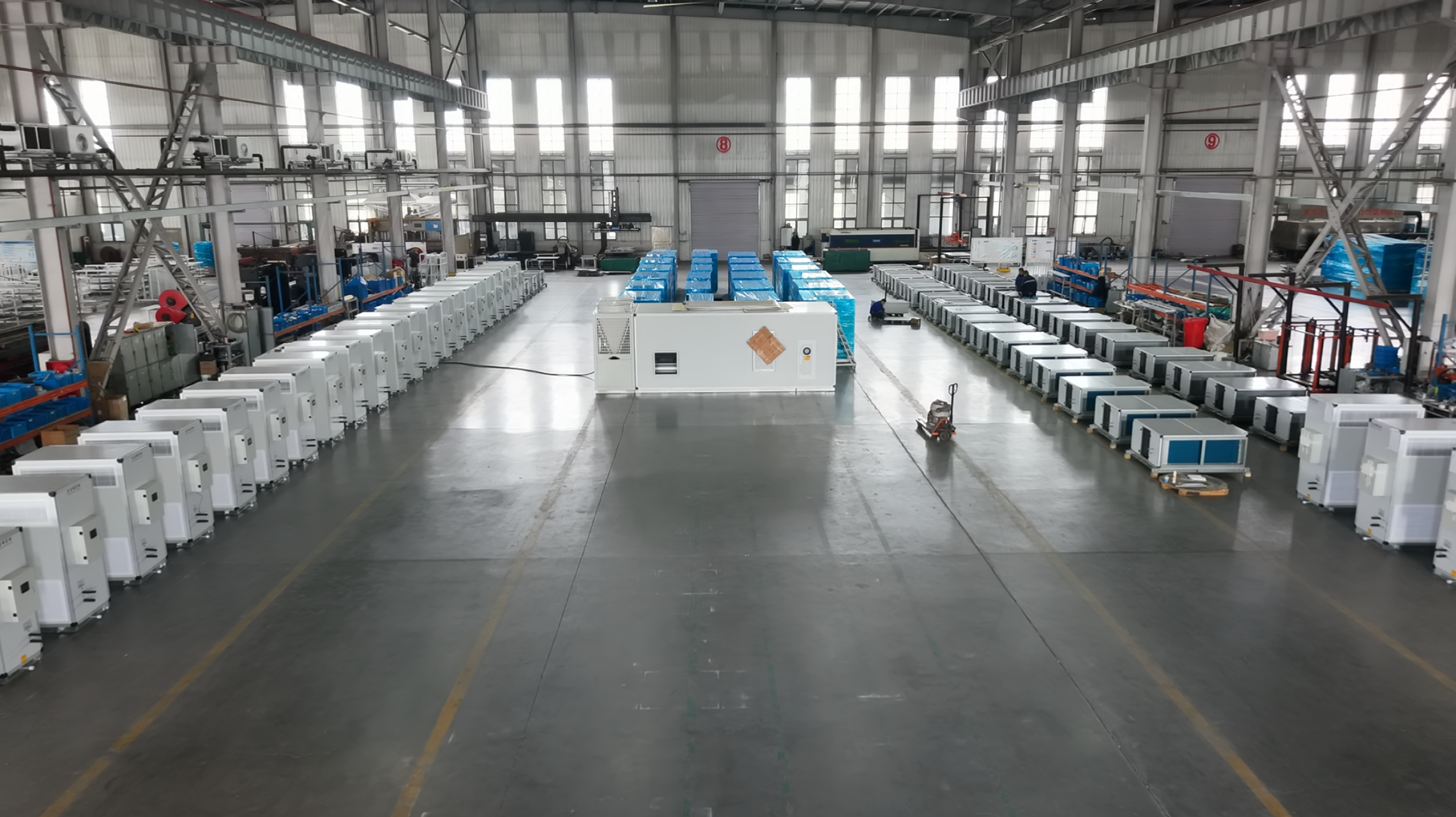
Four-Step Factory QC, Per Unit
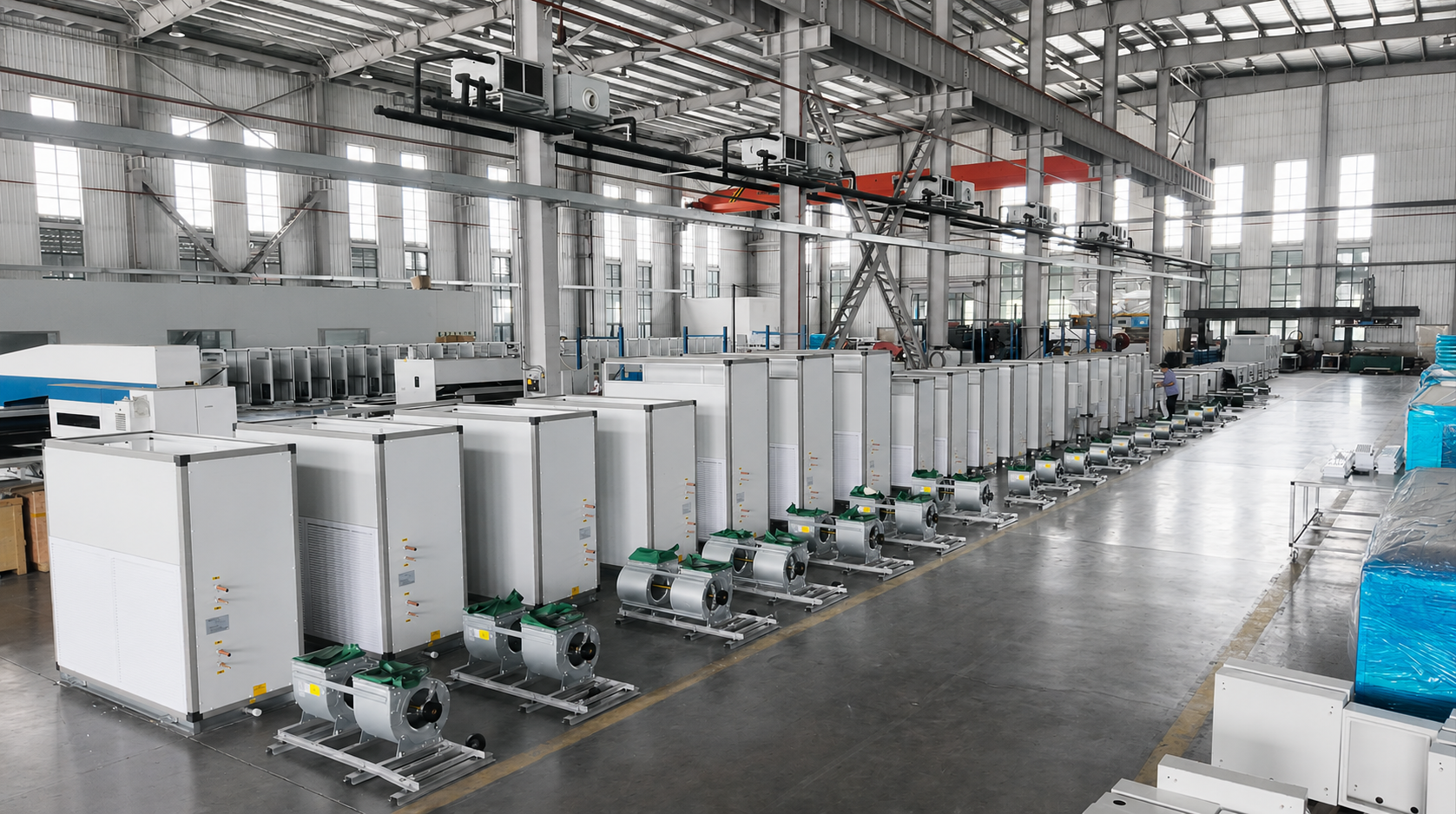
Every commercial AHU that leaves Koven Air’s 20,000m² factory goes through four mandatory inspection steps before packaging – not a spot-check sample, every unit, with results recorded and archived:
-
StepWhat’s CheckedAcceptance Criteria
-
1. Appearance InspectionSheet-metal scratches, deformation, weld-seam quality, seal installationNo visible defects; scratch depth <0.2mm; weld seams flat, free of porosity or cracks
-
2. Control Logic TestControl-board power-on self-check, sensor signal acquisition, relay/contactor operation, protection-function triggerAll protection logic triggers correctly; sensor accuracy within ±1%
-
3. Performance TestRated cooling/heating performance, COP/EER measurement, noise & vibrationCOP/EER not below 95% of design value; noise ≤ rated value +3 dB(A)
-
4. Aging TestContinuous full-load run, multiple start-stop cycles, parameter stability≥72 hours continuous operation, fault-free; parameter fluctuation within ±3%
Sourcing Your Commercial AHU — Pricing, Lead Time & Support
Buyers evaluating an overseas AHU manufacturer for the first time are, reasonably, more skeptical than buyers reordering from a known supplier – a widely circulated buyer account described concluding it was “impossible to buy high quality and performance verified air conditioners from a factory out of China” after certificates didn’t match delivered specs on repeat orders. That skepticism is earned by real bad actors in the market, and the honest response isn’t to argue it away – it’s to make verification easy before you commit. As sourcing consultant Renaud Anjoran has written, “a trading company often poses as a manufacturer, but they might just be customer number 47 for the real factory” – Koven Air designs and builds every commercial AHU in its own 20,000m² factory, not through a trading-company intermediary.
How to Vet Koven Air (or Any Overseas AHU Manufacturer) Before Ordering
“It’s not about the manufacturer, it’s about the support. Who are the good local vendors in your area and do they back up the product they sell?” is a legitimate question for any AHU supplier to be asked, us included.
Ask for the certificate scope, not just the certificate; ask what product lines and factory site the ISO 9001/CE registration actually applies to; ask for the QC inspection record format prior to placing an order, not after a dispute; take the opportunity to conduct a factory visit or third-party audit if feasible, if not, ask for a video walk-through of the aging-test bay. If your vendor is overseas and your visit team doesn’t speak the local language, arrange a translator in advance so no misunderstanding about certificate scope and QC terms occurs. For a first order, keep certification-verified specs and QC records in the purchase agreement itself, not just the sales brochure.
How Sourcing Works: Pre-Sales, In-Sales, After-Sales
Pre-Sales
Our engineering department first validates your project design parameters and conducts an independent engineering calculation check prior to proposing a configuration, eliminating the possibility of undersized unit failure, before change orders.
In-Sales
Production and testing are performed prior to shipment, utilizing the four-step QC process outlined above. Subsequently, our technicians provide on-site installation and commissioning guidance, making field-specific modifications instead of presuming field drawings correlate exactly with drawings.
Post-Sales
we provide free lifetime technical guidance service, resolve any warranty period issues promptly, and offer periodic training to engineers, contractors and site staff responsible for long-term equipment maintenance and operation.
Air Handling Unit Price, What Actually Drives the Number
“This is a very lean business venture and my margins are already tight” often precedes price questions from smaller commercial buyers, and that’s precisely why any number guesswork is detrimental. Commercial air handling units price according to their configuration, and anyone giving a per-unit number without knowing your cooling loads is guessing. Where a standard, pre-packaged/modular unit built to a specific airflow range is predictably priced, custom-engineered DX air handling units with unusual filtration requirements aren’t. Here are some of the variables that directly affect your quotation:
- Configuration complexity (split DX vs. chilled water vs. heat-recovery impact equipment cost and trade skills required for installation).
- Airflow capacity band (your requirements fall into the 1,500–200,000 m³/h commercial range).
- Filtration level and certification (from G4 pre-filter through F7-F9 and HEPA for hospital/cleanroom requirements).
- Customization extent (casing material [standard vs. corrosion resistant], coil rows, integration with existing BMS, etc.).
[Contact us for a quote specific to your configuration and delivery schedule].
Not ready for a full RFQ yet?
Download AHU Configuration Comparison GuideEngineering & Sizing Tools
Preliminary calculators for airflow, unit configuration, and lifecycle cost analysis.
Airflow Estimator
Calculate baseline airflow requirements (m³/h or CFM) based on room volume and target air change rates.
Configuration Selector
Filter DX, CW, and Heat Recovery configurations against your site’s spatial and thermal constraints.
Custom vs. Packaged Estimator
Analyze upfront capital expenditure versus long-term operational savings for custom-built vs. off-the-shelf equipment.

![Vertical Fan Coil Unit: Design & Maintenance [Guide]](https://kovenair.com/wp-content/uploads/2026/09/vertical-fan-coil-unit-guide-featured-1-150x150.png)