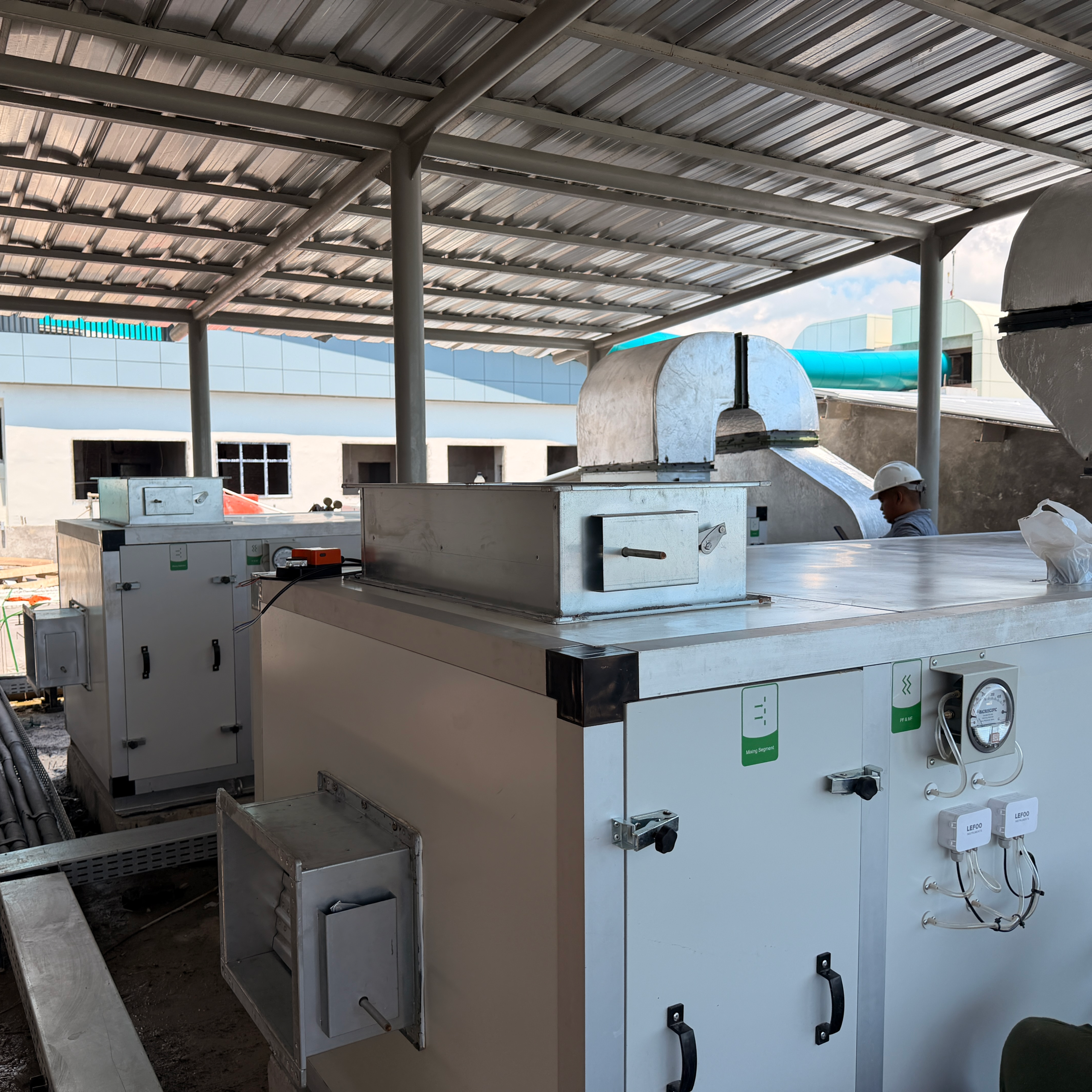
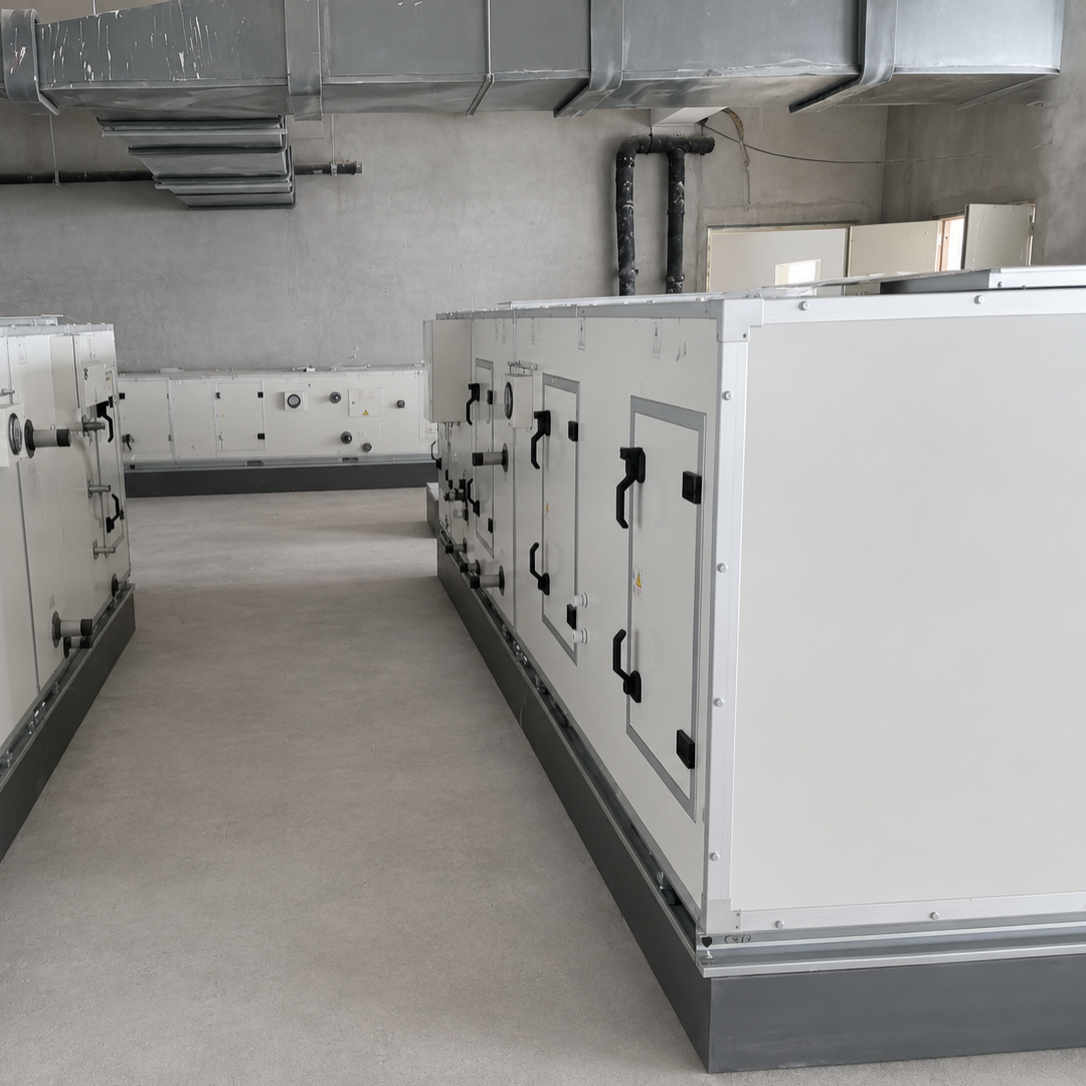
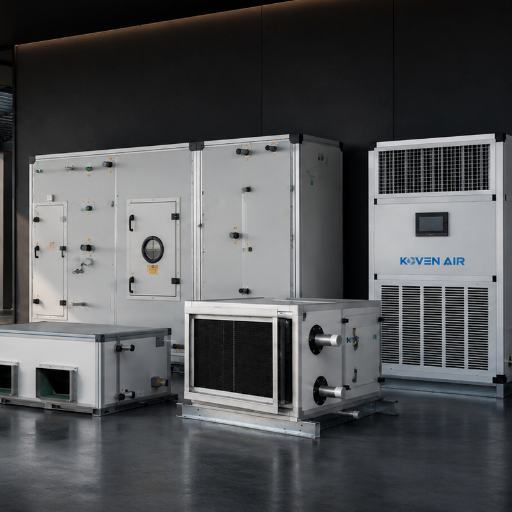
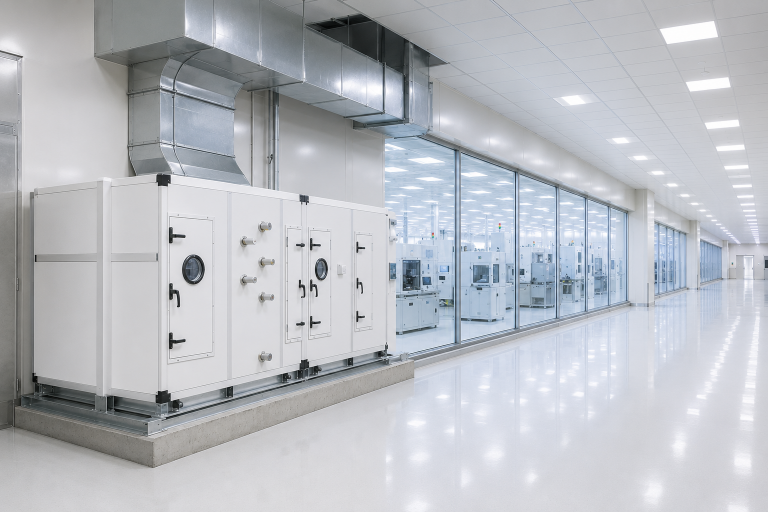
Make-Up Air Unit (MAU) for Cleanroom & Purification Facilities
Custom 100% fresh-air make-up air units for semiconductor, electronics, lithium battery, biopharma, food, hospital and other controlled-environment projects. Koven Air configures large-capacity MAU systems with fresh-air, pre-cooling, cooling, heating, humidification, filtration and fan sections to match your process requirements.
Cleanroom Fresh-Air Load, Temperature and Pressure Control
In purification projects, a make-up air unit does more than replace exhausted air. It delivers 100% conditioned fresh air while helping maintain room pressure, temperature, humidity and cleanliness for processes that cannot rely on simple recirculation.
Outdoor air is a large thermal and moisture load. If it enters a cleanroom, electronics plant or pharmaceutical area without engineered conditioning, it can disturb temperature, humidity, pressure cascade and particulate control. That instability shows up as process risk, condensation risk and higher load on downstream equipment.
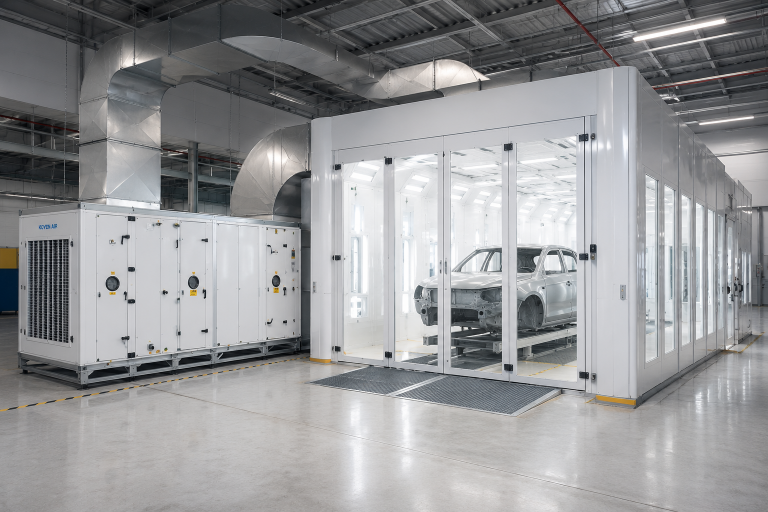
Koven Air MAUs are configured as AHU-based 100% fresh-air systems. Fresh air enters through dedicated sections, is cooled, heated, humidified, filtered and supplied by a selected fan system according to the room requirement. Each unit is built around project airflow, cooling load, humidity target, static pressure and control logic instead of a stock catalog model.
Koven Air MAU — Functional Sections, Configurations & Specifications
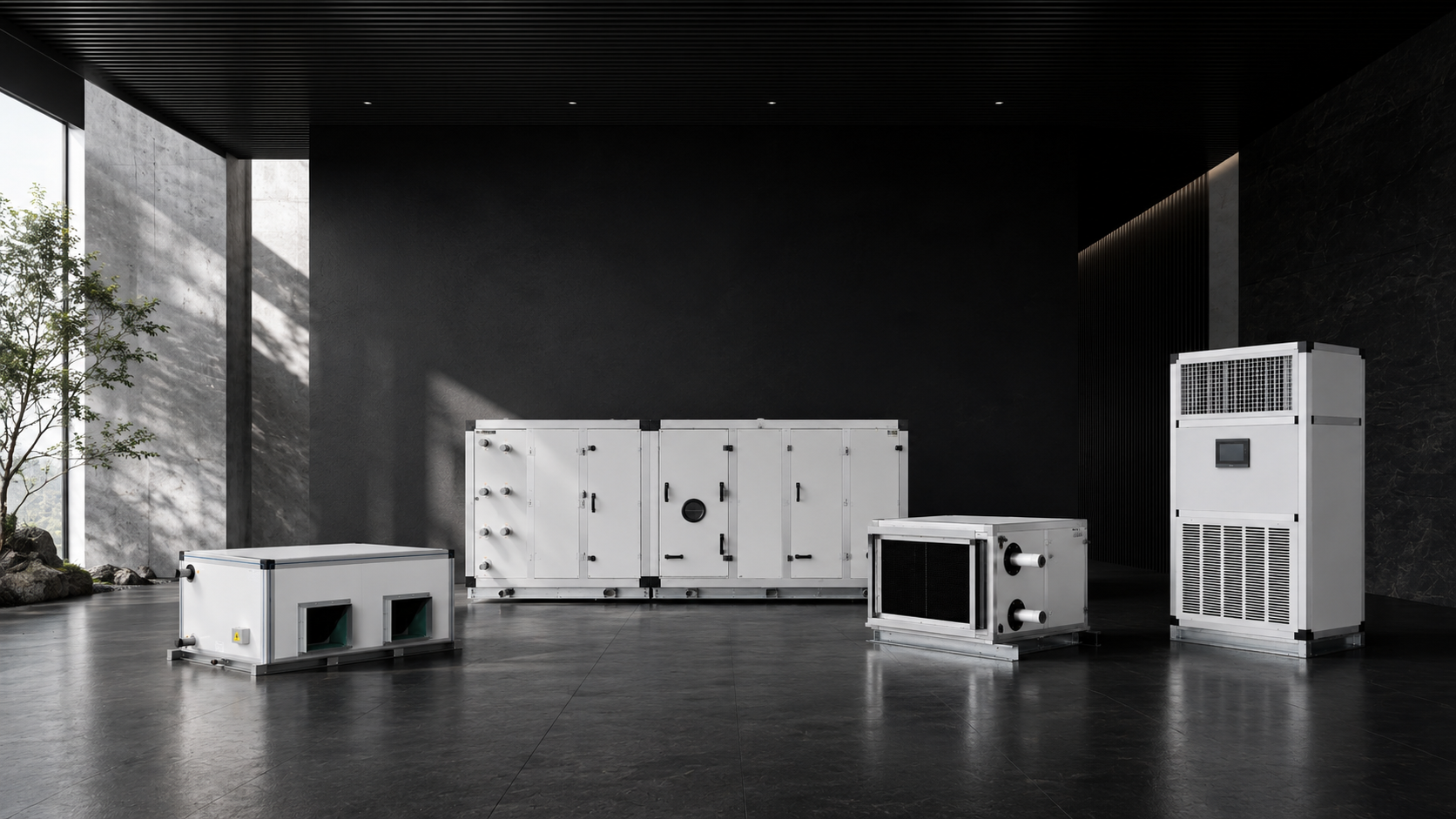
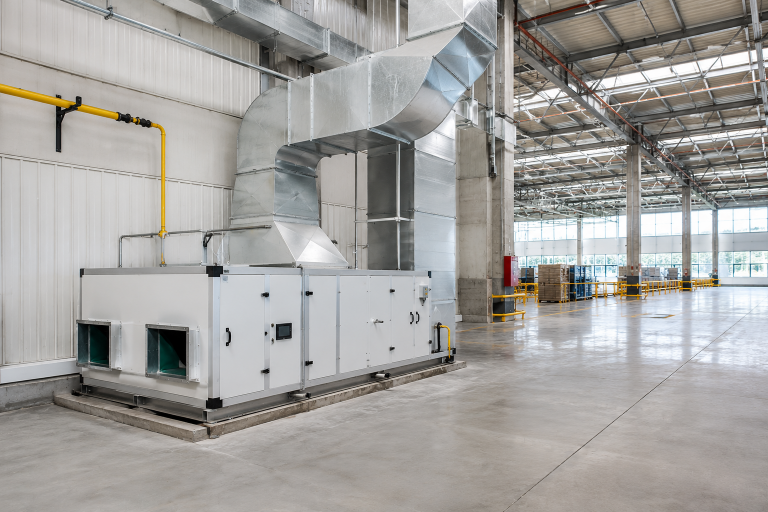
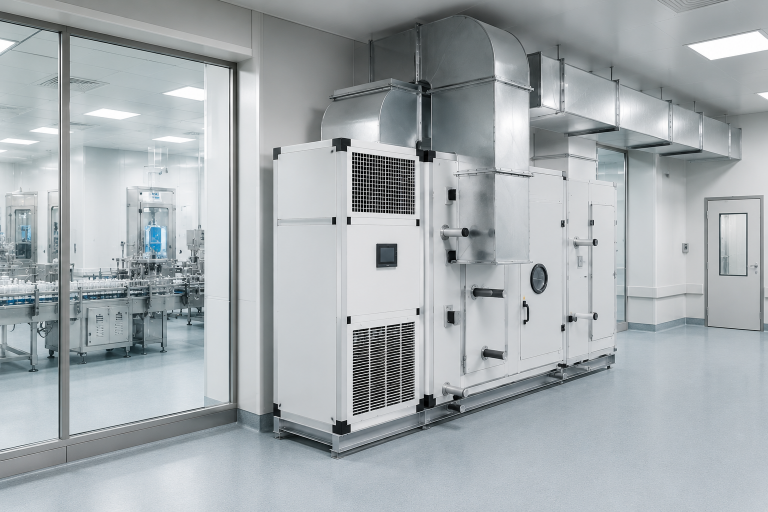
Koven Air MAUs are AHU-based 100% fresh-air systems for purification facilities. The unit is built from functional sections such as fresh-air intake, pre-cooling, cooling, heating, humidification, filtration, fan and controls, then sized to the project airflow, cooling load and cleanliness requirements.
Typical MAU functional sections Koven Air configures. Final capacity and coil data are set per project calculation.
Function section
Configuration range
Main purpose
Typical options
Best-fit use
Fresh-air section
100% outdoor air
Brings outside air into a controlled process system
Intake, damper and initial filtration options
Cleanroom and purification fresh-air supply
Pre-cooling section
Project-specific coil
Reduces peak outdoor-air load before final conditioning
Chilled water or DX pre-cooling
Hot-humid climates and high fresh-air load projects
Cooling section
DX or chilled water
Controls supply-air temperature and moisture removal
Cooling coils, dehumidification and drain design
Semiconductor, electronics, biopharma and food clean areas
Heating section
Electric or steam
Stabilizes supply temperature after cooling or dehumidification
Electric heating or steam coil
Winter operation and humidity-control projects
Humidification, filtration, fan & controls
Custom modules
Maintains humidity, cleanliness, airflow and control response
Humidifier, filters, fan section and BMS interface
Hospitals, lithium battery plants and controlled environments
Selection guidance by purification facility type — final configuration depends on room class, load and process data.
Facility
Typical airflow
Pressure target
Recommended config
Semiconductor cleanroom
Large 100% fresh-air load
Temperature, humidity and positive pressure stability
Cooling/dehumidification + filtration + fan control
Biopharma / hospital clean area
Per clean-area pressure cascade
Cleanliness, hygiene and pressure control
Fresh air + filtration + humidification + controlled cooling/heating
Food processing clean area
Fresh-air volume set by hygiene and process load
Condensation, odor and contamination control
Cooling + filtration + humidity control
Standard Construction
Typical MAU construction is organized as functional sections: fresh-air intake, pre-cooling, cooling coil, electric or steam heating, humidification, filtration, fan and control sections. Cabinet material, insulation, filters, coils, fan type, static pressure and BMS communication are configured to project drawings and RFQ details.
MAU vs AHU vs RTU — Choosing the Right System for Cleanroom Projects
For Koven Air, a MAU is not a packaged heater. It is a 100% fresh-air air-handling system built for purification projects where outdoor air must be cooled, heated, humidified, filtered and delivered under controlled pressure. The closest comparison is not a simple ventilation unit, but the relationship between MAU, AHU and RTU in cleanroom engineering.
Cleanroom Air-System Selector
Factor
Cleanroom MAU
General AHU
RTU
Air source
100% fresh air
Fresh air + return air, depending on design
Packaged rooftop airflow with limited fresh-air ratio
System role
Process fresh air, pressure, temperature and humidity control
General building air handling and mixed-air conditioning
Compact rooftop heating/cooling for smaller projects
Typical scale
Large-capacity project-specific system, up to 350,000 m³/h
Project-specific system with fresh/return-air flexibility
Smaller packaged commercial or industrial unit
Functional complexity
Multiple functional sections and project-specific controls
Flexible section design for many HVAC applications
Integrated package with simpler section configuration
Best for
Semiconductor, electronics, lithium battery, biopharma, food and hospital clean areas
In cleanroom and purification projects, the MAU is normally treated as a specialized AHU that runs on 100% fresh air. RTU equipment can be suitable for smaller commercial or light industrial projects, but it is usually less complex than a large MAU with pre-cooling, cooling, heating, humidification, filtration and fan sections. Koven Air helps define the correct system from room use, fresh-air demand, cooling load, humidity target and control requirements.
Need to confirm whether your project needs MAU, AHU or RTU?
A cleanroom MAU is selected from process requirements, not from a single catalog airflow value. The right unit must deliver the required 100% fresh-air volume while controlling supply temperature, moisture removal, humidification, filtration pressure drop and fan static pressure.
“We size MAU systems from fresh-air volume, cooling and dehumidification load, room pressure and functional-section requirements, not from a generic catalog model.”
— Koven Air Application Engineering Team
The cleanroom MAU sizing logic
Selection starts with required fresh-air volume, outdoor design condition, target supply-air temperature and humidity, room pressure cascade, filtration level, coil type, heating method, humidification demand, duct static pressure and control interface. These inputs determine the section sequence and the final MAU size.
Selection reference — core inputs for a purification MAU.
Selection input
What it controls
Typical project question
Fresh-air volume
m³/h or CFM equivalent
How much 100% outdoor air must the clean area receive?
Cooling and dehumidification load
DX or chilled water
What outdoor condition and supply-air state must the MAU handle?
Heating, humidification and static pressure
Electric / steam / fan ESP
Which functional sections and fan pressure are required?
External static pressure remains central because filters, coils, humidifiers, dampers and ductwork all add resistance. Koven Air selects the supply fan and motor against the actual section pressure drop and duct static pressure so the designed airflow can be delivered after installation.
Built for Demanding Facilities: Applications & Outcomes
Koven Air MAUs are built for controlled environments where fresh air must be conditioned before it reaches the process. Typical projects include semiconductor, electronics, lithium battery, biopharma, food and hospital clean areas.
Semiconductor cleanrooms
Semiconductor facilities require stable fresh-air temperature, humidity and pressure so process rooms remain protected from outdoor contamination. MAU sections are configured around the project’s air volume, coil load, filtration level and control sequence.
Electronics factories
Electronics workshops need reliable fresh air with controlled temperature and humidity to protect assembly quality and sensitive components. Koven Air configures cooling, heating, humidification, filtration and fan sections to match each production zone.
Lithium battery plants
Lithium battery production areas often require carefully controlled humidity, air volume and pressure zoning. MAU configuration can combine cooling, dehumidification support, heating, filtration and BMS control according to the plant process requirement.
Biopharma, food & hospitals
Biopharma, food and hospital clean areas need fresh air that supports hygiene, pressure cascade, temperature and humidity requirements. MAU design focuses on controlled conditioning and filtration rather than simple space ventilation.
Koven Air's factory environment-control experience, including lithium-battery, electronics, food and other controlled-environment projects, informs how each MAU is specified - with the same discipline applied in our own 20,000 Sq. Meter + manufacturing facility.
Project Documentation, Quality Control & Delivery Support
When a custom MAU is specified for a cleanroom or purification project, the success depends on clear technical documentation, traceable manufacturing and responsive delivery support. Koven Air prepares project data around airflow, cooling, heating, humidity, filtration, static pressure and controls.
Project Drawings
Dimensional and functional-section layout
Airflow & Coil Data
Fan, coil and capacity schedules
Filtration Plan
Filter grade and pressure-drop details
Controls & BMS
Control logic and interface points
Factory Inspection
Per-unit inspection before shipment
Commissioning Support
Installation and start-up guidance
Because these MAUs are configured for purification projects, the documentation package should match the controlled environment: fresh-air volume, cooling source, heating method, humidification, filtration, static pressure, electrical supply, control points and delivery constraints.
Koven Air backs project documentation with factory discipline: standard production processes, per-unit traceability, inspection records and operation testing before shipment.
Need drawings and technical data for your MAU project?
Buyers of custom cleanroom MAUs are worried about more than purchase price. A unit must fit the process load, fit the building layout, arrive on schedule and be supportable during installation. Koven Air quotes around the actual engineering scope instead of a generic model number.
Specification risk — where the project actually succeeds or fails
For a purification MAU, the real risk is not only unit price. Incorrect airflow, coil load, humidity control, filter pressure drop or fan static pressure can create commissioning delays and process instability. Correct specification keeps the system aligned with the room requirement from the beginning.
What drives your quotation
Beyond a headline price, these factors drive MAU scope, cabinet size and quotation:
Pricing factors — how each dimension moves the quotation.
Factor
Effect on cost
Airflow & static pressure
Higher m³/h and pressure drop require larger fan, motor and cabinet selection
Cooling, heating & humidity control
DX, chilled water, dehumidification, electric/steam heating and humidification define coil and control scope
Functional sections
More sections increase cabinet length, controls and layout coordination
Filtration & pressure drop
Higher filtration level changes fan selection, maintenance access and pressure-drop allowance
Controls & BMS integration
Control logic, sensors and building-management integration add engineering scope
Engineering, delivery & support
Koven Air supports the MAU project through three stages: pre-sales specification, delivery coordination and after-sales support. During delivery and commissioning, the team helps align the supplied unit with actual site conditions, installation sequence and control requirements.
Pre-sales Airflow, load and functional-section specification
During delivery Delivery coordination and commissioning guidance
After-sales After-sales support for installed projects
What is the difference between a cleanroom MAU and an AHU?
A make-up air unit is a specialized AHU configuration for 100% fresh air. A general AHU may mix fresh air and return air, while a cleanroom MAU is selected to condition outdoor air before it enters controlled rooms.
Does this MAU include burner heating?
No. This MAU page is for non-fired 100% fresh-air cleanroom systems. When heating is required, the heating section can be configured with electric heating or steam heating according to the project.
Which industries use this type of make-up air unit?
Typical applications include semiconductor cleanrooms, electronics factories, lithium battery plants, biopharma facilities, food processing clean areas and hospital controlled environments.
What information is needed to size a cleanroom MAU?
Key inputs include fresh-air volume, outdoor design condition, supply temperature and humidity target, cooling load, heating and humidification demand, filtration level, external static pressure, electrical supply and BMS requirements.
How is a MAU different from an RTU?
An RTU is usually a packaged rooftop unit for smaller commercial or light industrial projects. A cleanroom MAU is a larger AHU-based system with multiple functional sections for 100% fresh-air conditioning and controlled-environment requirements.
How large can Koven Air configure the MAU airflow?
Koven Air can configure large-capacity MAU systems up to 350,000 m³/h. Final airflow, cooling capacity and section sequence are confirmed from the project drawings and load calculation.