Get in Touch with Koven Air Company

Updated July 2026 | reviewed by Koven Air Environment Technology Co.,Ltd technical team.
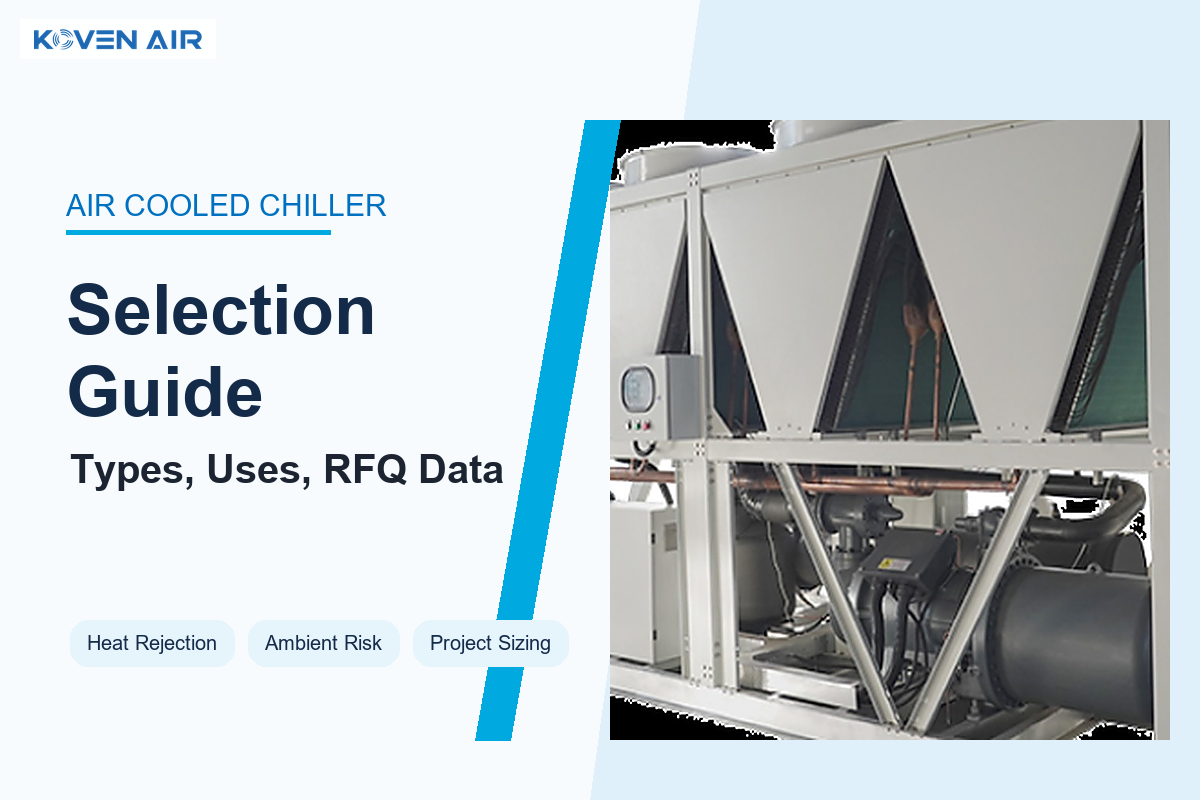
An air cooled chiller is a vapor-compression chiller system that extracts heat from chilled water, glycol, or another process fluid and rejects that heat to ambient air through a condenser coil and fans. It’s often selected when a cooling tower, condenser-water loop, water treatment project, or makeup water source would place too much burden on the project.
Quick Specs Before You Read
- Heat rejection path: ambient air, not cooling-tower water.
- Main loop: evaporator, compressor, air-cooled condenser, expansion valve, refrigerant circuit, and chilled water or glycol circuit.
- Best application guide: learning the selection logic before giving project sizing.
- Koven Air product context: screw and scroll air-cooled industrial chiller options are handled on the existing solution page, not repeated here.
Engineering Note: Numbers That Belong in the Evidence File
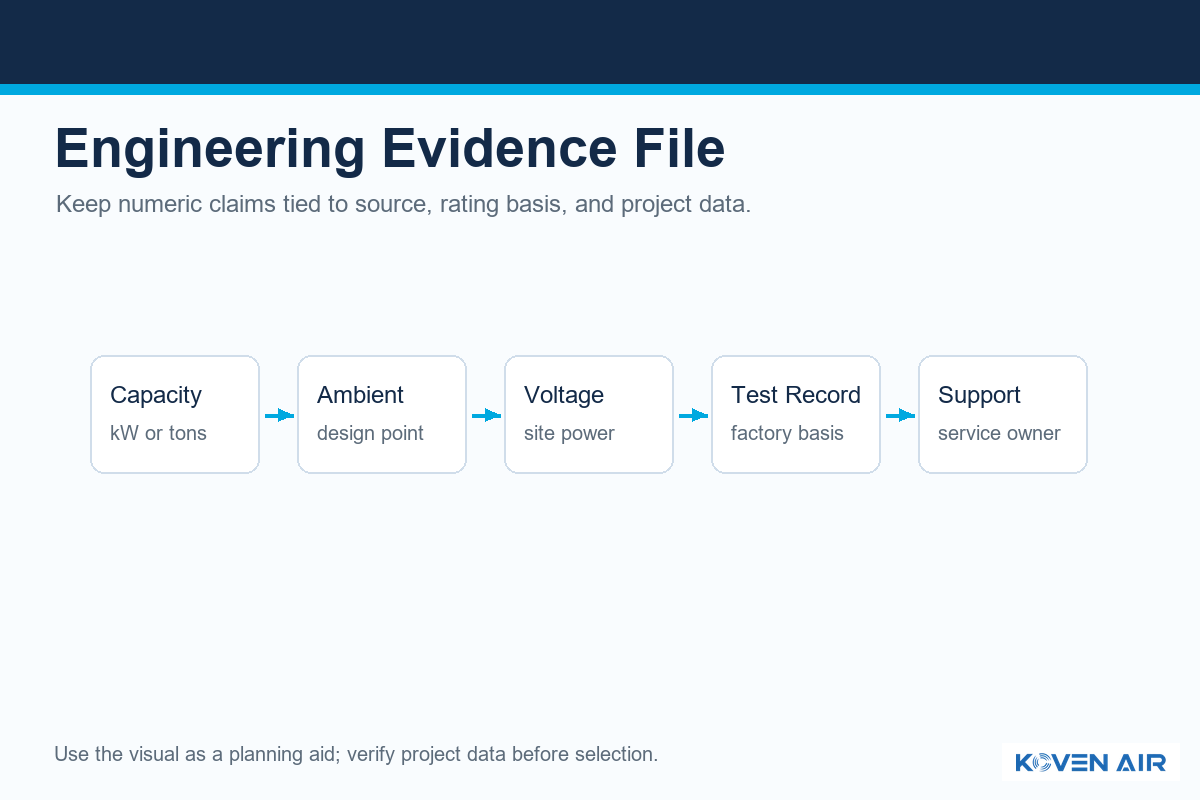
DOE/FEMP uses a 175 tons air-cooled chiller example, a 23 years lifetime basis, 358,974 kWh per year energy use for a high efficiency model, 383,072 kWh per year for a required efficiency model, and 432,990 kWh per year for a lower efficiency model. That reference also provides $74,491 and $110,451 lifetime savings examples for the same scenario.
FEMP’s air-cooled electric chiller calculator takes as input a 100 tons base model, 2,000 hours annually, EER 9, $0.09/kWh energy cost, and a 23 years assumed lifetime. These values are calculator assumptions, not an assurance for any given site.
Koven Air’s existing solution page lists screw air-cooled options at 224 kW to 2,660 kW for one R407C range and 388 kW to 1,366 kW for one R134A range, with 25% to 100% modulation stated for the screw platform. User-provided factory data also lists a 24 hours aging test, 36 factory inspections, 400 traceability records, 18 standardized processes, 23 sheet-metal operations, and voltage builds such as 380 V, 415 V, 460 V, and 575 V when configured for the project.
Engineering rule: name the risk before naming the unit, because an industrial buyer needs the application, factory precision record, and 24-hour test basis tied to the same duty file before a quote is trusted.
What Is an Air-Cooled Chiller?
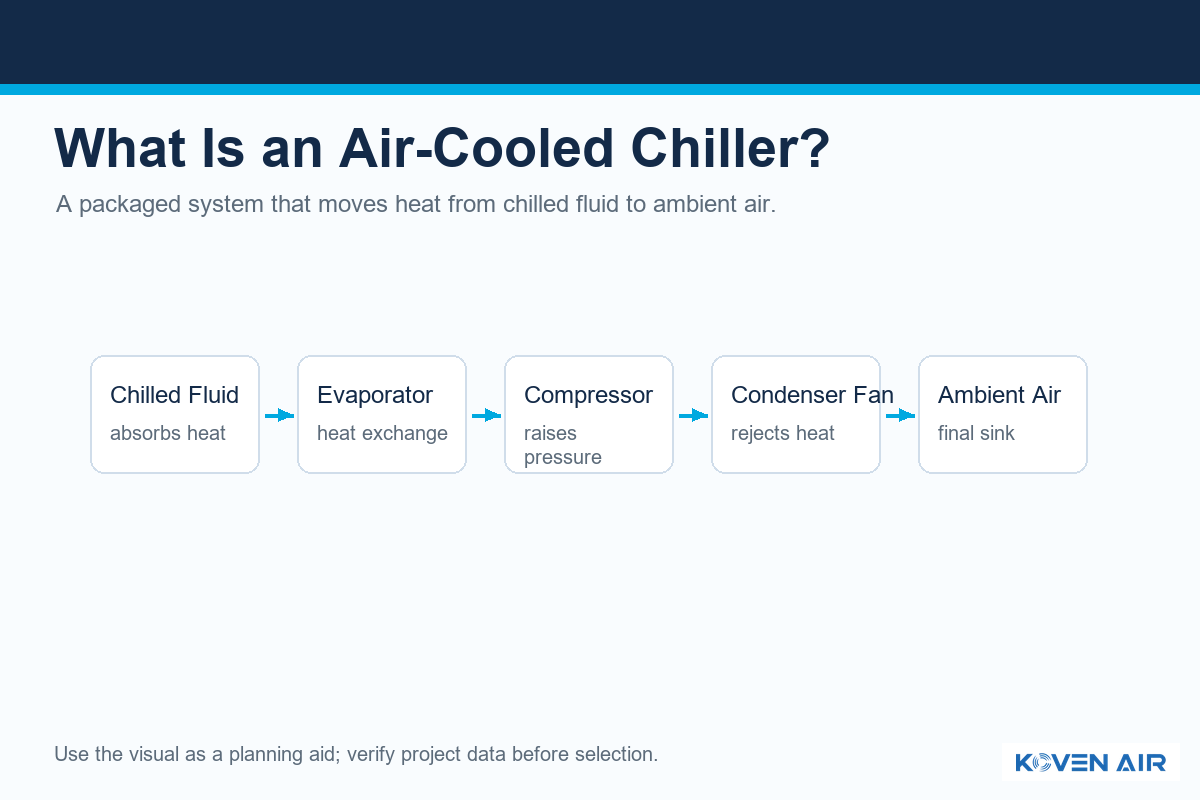
An air-cooled chiller is a packaged refrigeration system that absorbs heat from a process or HVAC system and rejects that heat outdoors through finned condenser coils. This term describes the condenser side of the refrigeration cycle. It continues to produce chilled water or chilled glycol to serve air handling units, process heat exchangers, machinery jackets, molds, battery production lines, electronics equipment, or computer rooms.
Project check: for an industrial buyer, the risk is treating the name as the design. A real application should be built around factory precision records, the 24-hour duty expectation, and the test data needed for the cooling load.
DOE/FEMP divides air-cooled and water-cooled electric chillers in its federal purchasing guidelines because the cooling medium, operating pattern and efficiency requirement are different. For a purchaser, this means the decision isn’t only “which chiller is efficient?” It’s “which heat rejection path is best for the site?”
How an Air-Cooled Chiller Works
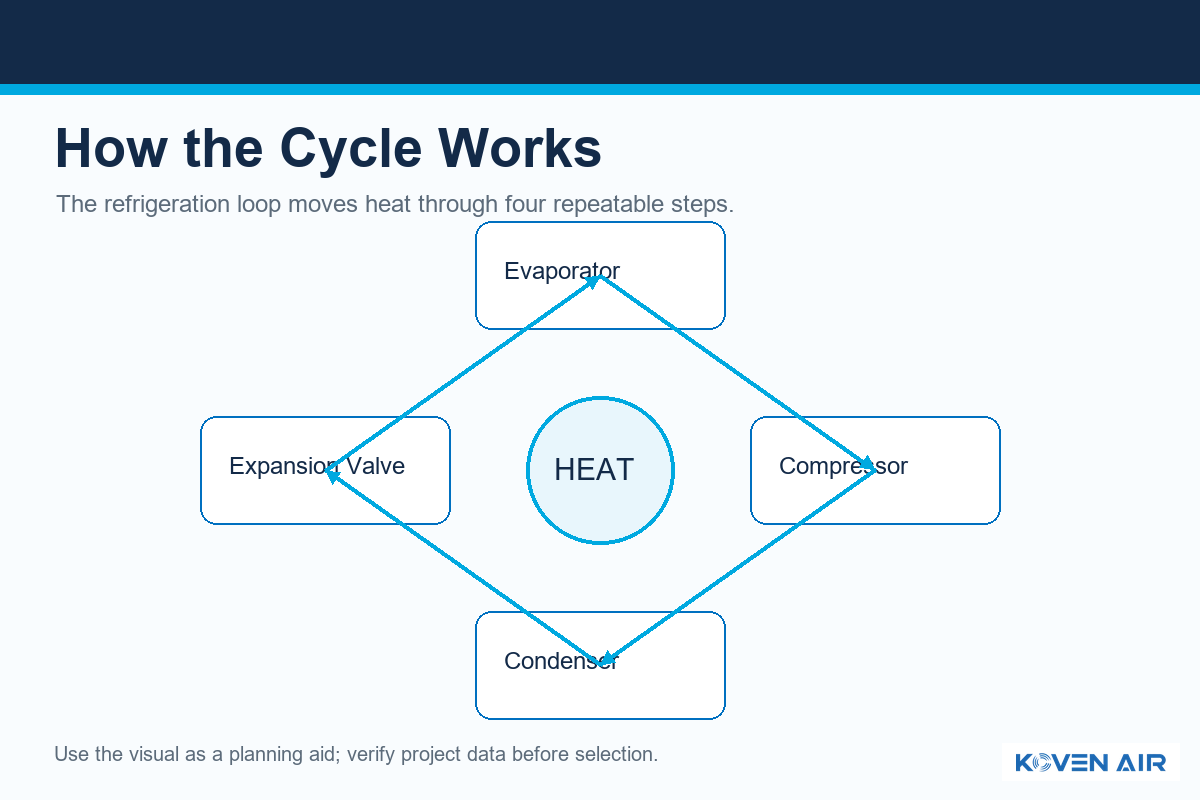
An air-cooled chiller does not create cold; it moves heat. Chilled water or another fluid absorbs process heat in the evaporator, then refrigerant carries that heat to the compressor, where pressure and temperature rise. Ambient air passes across the condenser coil so the refrigerant can reject heat. The expansion valve drops refrigerant pressure before the refrigeration cycle starts again.
Project check: production teams should treat flow, refrigerant, and ambient air as linked variables because the risk of a poor match increases under 24-hour operation, and factory test records need enough precision to confirm the working point.
Four-Step Process Strip
- Evaporator: chilled water or glycol gives up heat to the refrigerant.
- Compressor: refrigerant gas is compressed to a higher pressure and temperature.
- Condenser: the ambient air is driven by fans across the condenser coil to enable the refrigerant to shed excess heat.
- Expansion valve: pressure and temperature drop before the refrigerant returns to the evaporator.
Core Components and What Each Part Controls
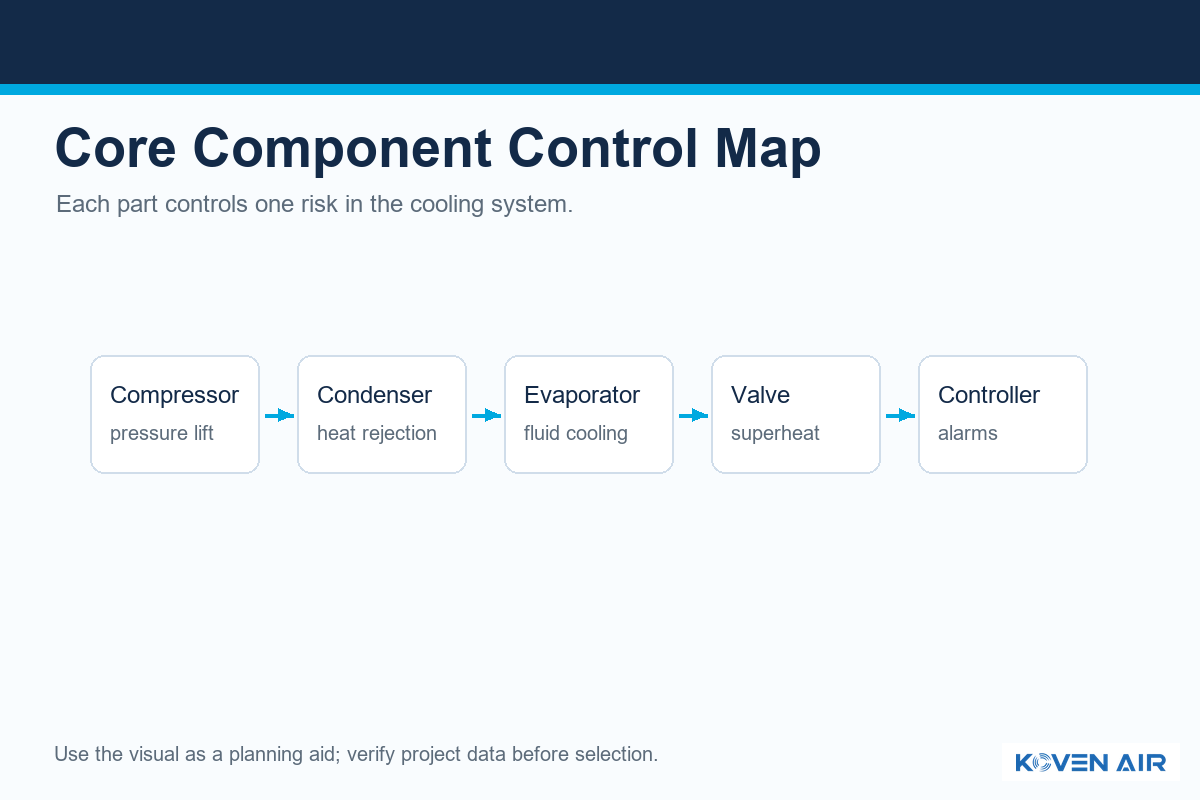
Most air-cooled industrial chiller machines use the basic component set outlined in these pages. Your specific compressor, heat exchanger, controls, refrigerant and safety package must be determined in conjunction with the cooling capacity, pressure and temperature range, the fluid type and the operating environment.
| Component | Function | Buyer checkpoint |
|---|---|---|
| Compressor | Raises refrigerant pressure and moves refrigerant gas through the circuit. | Match screw, scroll, or other compressor type to duty hours and load profile. |
| Air-cooled condenser coil | Rejects heat from refrigerant to ambient air. | Check design ambient, coil access, corrosion exposure, and clearance. |
| Condenser fans | Move ambient air across the coil. | Review sound limits, variable-speed control, and hot-air recirculation risk. |
| Evaporator or heat exchanger | Transfers heat from chilled water or process fluid to refrigerant. | Confirm flow rate, pressure drop, fouling risk, and fluid compatibility. |
| Expansion valve | Controls refrigerant flow into the evaporator. | Ask how part-load stability and superheat control are handled. |
| Controls and alarms | Track pressure, temperature, flow, compressor status, and safety trips. | Request alarm list, BMS communication details, and commissioning records. |
Air-Cooled vs Water-Cooled Chiller: The Cooling Tower Avoidance Tradeoff Box
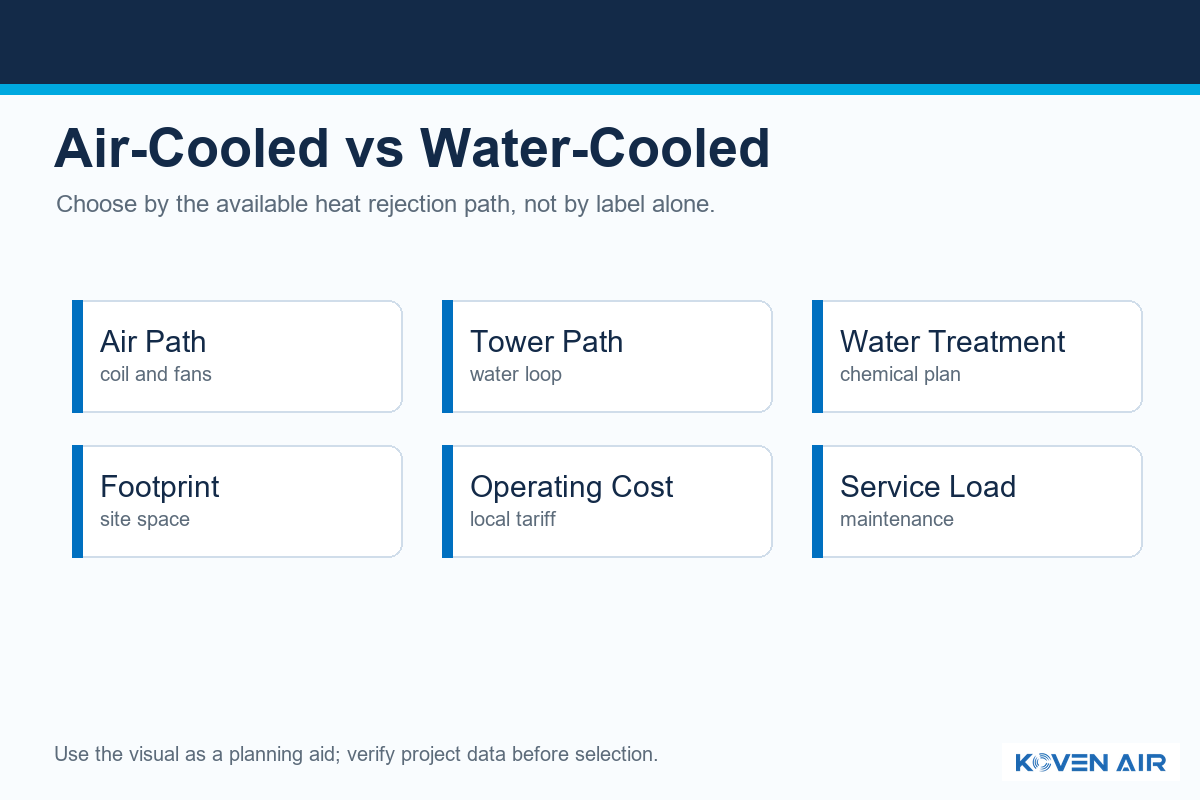
FEMP says, where the two choices are competitive at same capacity, water-cooled chillers can probably provide a greater level of equipment effectiveness. But it doesn’t close out all the projects. Air-cooled chillers eliminate the cooling tower, condenser-water pumps, tower basin, water treatment, blowdown, and a few water-quality tasks.
Water-cooled chillers are still in contention if site is blessed with high run hours, low water risk, and a plant team prepared to work water.
Project check: this tradeoff is not only a water question, because an industrial buyer may shift risk from tower maintenance to ambient heat rejection. Ask for factory precision data, the 24-hour operating assumption, and the application basis behind the comparison.
| Decision factor | Air-cooled chiller | Water-cooled chiller |
|---|---|---|
| Cooling tower | Not required. | Required for most condenser-water systems. |
| Water resources | Lower water-side burden. | Requires water, treatment, and water-quality control. |
| Energy efficiency | Usually lower equipment efficiency in equal-capacity comparisons. | Often higher equipment efficiency. |
| Ambient exposure | More sensitive to outdoor air temperature and airflow. | More dependent on tower and condenser-water condition. |
| Best fit | Sites where water, tower upkeep, footprint, or fast deployment matters. | Large plants where energy efficiency and water-side maintenance capacity justify tower infrastructure. |
6-Point Air-Cooled Chiller Fit Matrix
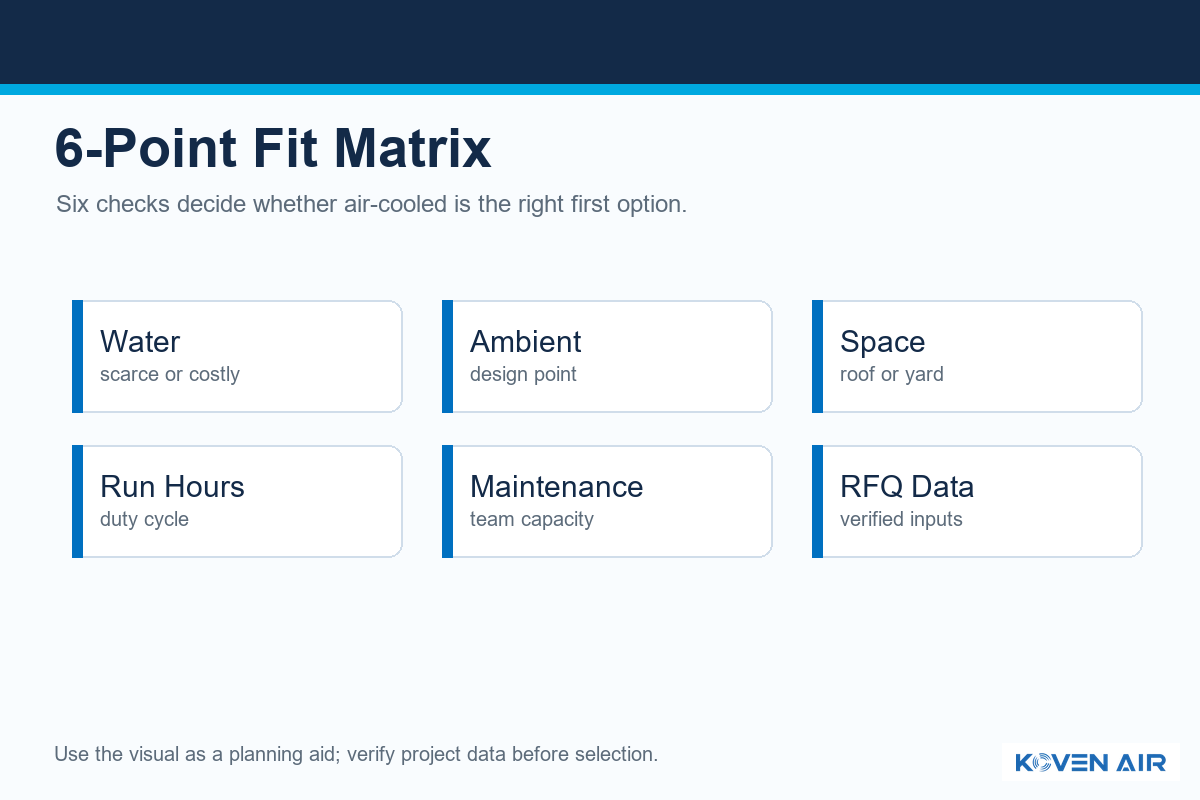
This fit matrix should be used as a screen, not as a substitute for the manufacturer’s size specifications. It provides plant managers, engineers, finance teams and purchasing teams with better questions to consider prior to the quote phase.
Project check: a fit matrix reduces the risk of a wrong early shortlist because each application can be checked against factory data, precision limits, and the 24-hour duty profile before the RFQ becomes a purchase order.
| Point | Good fit | Check carefully | Buyer role |
|---|---|---|---|
| Design ambient | Moderate climate and clean airflow path. | High ambient, rooftop heat, or poor discharge path. | Engineer |
| Cooling capacity | Known heat load and process schedule. | Only nominal tonnage is known. | Plant manager |
| Process temperature | Comfort or standard process chilled water. | Low leaving-fluid temperature or high glycol percentage. | Engineer |
| Water availability | Water is costly, metered, restricted, or difficult to treat. | Water is abundant and plant has tower maintenance capacity. | Finance |
| Uptime risk | Modular staging or standby capacity can be specified. | Single machine supports a mission-critical process. | Plant manager |
| Site access | Clear maintenance access and airflow clearance. | Narrow roof, nearby wall, sound limit, or crane limitation. | Procurement |
Main Types of Air-Cooled Chillers
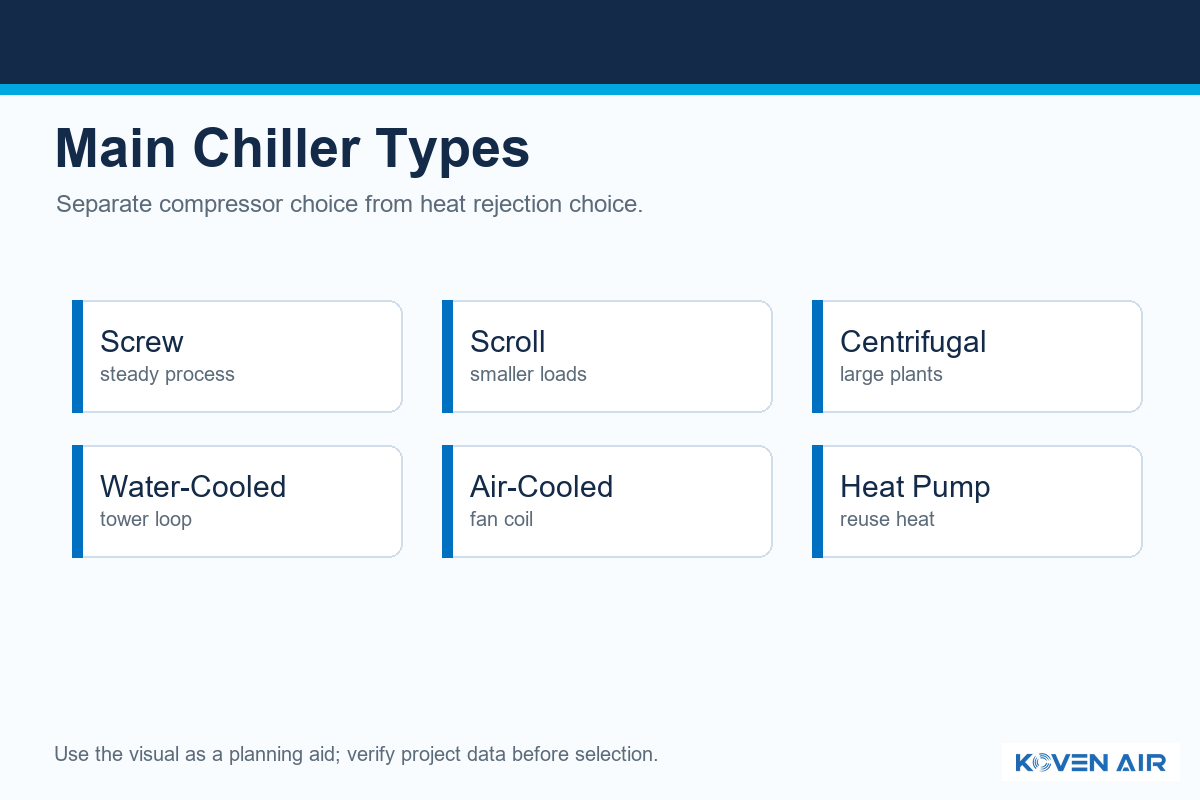
Air-cooled chillers typically fall into a few compressor types and operating modes. Scroll air-cooled chillers are frequently used in smaller industrial or light process load applications. Screw air-cooled chillers are widely applied in larger industrial processes and high-hour operating services.
Modular air-cooled chiller systems divide cooling capacity among multiple units or compressors for stage loading and redundancy. Different chillers offer different service patterns, so lower-temperature process applications need individual review because leaving-fluid temperature, glycol, refrigerant selection, and pressure drop can influence performance.
Project check: screw, scroll, and modular choices carry different risk under production loads, because the right application depends on factory build range, precision control, and whether 24-hour operation is expected.
Screw-vs-Scroll Duty Map
| Chiller type/class | Scroll leaning | Screw leaning |
|---|---|---|
| Load size | Smaller modular load. | Larger industrial load. |
| Operating hours | Intermittent or seasonal. | Long daily operation or continuous process. |
| Load profile | On/off comfort cooling. | Frequent part-load operation. |
| Redundancy | Multiple small modules may work. | Multiple circuits or compressors may be required. |
| Service expectation | Simple package, lower first cost. | Higher capacity control and industrial service access. |
| Modular package | Small modules can stage capacity. | Larger modular blocks may suit industrial redundancy. |
| Low-temperature process class | Needs careful review; scroll is not assumed. | Often needs project-specific compressor and refrigerant review. |
| High-ambient class | Can work when derated and staged correctly. | Usually needs condenser and control review at design ambient. |
Ambient-to-Capacity Risk Ledger
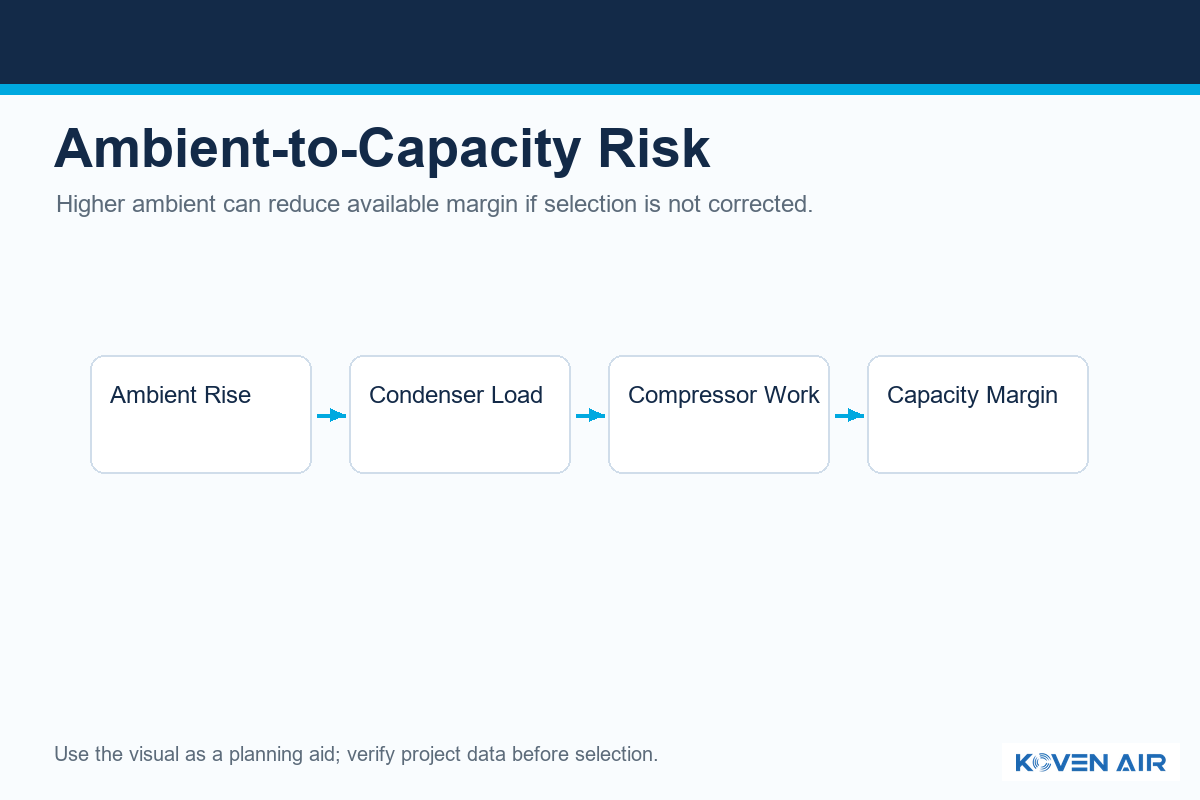
Ambient air is no simple afterthought; it’s a factor in condenser heat rejection, condensing pressure, fan power, compressor work, capacity margin and alarms. Patent activity around condenser fan speed control helps illustrate why air-side design remains a control and efficiency focus. Nevertheless, purchasers should continue to use patents as an indicator of new development, rather than as proof of inclusion in a specific commercial product.
| Risk | What can happen | RFQ evidence to request |
|---|---|---|
| High design ambient | Lower capacity margin and higher compressor work. | Rated capacity at project ambient. |
| Poor condenser clearance | Hot discharge air can recirculate. | Layout drawing with airflow clearance. |
| Dirty condenser coil | Heat transfer falls and pressure rises. | Maintenance access and cleaning plan. |
| Altitude or low air density | Air mass flow changes at the condenser. | Altitude correction or application review. |
| Low fluid temperature | Refrigeration lift and glycol effects may change duty. | Leaving fluid temperature and glycol percentage. |
| Noise restriction | Fan speed may be limited near neighbors or offices. | Sound data and installation location. |
| Continuous process duty | Small sizing errors last all year. | Duty cycle, load profile, and redundancy target. |
| Seasonal maintenance gaps | Small airflow faults show up during peak heat. | Pre-season inspection list. |
| Hybrid or adiabatic comparison | Rating basis may not match standard dry air-cooled equipment. | AHRI scope statement and test basis. |
Where Air-Cooled Chillers Are Used
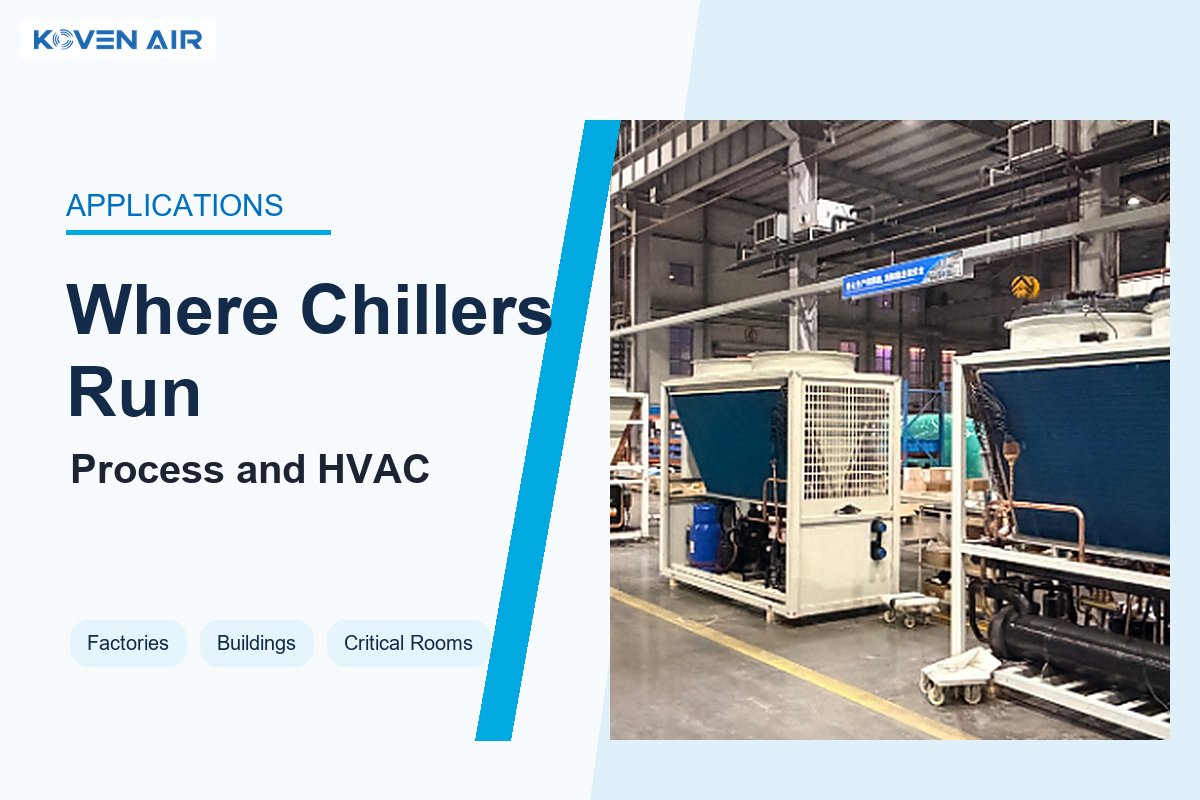
Air-cooled chillers are suitable where reliable cooling is required but water-side construction is difficult. Koven Air’s declared application scope includes critical facilities such as hospitals, airports, schools, subways, high-speed trains, data centers, and computer rooms; industrial customers such as textile manufacturers, machinery manufacturers, lithium battery factories, electronics companies, car plants, and semiconductor companies; commercial buildings such as business centers, industrial parks, office buildings, gymnasiums, and libraries; and agriculture or storage sites such as mushroom farms and granaries.
Project check: an application list is useful only when the production risk, factory test file, 24-hour duty case, and precision control requirement are tied to the actual site.
Also represented in trade press as part of commercial, industrial and institutional plant equipment is packaged air-cooled chiller plants. As market context for your project, exact equipment performance should be taken from the project’s own data and factory test reports.
10-Field Chiller RFQ Evidence Sheet
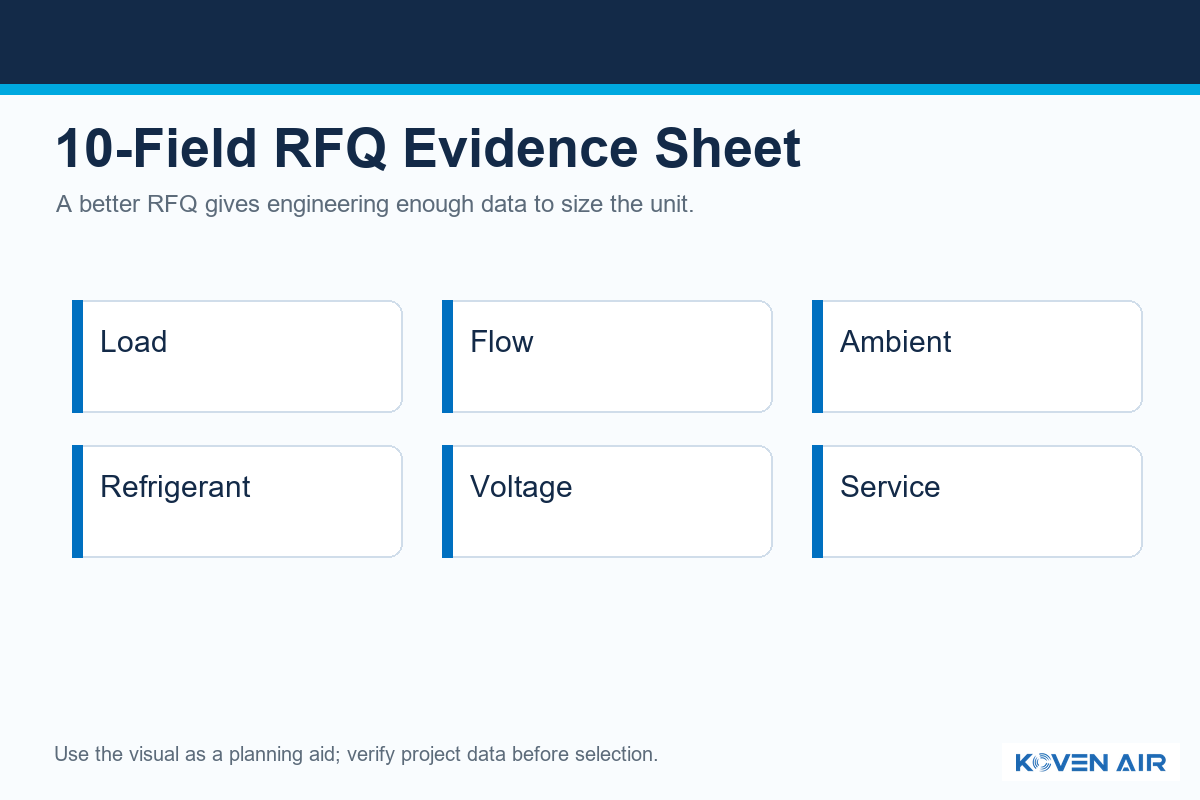
At the RFQ stage, a guide is helpful without turning the article into a product page. These are the fields to prepare before asking any manufacturer about a cooling solution.
Project check: the RFQ is a risk-control document because it connects the application, factory precision evidence, 24-hour operating expectation, and test basis before the unit is released for production.
| Field | Why it matters | Who owns it |
|---|---|---|
| Cooling capacity or heat load | Sets the first sizing band. | Engineer |
| Entering and leaving fluid temperature | Changes refrigeration lift and evaporator duty. | Engineer |
| Flow rate | Affects heat transfer and pressure drop. | Engineer |
| Fluid type and glycol percentage | Changes viscosity, freeze protection, and pump duty. | Engineer |
| Ambient design temperature | Sets condenser heat-rejection stress. | Engineer |
| Process duty cycle | Separates occasional comfort cooling from 24-hour production duty. | Plant manager |
| Power supply | Voltage and site electrical limits affect configuration. | Electrical team |
| Refrigerant preference or rule constraint | GWP, safety classification, service skill, and installation timing all matter. | Engineering and compliance |
| Site access, clearance, and sound limits | Avoids airflow, service, and neighbor issues after delivery; sound-sensitive sites should request the dBA basis, such as AHRI 370 where applicable. | Facilities |
| Commissioning and after-sales expectations | Defines who checks the real installation before handover. | Procurement |
Once these fields have been finalized, you can send duty data for a project-specific air-cooled chiller selection.
Maintenance and Operating Checks That Protect Performance
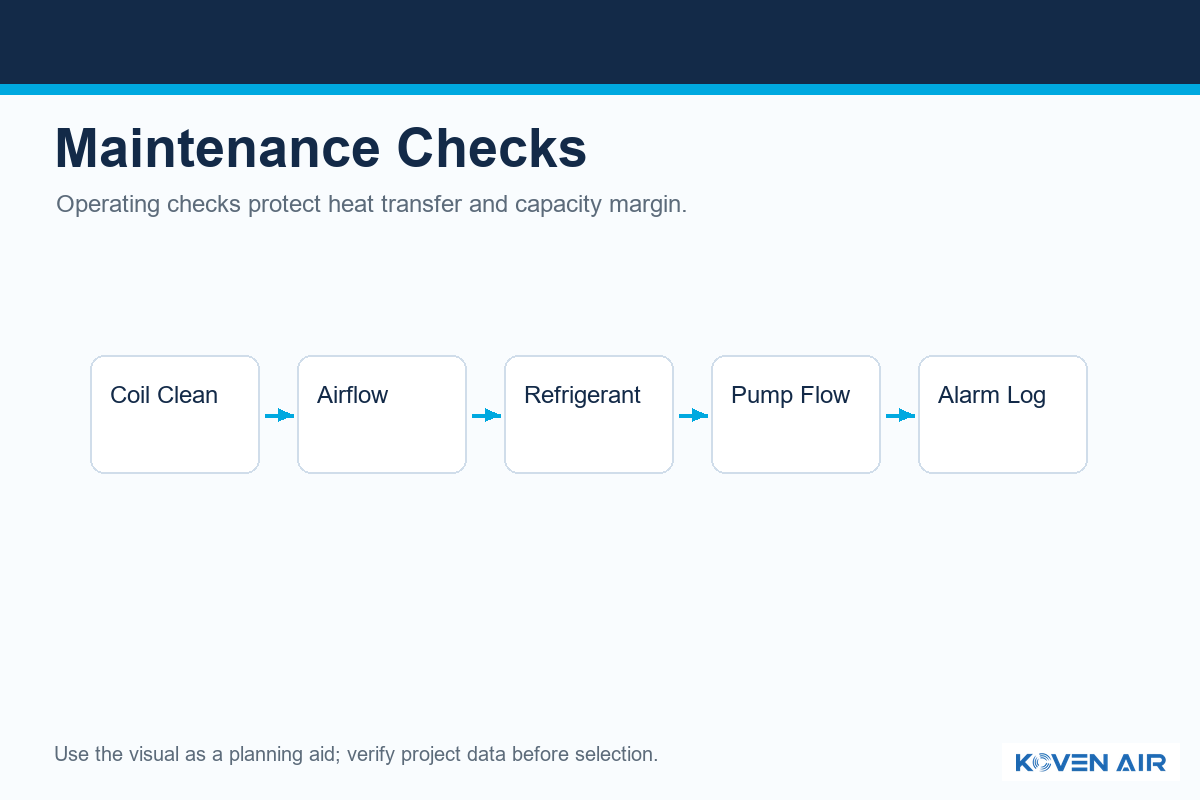
High head pressure and chiller alarm field discussions often return to practical culprits: airflow, condenser condition, flow, controls, and operating context. View those discussions as early warning topics; then validate against the equipment manual and service data.
Project check: maintenance risk rises when field data, factory records, precision alarm limits, and 24-hour duty notes are separated from the service file, because troubleshooting then depends on memory instead of evidence.
- Keep condenser coils clean and accessible.
- Check for fan blockage, guard presence, discharge path, and intake path blockages.
- Monitor refrigerant alarms, suction pressure trends, discharge pressure trends, and abnormal temperature excursions.
- Before assuming a faulty refrigerant charge, confirm chilled water flow and/or glycol flow.
- Review controls and safety sensors before seasonal high-ambient periods.
- Log vibration, abnormal sound, and electrical events in maintenance notes.
- Keep commissioning records and factory test reports traceable for warranty and service troubleshooting purposes.
Evidence Boundary: AHRI, EPA, and ASHRAE Are Not One-Size-Fits-All
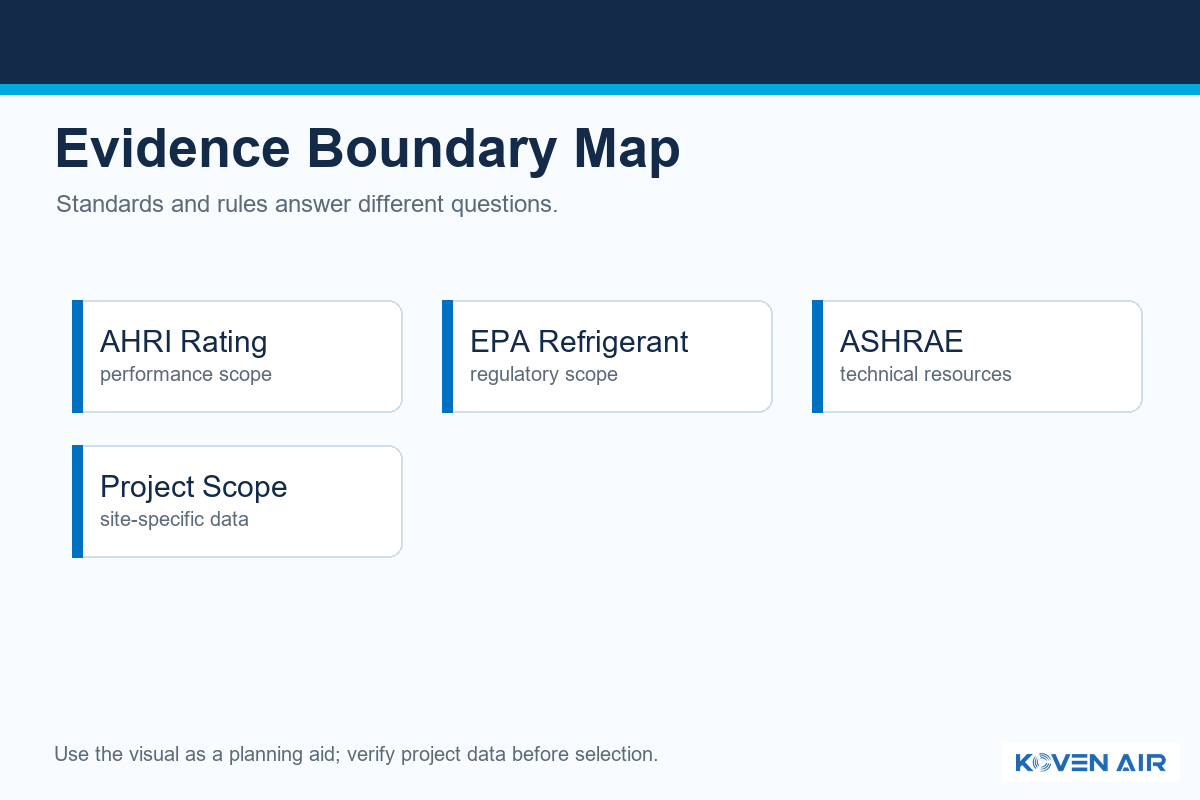
AHRI 550/590 covers factory-made vapor-compression water-chilling and heat-pump water-heating packages, including air-cooled condensers. Some equipment can fall outside that scope, including actively adiabatically-cooled condensers, split air/water heat rejection, and packages that use liquids other than water as the heat absorbing, cooling, or heat rejection medium.
Before specifying equipment, ask which standard, test condition, and liquid basis support the rating claim.
Project check: standards reduce risk only when the exact application, factory test condition, precision rating basis, and 24-hour service expectation are stated, because a standard label without scope can mislead the RFQ.
EPA refrigerant guidance needs care too.
Comfort-cooling chillers and industrial process refrigeration chillers are divided by type and industrial process columns vary based on the temperature of the exiting liquid. If you’re supplying equipment for a semiconductor process, low-temperature process, data center or comfort hvac system, confirm that the proper sector and the year date you’re considering fall within the appropriate definition and apply refrigerant guidelines accordingly.
For large refrigerant charge volumes in the United States, this choice may add EPA Section 608 leak repair and reporting requirements to the ownership plan. Treat refrigerant choice, leak detection, access for service, and maintenance recordkeeping as lifecycle requirements, not just startup details.
Low-GWP refrigerant choice requires more than just looking at environmental criteria. ASHRAE Standard 34 assigns a refrigerant safety rating for flammability and toxicity, and Standard 15 covers safe design, installation, and operation. Refrigerant should be selected by checking GWP, safety class, charge size, ventilation needs, service access, and the status of local code adoption.
How Koven Air Supports Project Verification
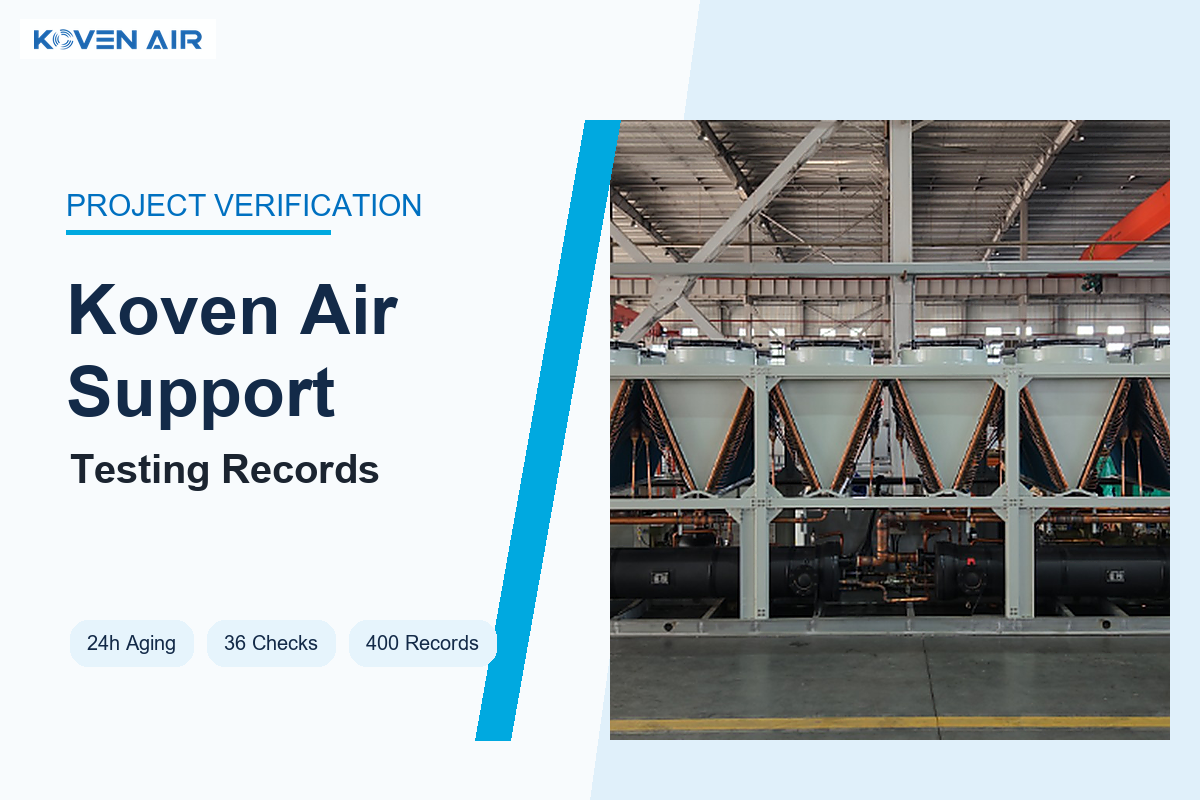
Koven Air Environment Technology Co.,Ltd. was founded in 2007, starting brand development and export in 2010. Based on the supplied brand reference, Koven Air has been exported to 35 countries and specializes in high-end industrial, commercial, and agricultural growing environment control equipment, with customized HVACR solutions and responsible after-sales service.
Project check: buyer risk is lower when the application file, factory precision records, 24-hour test result, and service contact path are reviewed together because each item supports the next engineering decision.
Koven Air’s manufacturing process includes a 20,000 square meter modern factory footprint, 18 standardized processes, 23 precision sheet metal fabrication operations, intelligent robot modular assembly operations, 400 traceable manufacturing records, 36 factory quality inspections, a 24-hour continuous aging test, and a professional chiller and heat pump laboratory. As confirmation, ask Koven Air to reference the project rating, factory test record, commissioning plan, and service point of contact.
Service process is also a factor to consider. Pre-sales services must ensure the accuracy of project design and parameters.
During the sales process, equipment should undergo production, testing, packaging, and transportation, and provide technical installation and commissioning guidance when needed. After-sales services are offered for a lifetime of free technical consultation and during the warranty period, regular training is provided for engineering contractors and engineers.
Final Takeaway: Choose by Heat Rejection Reality, Not by Name Alone
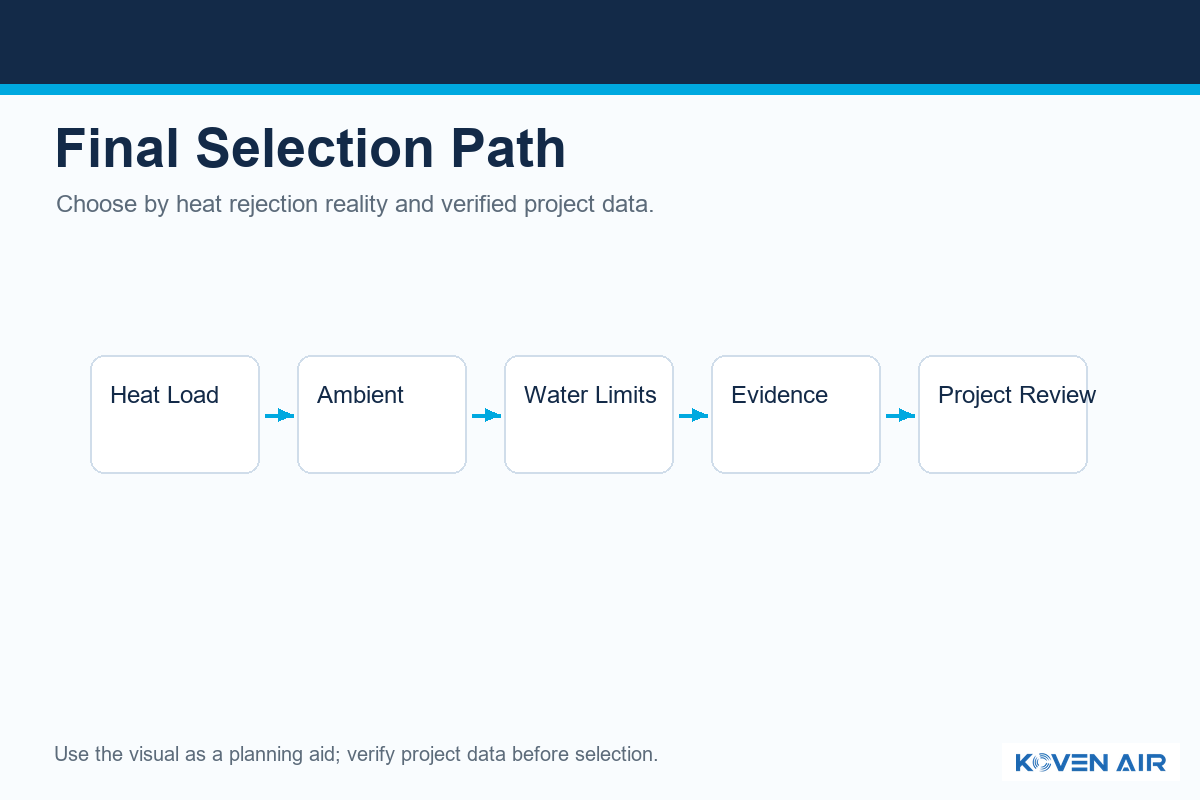
Air-cooled chillers offer a strong fit when site simplicity, ease of installation or modification, water resources, or tower maintenance is key. If the ambient air can handle the process load, you can select the air-cooled chiller when the site does not have access to the condenser-water loop required by a water-cooled chiller. If leaving fluid temperature is low, ambient temperature is high, or continuous operation and lifecycle energy consumption are primary decision drivers, a water-cooled chiller may be the more appropriate option.
Before you choose a piece of equipment, verify your heat load, ambient design point, refrigerant, flow rate, rating basis and installation constraints. Final project risk should be checked against the application, factory precision evidence, 24-hour duty record, and test basis; then review the industrial air-cooled chiller project page before selection.
FAQ
What is an air-cooled chiller?
An air-cooled chiller is an open-system, vapor-compression refrigeration system that removes heat from the process fluid and rejects the heat directly into ambient air with a condenser coil and fans. Unlike a water-cooled chiller, it doesn’t use a cooling tower and condenser-water loop to dissipate heat. For a 24 hours production site, final selection still needs site supply details such as 380 V or 460 V before sizing.
Which is better, an air-cooled or water-cooled chiller?
An air-cooled chiller is a more suitable option when considering a smaller or simpler system footprint and when ease of installation, modifications and maintenance is important.
Conversely, a water-cooled chiller may provide higher equipment efficiency and be the better selection in a larger or more critical process. Selection depends on several variables, including ambient, plant-wide and process requirements, annual operating hours, and the available physical space. It also involves project-specific design factors, including energy costs, water costs, the mechanical services available at the facility, service capability, and the ease of securing spares. If selecting an imported or factory-direct unit, compare test basis, refrigerant availability, the manufacturer’s after-sales support, commissioning requirements, and spare parts and repair agreements.
How does ambient temperature affect an air-cooled chiller?
Environmental factors can play a role in condenser performance. As ambient air temperatures rise, the condenser becomes more challenged and requires greater compressor work, resulting in higher operating pressure and reduced available capacity margin. Capacity should be verified at the actual operating ambient rather than solely relying on catalog information, which often presents conditions at a nominal test point. It’s also important to consider factors that may hinder condenser operation, such as clearance to adjacent walls or other rooftop heat loads, as well as airflow patterns around the equipment.
Proper evaluation should take into account the direction of the discharge-air stream, site altitude, the possibility of coil fouling, and the timing for seasonal maintenance. A unit that performs adequately at a mild test point could fail under actual site conditions if a different condenser configuration, variable-speed fan controls, or additional capacity margin isn’t implemented.
What information is needed to size an air-cooled chiller?
At a minimum, your cooling solution submission must include the equipment’s heat load (or cooling capacity), temperature of the entering and leaving fluids, flow rate and fluid type, glycol percentage (if applicable), design ambient, duty cycle, power supply requirements, refrigerant requirements, installation location, clearance available for airflow, maximum sound levels, and the required commissioning process. Omitting any of these parameters will affect your final selection.
Do air-cooled chillers need cooling towers?
Is an air-cooled chiller the same as a water-cooled chiller?
No, an air-cooled chiller is an open-system device, meaning it rejects heat directly to ambient air through its condenser coil and fans. This design eliminates the need for a cooling tower, basin, condenser-water pump, water treatment program, and makeup water requirement. In return, the unit is more sensitive to ambient air changes and needs clear airflow.
Industrial Chiller Cooling System Terms: Data Center Cooling Solution, Efficient Cooling, Condenser, Scroll Chiller, Centrifugal Chiller, and Air-Cooled Chillers and Water-Cooled Notes
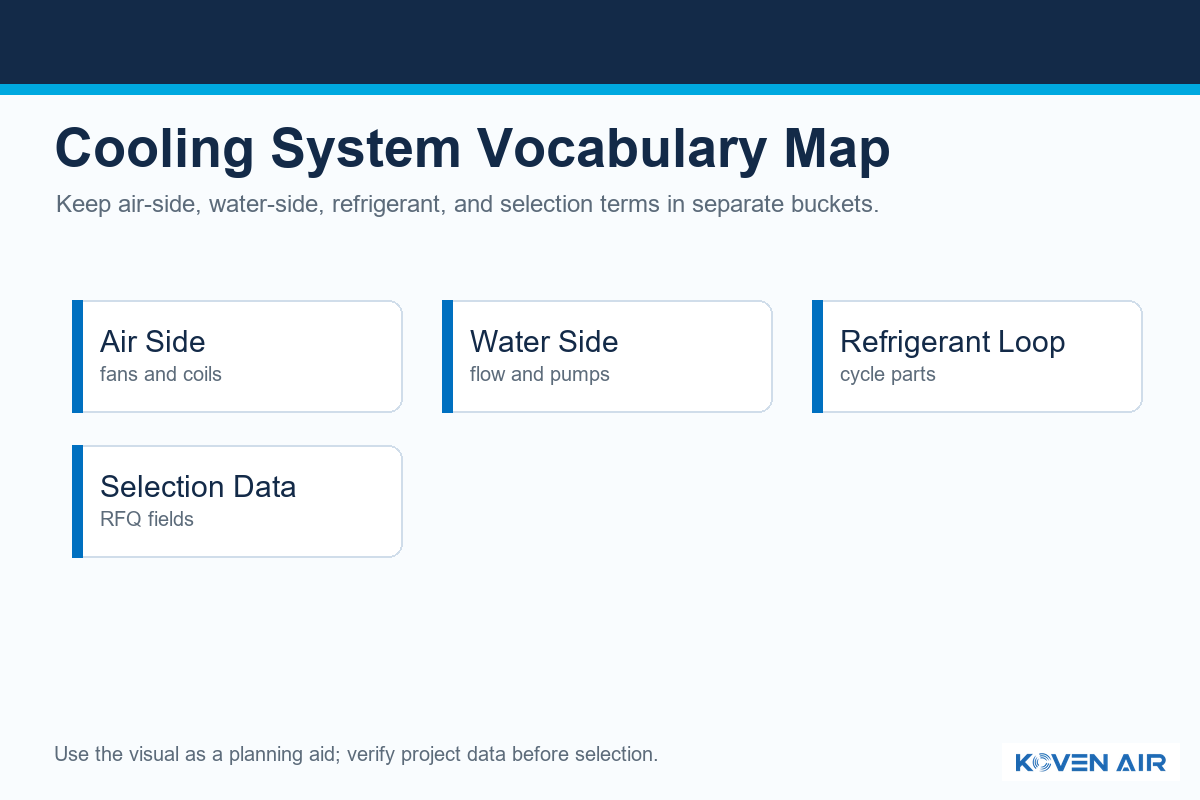
Use this vocabulary map when comparing catalog pages, engineering notes, and RFQ replies. It is not a model list; it is a way to keep air cooling language, water-side language, and site-risk language in separate buckets. Koven Air’s project file can then connect these terms to 24 hours testing, 36 inspections, 400 traceability records, 18 standardized processes, 23 sheet-metal operations, and site power such as 380 V, 415 V, 460 V, or 575 V when the configuration calls for it.
| Term bucket | Use in selection notes |
|---|---|
| Capacity and model language | Catalogs may describe chiller units, chiller capacity, chiller models, or packaged chiller choices; the useful question is whether the right chiller matches the actual load. |
| Efficiency language | Air cooling can simplify the site, but chiller efficiency, chiller performance, and efficient cooling still depend on ambient temperature, airflow, and load profile. |
| Air-side path | A chiller condenser must move air across the condenser, force ambient air through the coil path, and carry heat from refrigerant to air after the cooled refrigerant leaves the condenser section. |
| Water-side path | Water supply, local water, limited water, water consumption, water temperature, cooling water, process water, and heat from the chilled water all affect whether the project should avoid tower infrastructure. |
| Water-cooled comparison | Compare air-cooled chillers and water-cooled systems separately; compared to water-cooled units, air-cooled packages shift more attention to ambient air and fan-side clearance. Water-cooled chillers offer different plant duties, and water-cooled chiller systems or water-cooled industrial plants may win where water-side maintenance is practical. |
| Compressor and package terms | Centrifugal chiller, scroll chiller, screw chiller, chiller technologies, portable air-cooled chillers, and industrial chiller units are market terms; each needs the same application and rating check. |
| Application language | Industrial and commercial buyers often use industrial cooling or air-cooled chiller solutions as broad labels, but choosing a chiller still means choosing the right balance of site water, energy, service, air handler demand, and duty cycle. |
| Definition language | The defining feature of air-cooled equipment is using ambient air instead of water for heat rejection; ambient air instead of water is the reason chillers are ideal where water infrastructure is difficult. |
| Equipment detail language | Suppliers may say chillers are equipped with certain fans, controls, coils, or protections; confirm those details against the application, factory test basis, and service plan before selection, especially when the goal is to lower the temperature in a process loop. |
References and Sources
- U.S. Department of Energy FEMP: Purchasing Energy-Efficient Electric Chillers
- U.S. Department of Energy FEMP: Energy Savings Calculator for Air-Cooled Electric Chillers
- U.S. EPA: Technology Transitions HFC Restrictions by Sector
- U.S. EPA: Stationary Refrigeration Leak Repair Requirements
- AHRI 550/590 and 551/591 Scope Page
- ASHRAE Refrigeration Resources
- Chiller & Cooling Best Practices: Industrial Chiller and Heat Rejection Innovation at the 2025 AHR Expo
- Google Patents: Condenser Fan Speed Control for Air Conditioning System Efficiency Optimization

![Cleanroom HVAC Systems: ISO Classes & Design Guide [2026]](https://kovenair.com/wp-content/uploads/2026/07/cleanroom-ahu-pharma-biotech-guide-featured-2-150x150.png)