Get in Touch with Koven Air Company

Fan Coil Units
Fan Coil Units for Commercial HVAC Projects
Choose horizontal, vertical, concealed, cassette, and hydronic fan coil units (FCUs) for chilled water fan coil systems with project calculation, factory testing, and lifetime technical guidance.
340-2380
m3/h airflow range
2.25-13.53
kW cooling range
42-56
dB(A) at 50Pa
12/30/50
Pa ESP options
35
countries using Koven Air
Product 01
Product 02
Application 01
Application 02
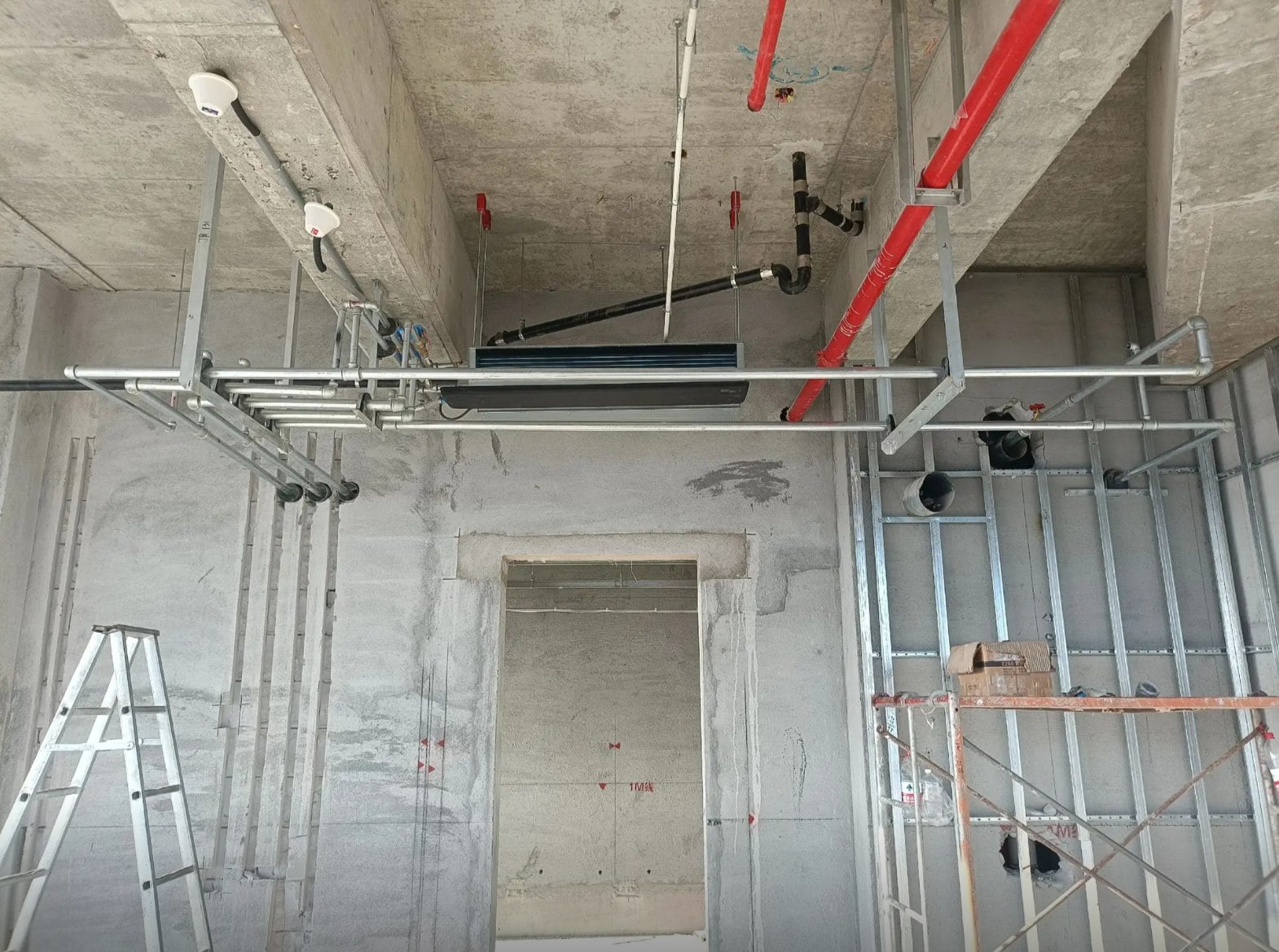
Commercial Fan Coil Unit Problems Koven Air Solves Before Installation
Primary roles: engineers checking selection data, procurement teams qualifying a fan coil unit manufacturer, and project owners reducing site risk.
Capacity needs proof
A fan coil unit uses a fan and water coil to heat or cool indoor air inside an hvac system. Koven Air starts selection from airflow, water temperature, load, ESP, and noise target instead of model name alone.
- Cooling and heating load check
- Air volume and static pressure match
- Chilled water and hot water conditions
Install space is a cost driver
Ceiling depth, ductwork path, drain slope, valve access, and service panel size can change the unit choice. Not ideal to discover that after the ceiling grid is closed.
- Concealed ducted ceiling spaces
- Perimeter vertical floor zones
- Cassette grid ceilings and lobby zones
Water-side choices matter
Buyer discussions often turn from the FCU box to valves, pump behavior, and pressure drop. Koven Air asks for that context early because valve choice can change control stability.
- Two-way, three-way, or PICV valve plan
- Constant-flow or variable-flow loop
- 2-pipe or 4-pipe building mode
Engineer note
For fan coil units hvac selection, a capacity row without airflow, ESP, water temperature, and valve plan leaves too much guesswork. Send the schedule before purchase; the model will be easier to verify.
Koven Air Fan Coil Unit Range: Horizontal, Vertical, Concealed, Cassette, and Hydronic Models
Use this module as the homepage product card block. It routes each commercial fan coil unit buyer to the correct child page.
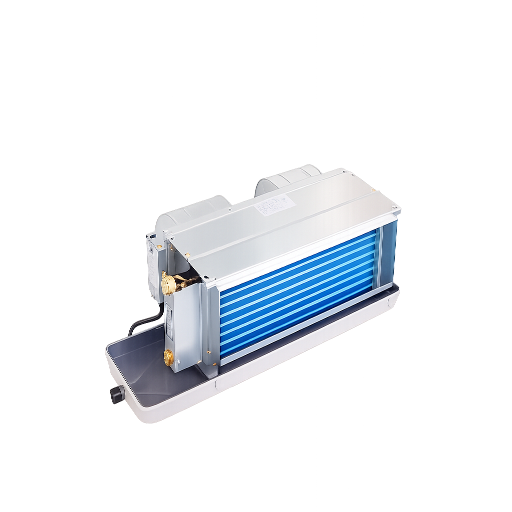
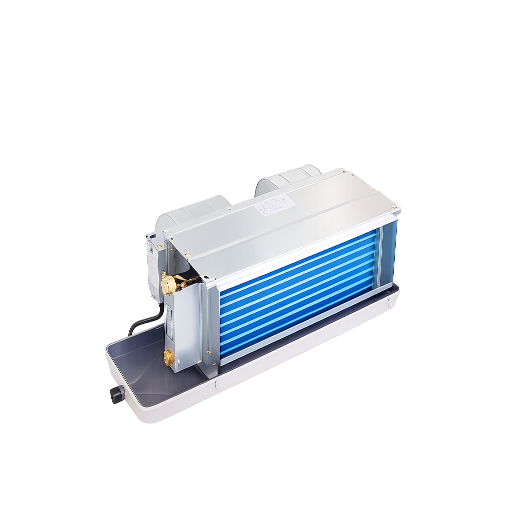
Horizontal Fan Coil Unit
340-2380 m3/h
42-56 dB(A) at 50Pa
KAFP horizontal models fit ducted ceiling work where airflow, ESP, and sound pressure need early checking.
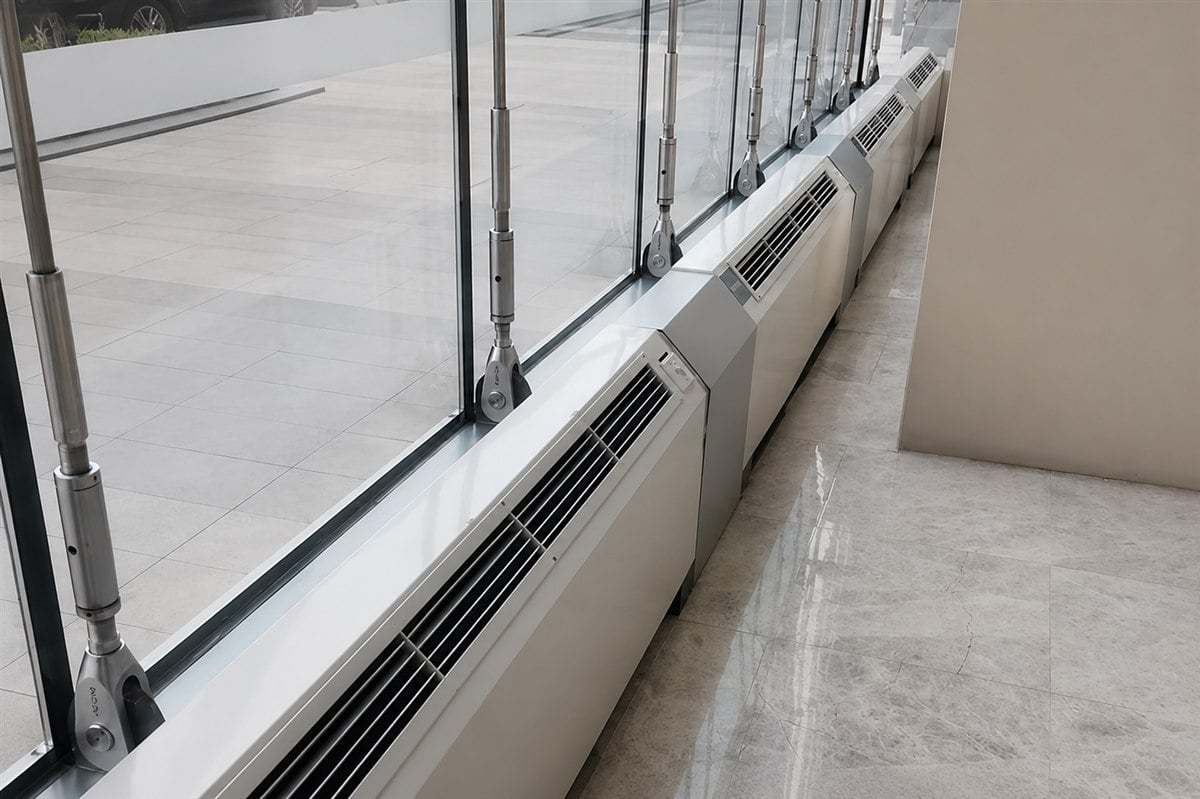
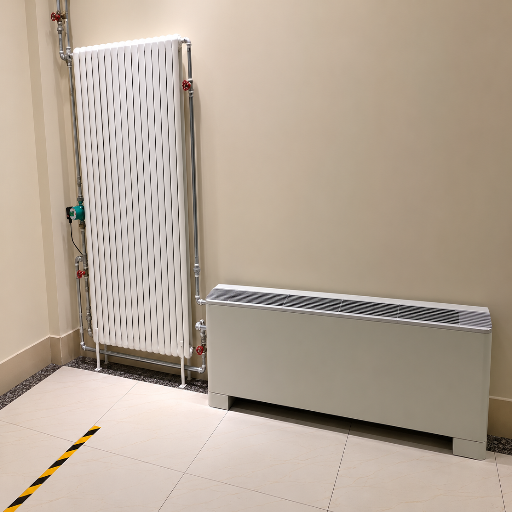
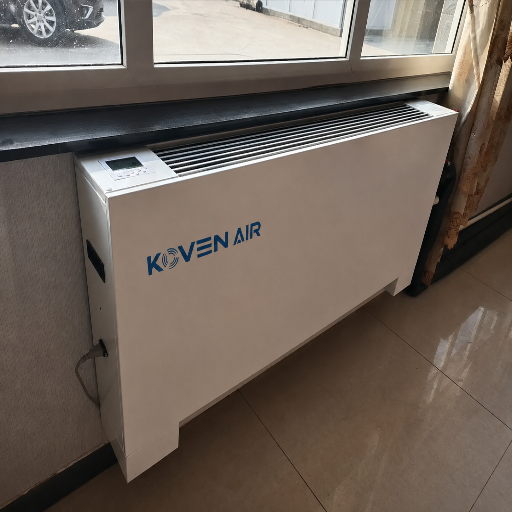
Vertical Fan Coil Unit
2.25-13.53 kW cooling
3.40-20.19 kW heating
Vertical FCUs serve perimeter rooms, window-side zones, apartments, and retrofits where wall or floor space is fixed.
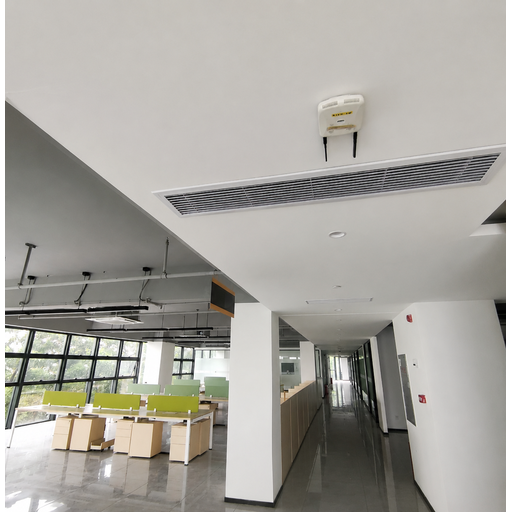
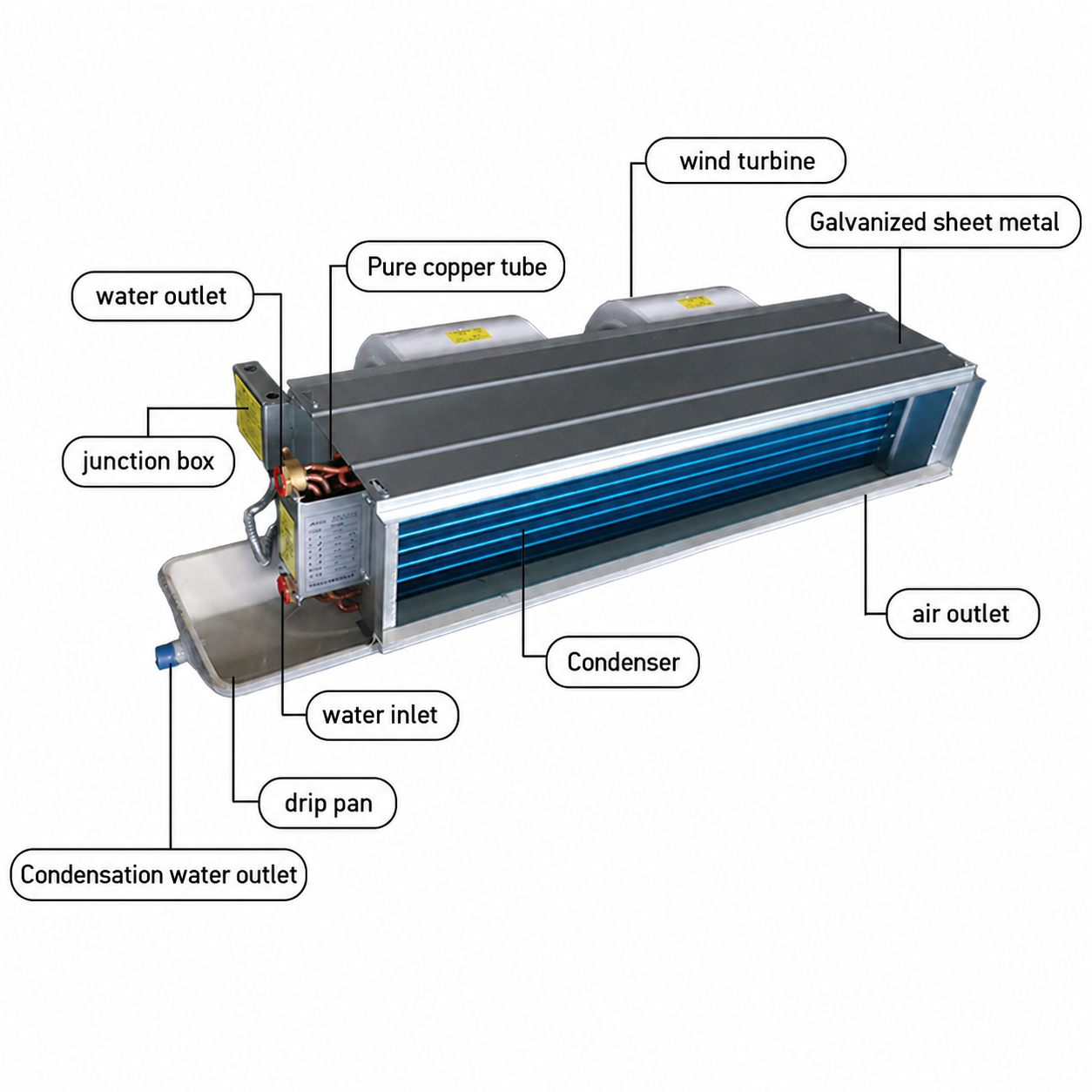
Concealed Fan Coil Unit
200-1401 CFM
DN20 water/drain
Concealed ducted KAFP units support hotel rooms, offices, and quiet ceiling zones with duct sizing and service access planned together.
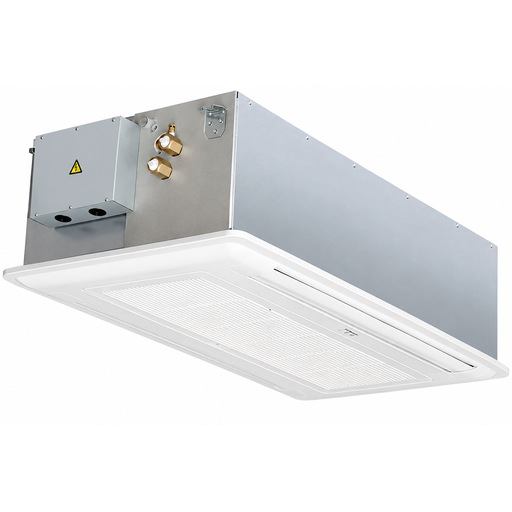
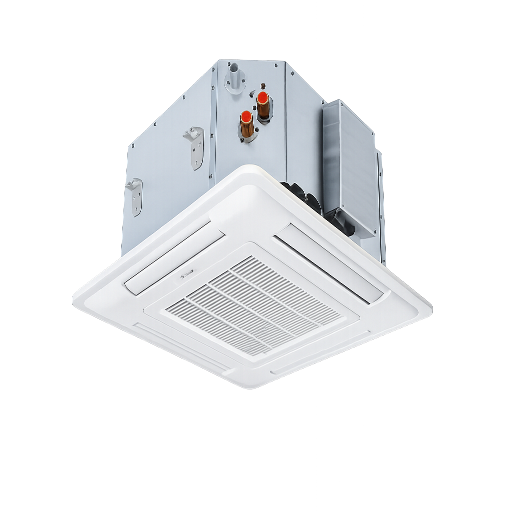
Commercial Cassette Air Conditioner
350-2420 m3/h
2.16-14.4 kW cooling
KASKM4 cassette fan coil units support grid-ceiling projects that need 2-way or 4-way air distribution.
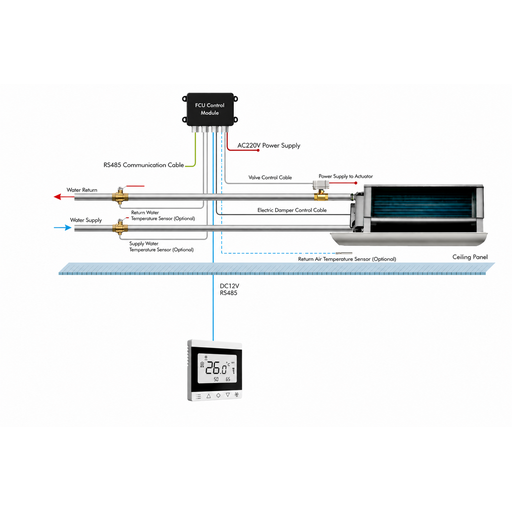
Hydronic Fan Coil Unit
2-pipe / 4-pipe
PICV-ready option
Hydronic fan coil units connect chilled-water and hot-water loops for commercial spaces where pipework, valve authority, and room comfort must work as one system.
Need a mixed schedule?
Many projects use more than one FCU type: concealed units for rooms, cassette units for open areas, and vertical units near perimeter glazing. That is normal.
- Send room list and cooling load.
- Add ceiling height and service access notes.
- Mark noise-sensitive spaces before selection.
- Have an FCU schedule already? Send it for model and duct configuration review.
2-Pipe vs 4-Pipe Fan Coil Units: The 5-Gate FCU Pipework Decision Matrix
Use this decision matrix when the project team is unsure whether the building can accept seasonal switchover or needs room-by-room heating and cooling choice.
Decision gate
2-pipe FCU signal
4-pipe FCU signal
What to send Koven Air
Season mode
Whole building changes from cooling to heating by season.
Different zones may need heat and cooling on the same day.
Seasonal operation plan
Room diversity
Rooms share similar exposure and occupancy.
Hotel, hospital, lab, or office zones have mixed loads.
Room schedule and exposure notes
Budget and space
One water circuit lowers pipe count and valve count.
Extra circuit adds pipework but improves comfort choice.
Ceiling and riser limits
Humidity or reheat
Basic seasonal comfort is enough.
Reheat or tighter dehumidification may be needed.
Humidity target and control logic
Example model check
KAFP-05WA: 4950 W cooling, 7425 W heating
KAFP-05WA: 5135 W cooling, 3127 W heating
Water temps and valve plan
Koven Air engineering note:
do not choose 4-pipe only because it sounds premium. Choose it when the building has real simultaneous load needs, reheat demand, or comfort zones that cannot wait for seasonal switchover.
Not sure which side the project falls on? Share the water-loop plan and room schedule.
Talk to an Engineer About PipeworkChilled Water Fan Coil Specifications Engineers Can Verify
This section gives enough data for first-pass engineering review before the buyer opens an RFQ thread.
| Parameter | Koven Air FCU range | Why it matters in selection |
|---|---|---|
| Model range | KAFP-02WA to KAFP-14WA | Lets the engineer map rooms from small offices to larger zones without changing product family. |
| Air volume | 340-2380 m3/h | Air volume sets room-side heat transfer, noise risk, and duct sizing pressure. |
| Cooling capacity | about 2.25-13.53 kW | Capacity must be checked against chilled-water temperature, room load, and fan speed. |
| Heating capacity | about 3.40-20.19 kW | Heating output differs by water temperature and 2-pipe or 4-pipe coil layout. |
| Ext. static pressure | 12 / 30 / 50 Pa | ESP should match duct length, grille choice, and return path. Too little pressure leaves weak airflow. |
| Sound pressure | 42-56 dB(A) at 50Pa | Noise is checked with fan speed, duct return distance, ceiling lining, and installation rigidity. |
| Water & condensate | DN20 inlet/outlet and drain | Pipe and drain planning prevents site rework around tight ceilings and service panels. |
| Power supply | 110V / 220V | Voltage must match project country and control panel design. |
Air-side design checks
- Supply duct velocity target in the Koven reference file: 700-900 FPM.
- Branch duct velocity target: 500-700 FPM.
- Grille face velocity target: 300-600 FPM.
- Supply-return separation: at least 3.5-5 ft by model size.
Site access checks
- Four M10 or 3/8 in hanging rods for concealed units.
- ceiling height allowance around 300 mm in the Koven install note.
- Access panel at least 450 x 450 mm or 18 x 18 in.
- Drain slope at least 1 percent where gravity drainage is used.
Standards & Compliance Directives
Public standards should be used correctly. ANSI/AHRI 440-2008 and AHRI 440/441 documents are fan-coil performance rating references, while ASHRAE, SMACNA, and ANSI-recognized ACCA Manual D sources help frame system design, duct construction, duct sizing checks, and energy efficiency review. If the tender names ANSI, ISO, or local code requirements, keep those exact titles in the submittal instead of turning them into catalog
Factory-Controlled FCU Manufacturing and Inspection
Procurement teams need supplier proof before they ask for price. This is where Koven Air separates the factory from a trading quote.
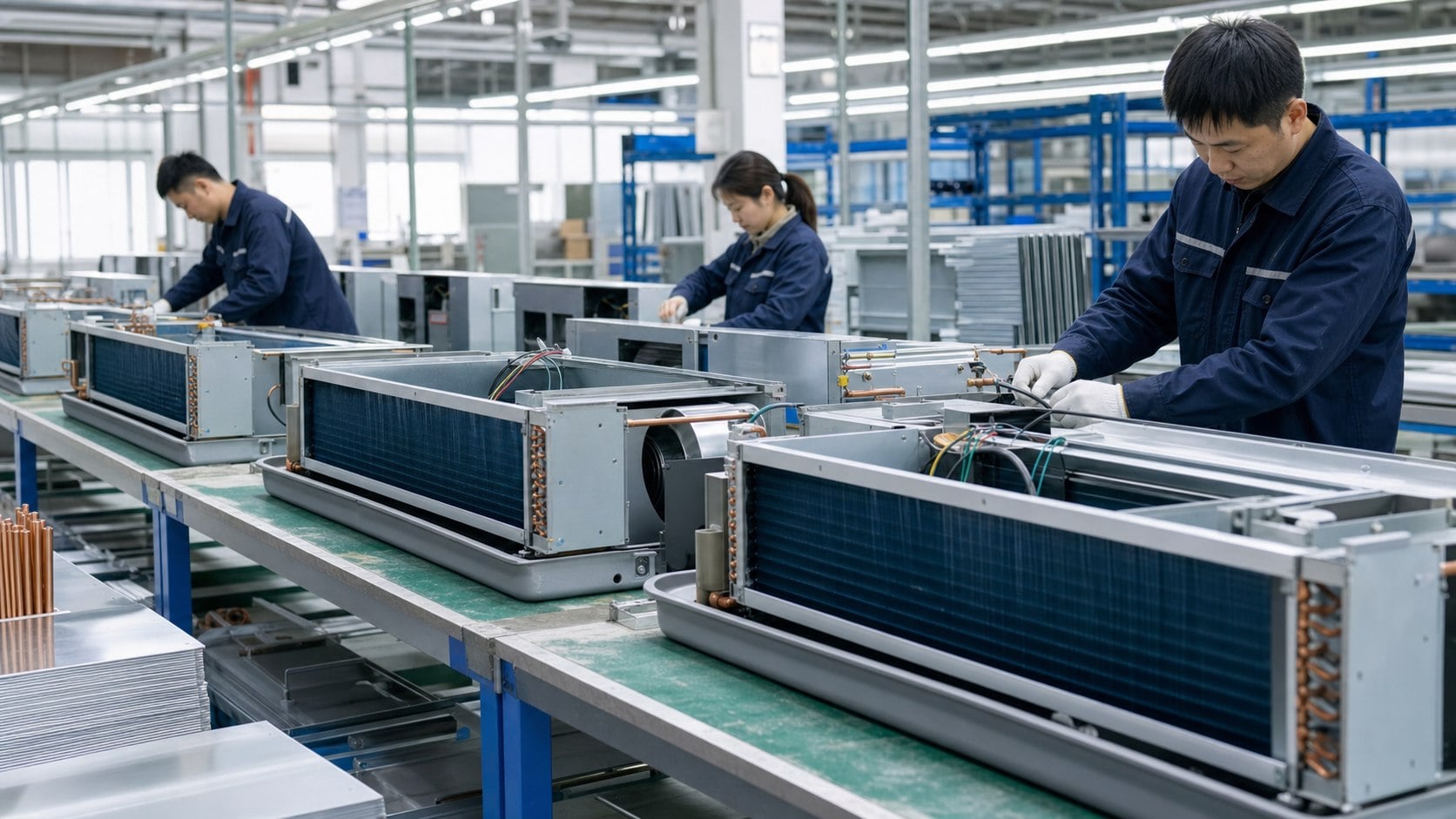
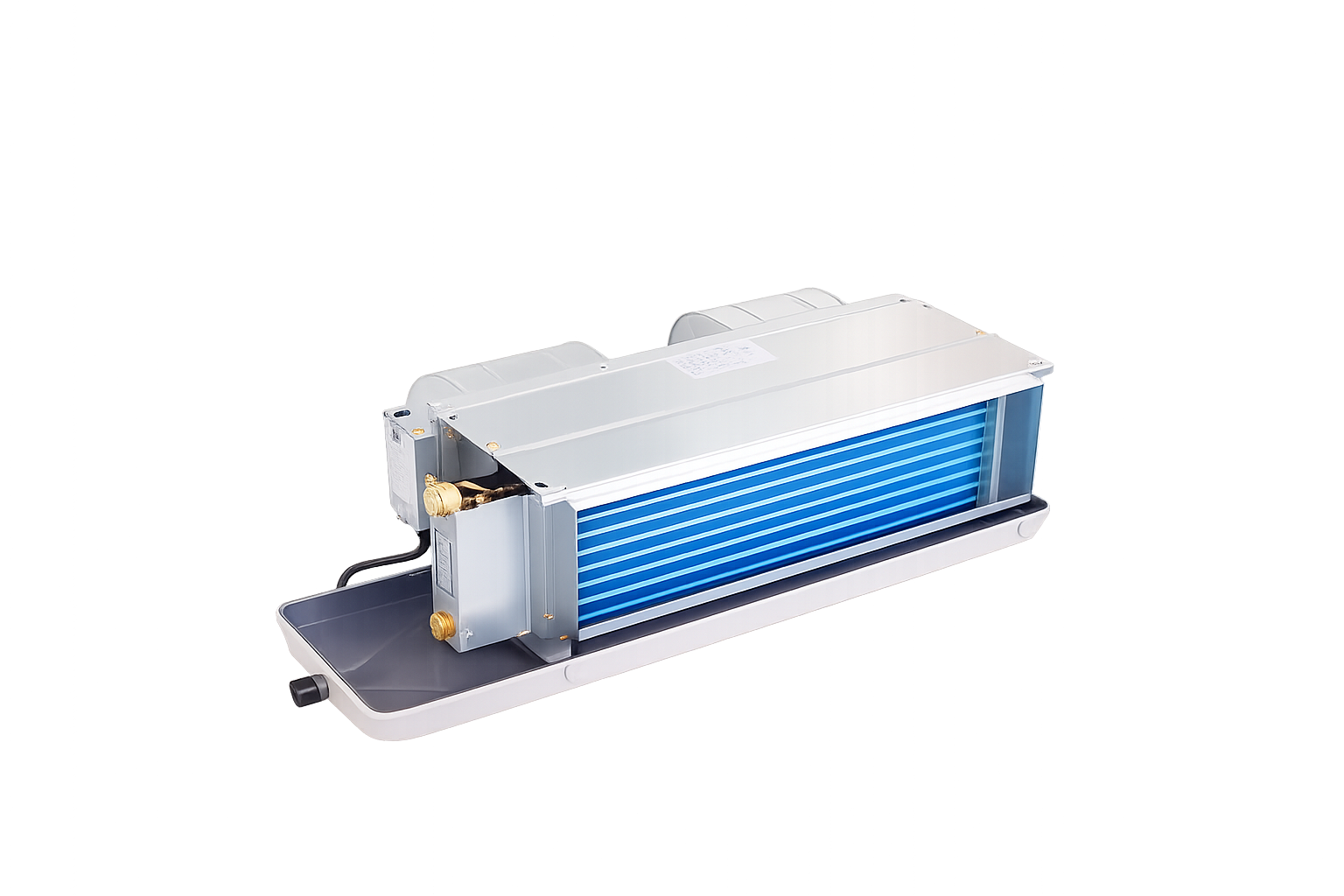
Sheet metal and coil control
- Copper tube and aluminum fin coil options
- Three-row coil data in the KAFP reference table
- Working pressure reference up to 1.6 MPa
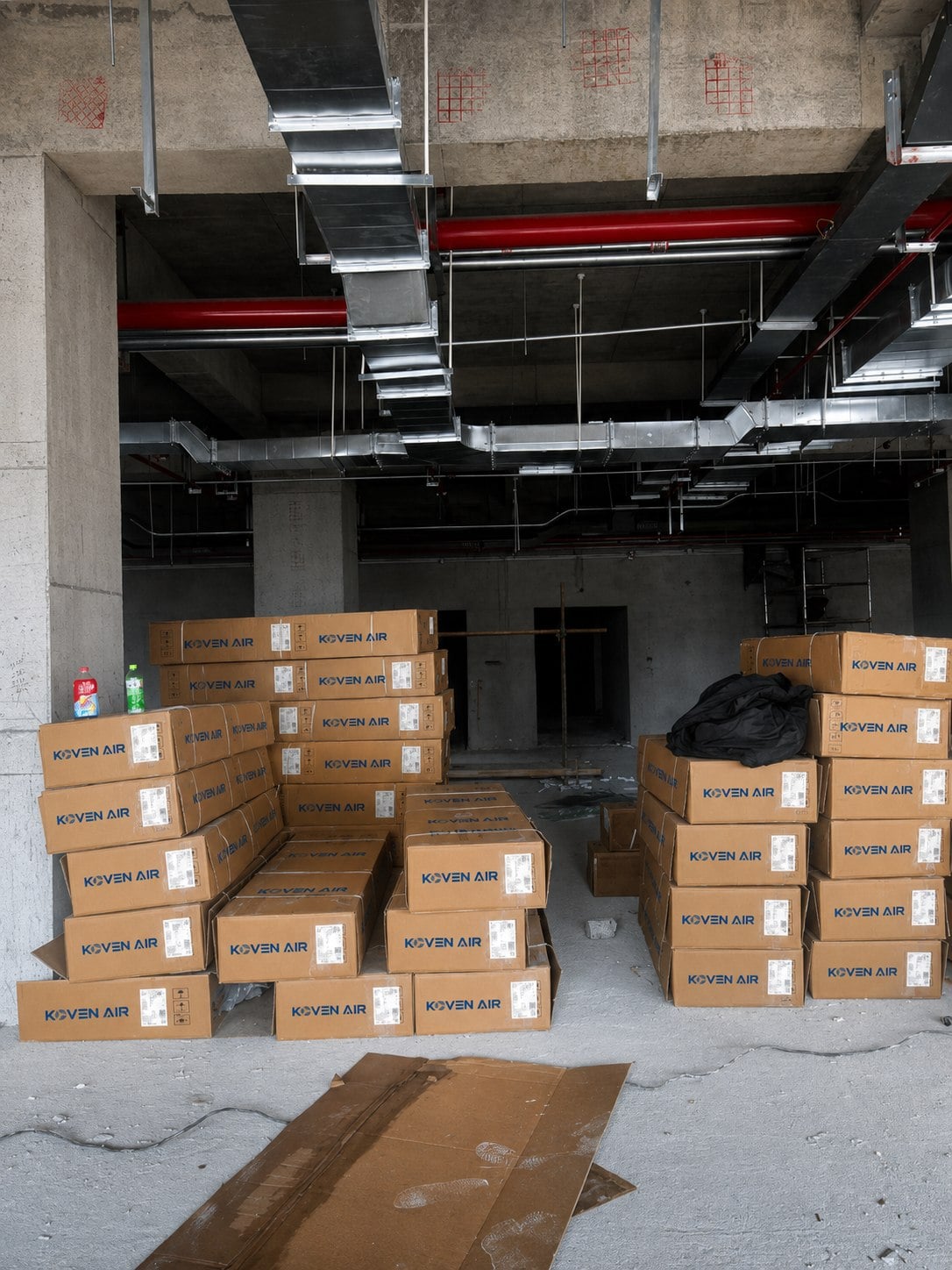
Process traceability
- 18 standardized production processes
- Intelligent robot modular assembly line
- Factory inspection before shipment
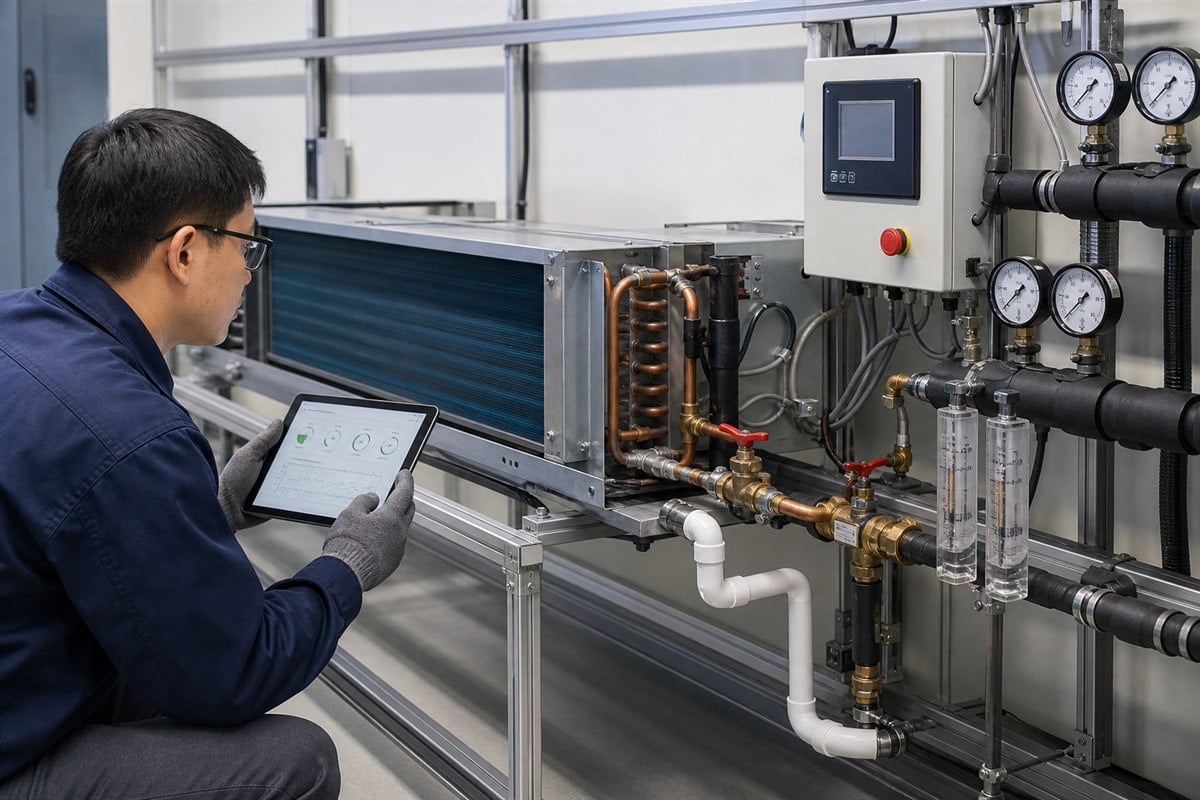
HVACR test base
- Chiller and heat pump testing lab
- Commercial and industrial project support
- Applications in controlled growing environments
Need factory info to qualify suppliers?
Ask for Inspection and Testing records with your RFQ.
Commercial FCU Project Proof: Hotel, Office, Residential, Industrial, and Agriculture Applications
Application proof should show where fan coils have to perform, but unverified project numbers stay conservative until the client approves them for public use.
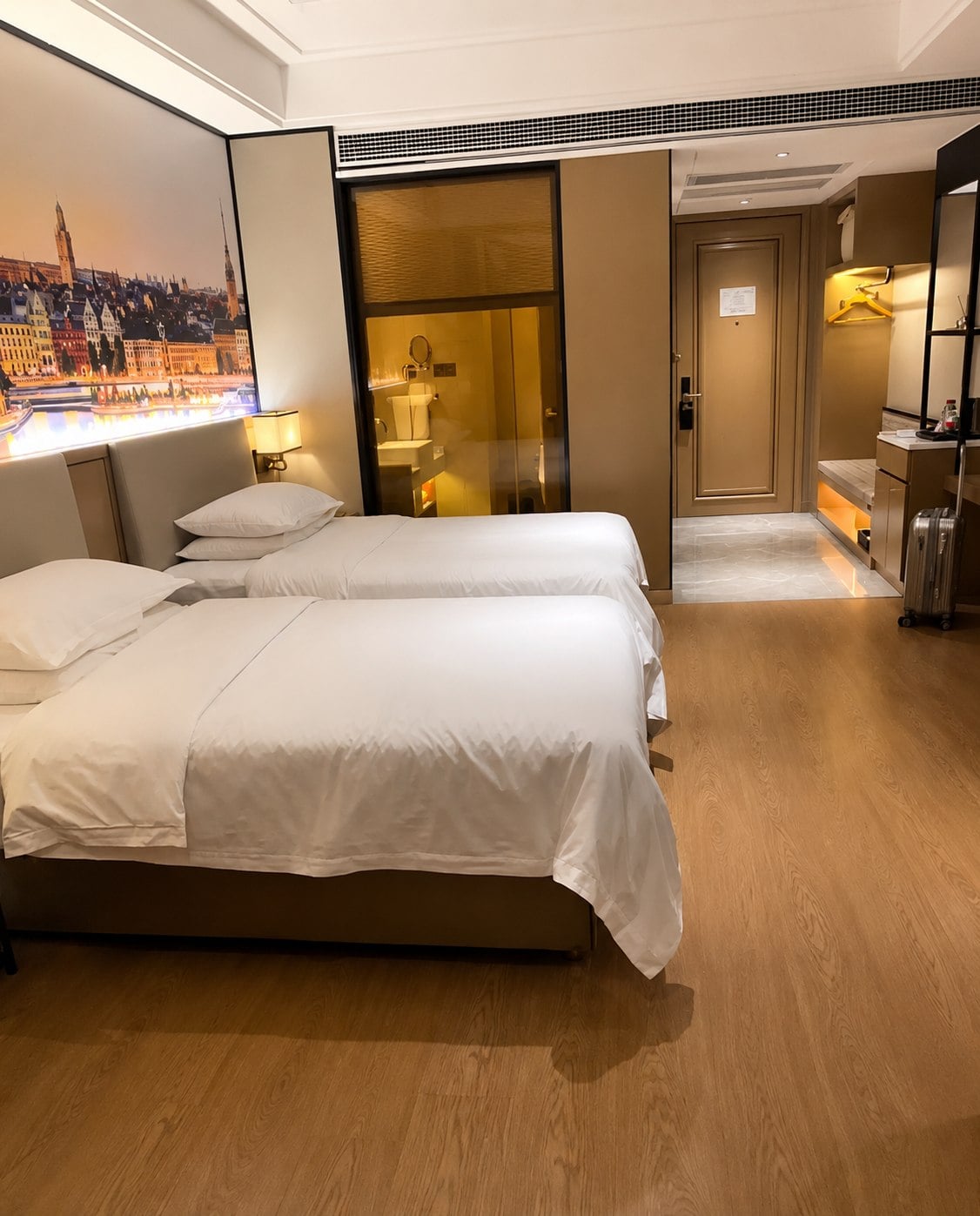
Hotel and business complex
Concealed horizontal fan coil units are perfect for hotel guest rooms, guest corridors, or anywhere noise, ceiling access, and room-by-room comfort are priorities. We have large hotel case studies in our internal Koven files, but we’ll need approval on public numbers prior to release.
- Room-by-room fan coil systems
- Low-speed sound checks
- Installation guidance for ceiling areas

Office and public buildings
For commercial grid ceilings, lobbies, libraries, schools and business centers, you can specify our cassette and concealed models to complement existing system aesthetics. When covering open spaces, your air distribution and return path are as important as the cooling capacity itself.
- 2-way or 4-way cassette airflow
- Chilled-water and hot-water operation
- Maintenance access above finished ceilings
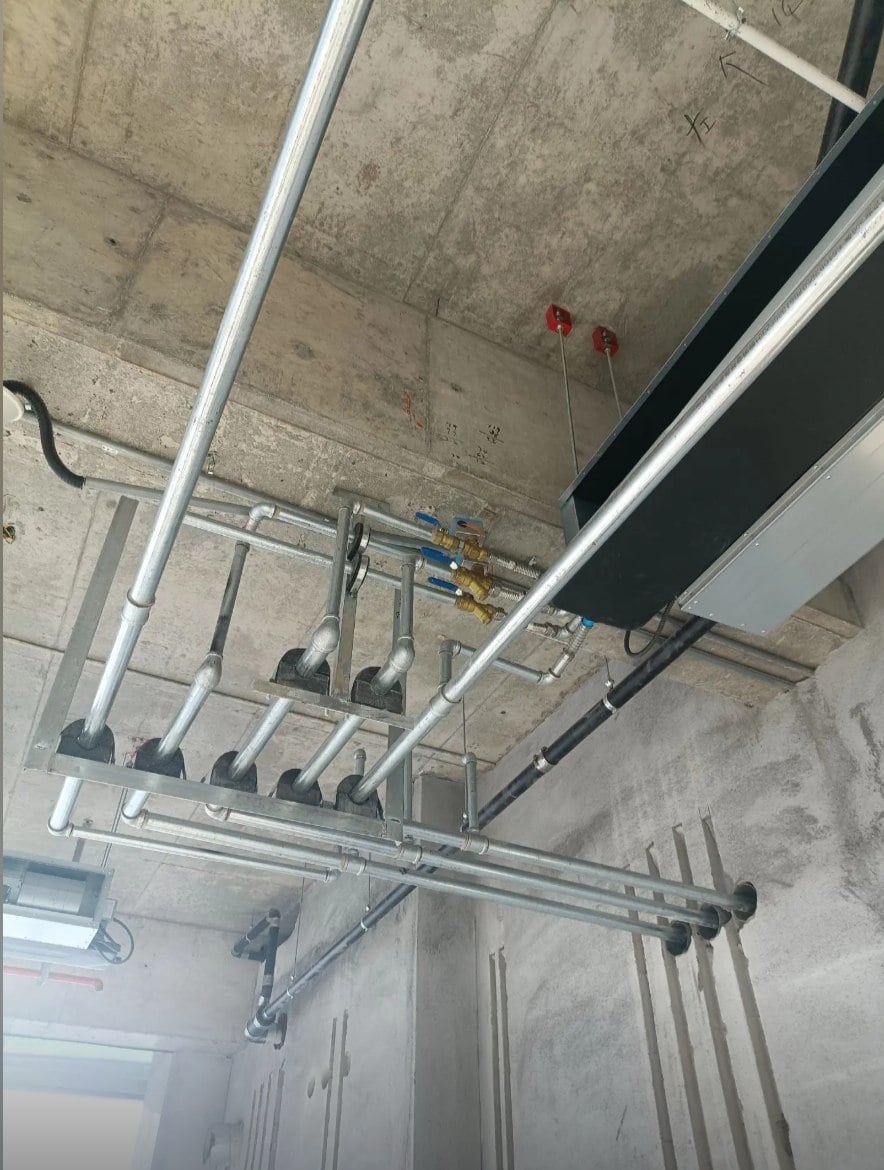
Industrial and controlled environments
Koven Air also works with industrial plants, car manufacturers, semiconductor operations, grain storage facilities, mushroom farms, data centers and computer rooms where reliable heat transfer and ongoing commissioning support are critical.
- Custom solution review
- Water-side design checks
- After-sales technical training
Fan Coil Unit Engineering Tools
01
Fan Coil Unit Selector
Enter early project data to shortlist a Koven Air FCU type and model band.
02
2-Pipe vs 4-Pipe FCU Decision Tool
Score five project signals before asking for a hydronic fan coil unit quote.
03
ESP, Duct, and Access Checker
Use Koven reference limits to find early duct and maintenance risks for concealed or horizontal FCUs.
FAQ: Buying and Engineering Questions About Fan Coil Units
Questions reflect buyer search patterns, engineering review topics, and project discussions.
A fan coil unit moves indoor air across a water coil for room heating or cooling. Here, the focus is commercial chilled-water selection.
No. A fan coil unit is the room-side terminal device; the chilled water, hot water, chiller, heat pump, boiler, pumps, and controls sit around it. That split is why Koven Air asks for water temperature, airflow, ESP, and valve plan before model confirmation.
It is an FCU connected to a chilled-water loop for cooling. In many buildings, the same fan coil system also connects to hot water for heating, either by seasonal switchover in a 2-pipe system or separate circuits in a 4-pipe system.
The main risks are poor access, drain issues, noise, wrong ESP, dirty filters, and weak water-side control. None of those are solved by a larger model number alone. Check the duct path, access panel, valve plan, and maintenance route while the ceiling is still open, then freeze those items before procurement issues a purchase order. For hotel rooms and offices, the uncomfortable failures are often small: a return opening too close to the fan, a drain line without enough fall, or a service panel that nobody can reach after interior work is finished.
The room unit mainly powers the fan and controls. Most energy sits in the hydronic plant.
A 2-pipe system uses one water circuit and suits buildings that can change between heating and cooling by season. A 4-pipe system uses separate chilled-water and hot-water circuits, so different zones can call for different modes. It costs more in pipework, but it can solve real comfort conflicts in hotels, hospitals, labs, and mixed-load offices.
Start with room type and installation. Horizontal and concealed units suit ducted ceiling work; vertical units suit perimeter or window-side zones; cassette units suit grid ceilings and open rooms; hydronic FCUs are the system category for chilled-water and hot-water loops. Then check airflow, cooling load, heating load, ESP, noise, and drain path. One mixed-use building may need more than one body style, so a product family view is safer than choosing every room from the same cabinet shape.
Cost depends on unit type, capacity, coil layout, ESP, voltage, control package, valve selection, drain pump, quantity, and destination. Koven Air should not quote from a single keyword. Send a room schedule and water conditions for a usable RFQ.
Plan filter cleaning or replacement, coil cleaning, condensate pan and drain checks, fan/motor inspection, valve checks, and access-panel clearance. Public buyer discussions show that unclear maintenance responsibility becomes a problem in old buildings, so write the maintenance owner into the project handover.
Yes. Send the schedule, water data, voltage, quantity, and site limits first.