
Get in Touch with Koven Air Company

Industrial Scroll & Screw Chillers — Air- and Water-Cooled Systems by Koven Air
A scroll chiller and a screw chiller can carry the same nominal tonnage and still post very different power bills. What separates them is not the badge on the compressor — it is where each machine sits on your load curve, and how many hours a year it actually spends there. Koven Air builds both, so the selection can follow the load profile instead of the catalogue.
Exported to 35 countries since 2010
CE · ISO 9001
IPLV rated per the AHRI 550/590 method
−30 °C to 50 °C operating envelope
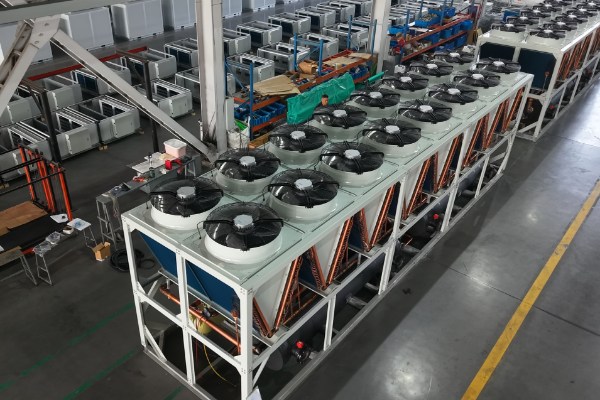
Solution Summary — Koven Air scroll & screw chiller range
Air-cooled scroll (KAFM)
63–160 RT
Modular scroll
19–234 RT
Air-cooled screw (KAFLG)
30–760 RT
Water-cooled screw (KASLG)
93–1,000 RT
Water-cooled screw COP
5.56–5.83
Water-cooled screw AHRI-IPLV
6.8–7.8
Low-GWP options
R32 · R1234ze · R1234yf
Fixed-speed & full inverter
Every series
Your Chiller Will Spend Most of Its Life at Part Load — Not at Design Capacity
The short answer: Pick the modular scroll below approximately 422 kW if load swings are significant and operating hours matter. Pick the screw above approximately 700 kW or any size if the plant run many hours near full load. Between 422 and 700 kW, either is fine. It’s all in the load profile.
Each industrial chiller is sized to be used for one design day that will only happen for a few hours per year. Then, the same industrial water chiller selected to be used on that afternoon will be used thousands of hours at a load that will only be about 25 to 75 percent of that design day level. That’s the real power consuming load.
Instinct says add margin. Field experience says otherwise — the trade consensus is blunt about it: “Is it better to oversize the chiller? Not always.” Engineers on r/engineering put the same warning in plant language: “if you get a 70 ton chiller and run it down at a 10–40 ton load…”
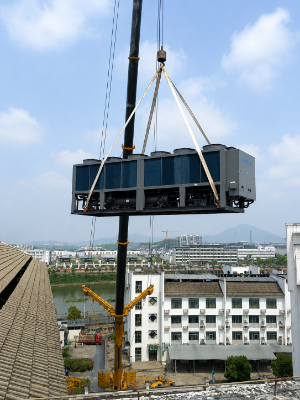
Why the compressor type is really a load-profile decision
01
Root cause. A large, fixed-speed, single compressor has a sweet spot for efficient operation. When you force it down to 30% capacity, it’s short-cycling, its condenser is far too big for the job, and the data-sheet efficiency of the compressor is no longer accurate for the equipment you possess.
02
Scroll answers this with numbers. A bunch of little hermetic scroll compressors stepped down by different amounts will do the job of taking load off of the ones that were running, and let the rest go dormant. It’s a lot of interleaved, one static/one orbiting scrolls in as many parallel paths as are needed to match the load.
03
Screw’s response: modulating modulation. One or two intermeshing helical rotors, constantly driven by a slide valve, have good design efficiency across a wide turndown range. As described in patent WO2018004985A1, such a design would feature a screw compressor and “selectively actuatable” by the controller slide valve.
04
Proof sits in the data. Koven’s own KAFM modular scroll units achieve their best COP at 50 % load (COP 3.93), not at 100 % load (COP 3.14), a difference of 25.2 %, to be seen later on in this article in detail.
The structural reason oversizing gets expensive
A chiller picked 30 % oversized doesn’t simply idle. It short-cycles, and every restart is compressor wear that shortens service life, so the mistake is locked into the plant for 15 to 20 years. Root cause: a single fixed-speed machine has one efficient operating point, and at 25 % load the risk has already moved from the datasheet to your operating budget.
Unlike a catalogue selection, Koven Air quantifies that trade-off before the order: pre-sales engineering verifies the calculated load against ISO 9001 factory test data, and the redundancy-versus-efficiency decision is put in writing.
Request a quote with the engineering calculation attached
That’s the case for having both types on the stock shelf, and the reason this page is based around duty cycle, capacity band, and refrigeration legislation, not which compressor sounds better.
The Koven Scroll & Screw Chiller Range — Models, Capacities and Series Match
KAFM — Air-Cooled Scroll
- 63–160 RT · R410A, low-GWP option R32
- Hermetic scroll compressors, 2 / 3 / 4 per unit
- Staged control: 2-step (50/100 %), 3-step (33/66/100 %), 4-step (25/50/75/100 %)
- Electronic expansion valve; shell-and-tube evaporator
- KAFMH(A)0602 / 0903 / 1204 = 220 / 330 / 440 kW cooling
- Fixed-speed and full-inverter (-PC) variants
KAFLG — Air-Cooled Screw
- 30–760 RT · R407C / R134a, low-GWP option R1234ze
- Single, double, triple and quadruple compressor heads
- R407C series: 067.1 = 224 kW up to 800.4 = 2,660 kW
- R134a series: 110.1 = 388 kW up to 400.2 = 1,366 kW
- Partial heat recovery optional (code H)
- Rooftop or outdoor installation – no cooling tower, no condenser-water pump
KASLG — Water-Cooled Screw
- 93–1,000 RT · R134a, low-GWP option R1234yf
- Cooling COP 5.56–5.83; AHRI-IPLV 6.8–7.8
- High-efficiency shell-and-tube evaporator and condenser
- Models KASLG-95.1A through KASLG-520.2A
- Fixed-speed and full-inverter (-PC) variants
- The efficiency choice when a cooling tower already exists
Model codes carry the specification. A KAFM designation such as KAFM-H-060-2-N-N-N-A resolves to a 60 kW heat-pump unit with two refrigeration circuits on R410A, where the seventh-position letter N becomes R when the low-GWP R32 charge is ordered. Procurement teams can therefore validate a refrigerant selection from the purchase order alone, before the unit ship. Every COP and IPLV figure quoted for these series is stated on the AHRI 550/590 test basis that US federal procurement requires, and the staged multi-compressor start sequence these modular units use is the arrangement described in published patent KR100881626B1.
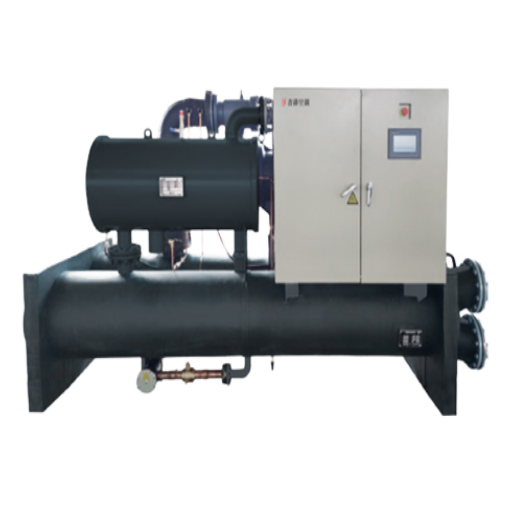
Where series selection goes wrong
A common mistake is to match tonnage and stop, because a datasheet COP is measured at one operating point and the plant rarely sit there. That gap between rated and realised efficiency is the structural reason two identical 440 kW quotations behave differently on site, and the risk show up as an energy bill rather than a warranty claim.
Koven Air will not claim an inverter COP figure it has not published, builds every series to ISO 9001, and runs a 24 hour ageing test in an in-house chiller and heat pump laboratory. Unlike a catalogue pick, our engineers size against your measured load hours — get a detailed sizing estimate →
The Duty-Cycle Match Register
Plant operating hours and the degree to which the load varies is what actually matters in chiller selection. Tonnage is only one input; use this grid to compare Koven series using realistic COP and capacity data rather than simply selecting by a ‘high/medium/low’ category.
The Duty-Cycle Match Register — Koven Air series selection by operating pattern. Capacity, COP and IPLV from Koven published specification tables; cooling conditions 12/7 °C chilled water, 35 °C ambient.
| Operating pattern | Typical load band | Capacity required | Recommended series | Published COP / IPLV | Deciding reason |
|---|---|---|---|---|---|
| Intermittent, wide swing (offices, schools, hotels) | 25–75 % | < 422 kW | KAFM modular scroll | COP 3.14–3.42 · IPLV 3.60–4.30 | Peak COP occurs at 50 % load; idle circuits stay offline |
| Two-shift production, moderate swing | 40–85 % | 422–700 kW | KAFM 4-step or KAFLG single-head | Scroll IPLV 3.60–4.00 · Screw IPLV 3.80–4.30 | Judgment band — redundancy versus seasonal efficiency |
| Continuous 24/7, narrow swing (data center, process) | 70–100 % | > 700 kW | KAFLG air-cooled screw | COP 3.23–3.35 · IPLV 3.80–4.30 | Slide-valve turndown holds design efficiency; field-serviceable |
| Continuous, cooling tower already installed | 60–100 % | 327–3,517 kW | KASLG water-cooled screw | COP 5.56–5.83 · IPLV 6.8–7.8 | Heat rejection to water, not air — the largest single efficiency gain available |
| Uptime-critical, no standby plant | any | < 823 kW | Modular scroll, N+1 circuits | IPLV 3.60–4.30 | One compressor down ≠ plant down |
There are two important rows that buck the conventional trend: if the load swings by more than 50% – even on a larger unit – it’s a scroll. Likewise, if a cooling tower is already on site then the primary comparison should be water-cooled screw versus the alternatives, before we even compare scroll to screw.
Not sure which row describes your plant?
Get a free capacity & COP sizing check →Send the load profile; we return the series match and the published efficiency figures.
Scroll vs Screw Chiller: The Capacity Crossover Band
Comparing the two types in a nutshell, below 440 kW, scroll units typically have the advantage on redundancy, granular staged capacity control and space; they’re also broadly comparable with air-cooled screw units on full-load COP. Above 700 kW, there are few manufacturers making scroll models and so water-cooled screw compressors will generally prevail; their design efficiency remains much more stable over their operational range. Between those two figures, the Capacity Crossover Band is where we select between them based on redundancy versus seasonal operating efficiency, not the compressor type.
This band isn’t some marketing gimmick. Consulting-Specifying Engineer is setting similar limits from the specifier side of the street: “Smallest water-cooled chillers (under 200 tons) usually incorporate several scroll compressors. Those between 200-500 tons will generally incorporate screw compressors.” Two hundred tons equals about 703 kW. Of the two scroll limits, the more conservative – Koven’s published maximum of 422 kW – seems the safe choice here.
This band isn’t a marketing device. Consulting-Specifying Engineer places the same boundary from the specifier’s side: “The smallest water-cooled chillers (up to 200 tons) begin with multiple scroll compressors, those from 200 to 500 tons use screw compressors.” Two hundred tons is roughly 703 kW. Koven’s published scroll ceiling of 422 kW is the more conservative number of the two.
Both capacity-control mechanisms are documented technology classes rather than vendor inventions: the screw’s slide valve in published patent WO2018004985A1, and load-following scroll modulation in WO2008144037A1. Both are rated on the AHRI 550/590 test basis that US federal chiller procurement requires.
Where each technology actually earns its keep
Scroll vs screw — Koven Air published figures, like-for-like air-cooled unless stated. Sources: Koven series specification tables; capacity crossover corroborated by Consulting-Specifying Engineer.
| Dimension | Scroll chiller | Screw chiller |
|---|---|---|
| Compression element | Two interleaved spiral scrolls, one fixed, one orbiting | One or two intermeshing helical rotors |
| Air-cooled capacity (Koven) | 63–160 RT (221–563 kW) | 30–760 RT (224–2,660 kW) |
| Modular / parallel arrangement | 19–234 RT across many modules | 2–5 compressor heads |
| Water-cooled capacity (Koven) | Not offered | 93–1,000 RT (327–3,517 kW) |
| Air-cooled full-load COP | 3.25–3.28 | 3.23–3.35 |
| Air-cooled AHRI-IPLV | 3.60–4.00 | 3.80–4.30 |
| Water-cooled COP / IPLV | — | 5.56–5.83 / 6.8–7.8 |
| Capacity control | Discrete staging: 2-step 50/100 %, 3-step 33/66/100 %, 4-step 25/50/75/100 % | Continuous slide-valve modulation, plus inverter on -PC variants |
| Best efficiency point | Part load — KAFM peaks at 50 % load | High and full load |
| Redundancy on a single failure | Independent circuits; remaining compressors keep running | One or two heads; a head loss removes 50–100 % of capacity |
| Serviceability | Replace the hermetic compressor as a sealed unit | Field-serviceable and rebuildable by a qualified chiller technician |
| Footprint at equal capacity | Smaller | Larger |
| Standard refrigerant | R410A | R407C / R134a |
| Low-GWP option | R32 (GWP 675) | R1234ze (air-cooled) · R1234yf (water-cooled) |
Inside the compression element
- Scroll: the orbiting scroll traps refrigerant gas in sequential chambers, compressing it toward the centre discharge port. Reduced number of moving parts results in low noise and low vibration making them suitable for Hotels, libraries, and rooftop plant located near populated areas.
- Screw: in the rotary screw compressor male and female screws spin together within a milled casing, reducing the volume of trapped gas along the thread as it passes from the inlet port to the outlet port. Regular oil scavenge, a very high maximum operating pressure, make the screw chiller type a durable compressor for heavy industrial use, operating for 24 hours, day after day.
They both use the same vapor-compression refrigeration cycle, both an electric motor drive the evaporator, and in both a valve of some kind throttles liquid refrigerant back into the evaporator. What changes is how each machine sheds capacity when the building stops calling for it. Out of the range: When cooling loads exceed about 1,000 RT, positive displacement is out, replaced by the impeller technology of the centrifugal chiller. Koven’s centrifugal and magnetic bearing lines address that range.
Both units then provide central HVAC or process chiller service, and will be represented as an air cooled screw chiller, water cooled screw chiller or an air-cooled scroll chiller depending upon how the building rejects the heat. Energy efficiency tends to follow the path heat rejected along the path of least resistance, much more so than it follows compressor type – an important point returning in the section Total cost of Ownership where it presents real-world data.
The part-load COP curve nobody publishes
Datasheets in this category all quote a single COP, at full load and stop. A single figure that describes an operating point that the machine spends almost no time in. Below is the measured part-load behaviour of the KAFM modular scroll range at 25 %, 50 %, 75 % and 100 % capacity.
KAFM modular scroll — cooling part-load COP, fixed-frequency units. R410A; chilled water 12/7 °C; ambient 35 °C. Part-load and IPLV values are manufacturer reference figures for guidance; data subject to change without notice.
| Model | Nominal | Cooling kW | COP @ 25 % | COP @ 50 % | COP @ 75 % | COP @ 100 % | IPLV |
|---|---|---|---|---|---|---|---|
| KAFM 040H-200 | 40 RT | 130 | 3.61 | 3.93 | 3.52 | 3.14 | 3.71 |
| KAFM 060H-300 | 60 RT | 195 | 3.61 | 3.93 | 3.52 | 3.14 | 3.71 |
| KAFM 080H-400 | 80 RT | 260 | 3.61 | 3.93 | 3.52 | 3.14 | 3.71 |
| KAFM 100H-500 | 100 RT | 325 | 3.61 | 3.93 | 3.52 | 3.14 | 3.71 |
| KAFM 120H-600 | 120 RT | 390 | 3.43 | 3.73 | 3.34 | 2.98 | 3.52 |
| KAFM 140H-700 | 140 RT | 455 | 3.43 | 3.73 | 3.34 | 2.98 | 3.52 |
| KAFM 160H-800 | 160 RT | 520 | 3.43 | 3.73 | 3.34 | 2.98 | 3.52 |
Note the 50% column against the 100% column. Every single unit in this range run 25.2% more efficient when run at half load as when run at full load since the stepped circuits shed compressors while condenser surface remains constant. In a building that operates from 30-70% all year long the use of this machine occurs within the very best performance region, not at the very worst.
What buyers actually ask before they choose
Three questions recur almost verbatim across engineering forums, and each maps onto a row of the table above.
- An industrial maintenance engineer: “Our current system is a screw compressor. I was quoted scroll compressors system. What’s better for varying load screw or scroll?” — that’s the crossover band, decided by load hours.
- A manufacturing buyer: “The scroll compressors seem like they’re better for handling” a broad consumption band, “but we’re told that they aren’t as durable as screw” — durability here means maintenance model, not build quality.
- A plant engineer sizing new capacity: “if you get a 70 ton chiller and run it down at a 10-40 ton load” — the oversizing trap, in one line.
Those searches also explain the phrasing engineers use: scroll chiller vs screw chiller when comparing compressors, screw chiller vs centrifugal chiller once capacity passes 1,000 RT, and water cooled chiller once a tower is on the drawing. A rotary screw chiller and an air cooled scroll chiller answer different questions, and neither answer is universal.
Where the scroll advantage stops — stated plainly
Integrated Part Load Value is itself a part-load weighted metric, and on Koven’s own air-cooled figures the screw is the higher number: IPLV 3.80–4.30 for screw against 3.60–4.00 for scroll. Consulting-Specifying Engineer agrees that screw chillers “typically maintain design efficiency (kW/ton) at partial load.” Scroll’s case rests on redundancy, staging granularity and footprint — not on a claim of superior seasonal efficiency. Any supplier telling you otherwise is describing a machine, not measuring one.
“Buyers ask us which compressor is more efficient. Honestly, on our own air-cooled units the screw posts the higher IPLV — and the scroll still wins the job, because the plant runs at forty percent load and the customer cannot lose the whole building to one compressor failure. We publish both numbers so that argument happens before the purchase order, not after commissioning.”
— Koven Air Engineering Team
We’ll need to place one more field-level consideration into the mix here. It can be noted that the screw chiller can be rebuilt, which only helps in those cases where there’s someone available that knows how to get it done, and the business admits there’s a dire shortage of good chiller people right now. Where those skills aren’t so readily available, the best bet may be the sealed-scroll replacement unit and that discussion also fit into the crossover range with efficiency.
Refrigerant Compliance: What You Can Actually Install in the United States in 2026
If the specifications don’t follow refrigerant laws, they aren’t specifications you can produce. Even if those deadlines were coming up, EPA’s Technology Transitions rule, implemented by the AIM Act, bans the installation of any new chiller that has a global warming potential above 700-those dates are long gone.
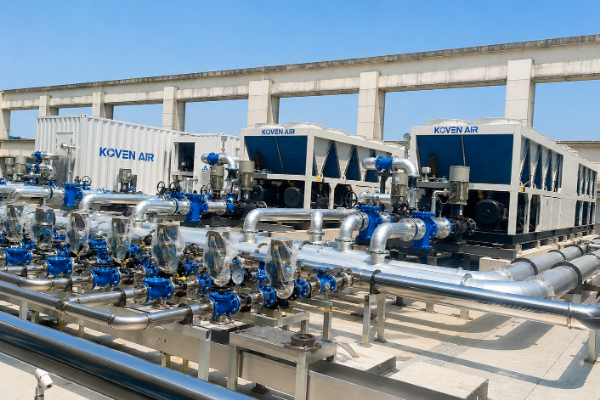
The compliance trap in a 2026 chiller specification
An expensive mistake is discovering the refrigerant problem at the border, because a unit charged with R410A can’t be installed for comfort cooling and the delay lands on your commissioning schedule. Structurally, the standard charge and the compliant charge are different bills of material, and only the purchase order decides which one ships.
R32 at 675 GWP sits roughly 68 % below the R410A charge it replaces, which is what moves a unit from prohibited to permitted. Unlike suppliers who quote the default and let the buyer carry the risk, Koven Air certifies the refrigerant position inside the model code and confirms it against the destination jurisdiction before production starts.
Two honest qualifications
Koven has not published separate COP and IPLV ratings for the low-GWP variants, so the efficiency figures on this page should be read as applying to the standard charge and confirmed for your selected refrigerant at quotation. Certification is likewise specific: Koven chillers carry CE and ISO 9001 as standard, with AHRI certification available as an option rather than as a default. IPLV figures here are stated as rated by the AHRI 550/590 method, which is a test procedure, not a certification claim.
US EPA Technology Transitions — chiller GWP limits and compliance dates. Source: epa.gov, page updated 8 July 2026. Informational only; refer to 40 CFR Part 84, Subpart B for compliance.
| Chiller application | GWP limit | Compliance date | Status today |
|---|---|---|---|
| Comfort cooling — system installation | 700 | 1 January 2025 | In force |
| Industrial process refrigeration, exiting fluid above −30 °C | 700 | 1 January 2026 | In force |
| Data centers, computer-room air conditioning, IT equipment cooling | 700 | 1 January 2027 | Approaching |
| Industrial process refrigeration, exiting fluid −50 °C to −30 °C | 700 | 1 January 2028 | Permitted |
| Semiconductor manufacturing equipment, charge ≤ 100 lb | 700 | 1 January 2030 | Permitted |
| Industrial process refrigeration, exiting fluid below −50 °C | Not covered | — | Permitted |
Which Koven charge clears the limit
Koven Air refrigerant options against the 700 GWP threshold. Refrigerant availability per Koven product documentation; GWP values per the AR4 basis used in the EPA rule.
| Series | Standard charge | GWP | ≤ 700? | Low-GWP option | GWP | ≤ 700? |
|---|---|---|---|---|---|---|
| KAFM air-cooled scroll | R410A | 2,088 | No | R32 | 675 | Yes |
| Modular scroll | R410A | 2,088 | No | R32 | 675 | Yes |
| KAFLG air-cooled screw | R407C / R134a | 1,774 / 1,430 | No | R1234ze | ≈ 7 | Yes |
| KASLG water-cooled screw | R134a | 1,430 | No | R1234yf | ≈ 4 | Yes |
Every line on this page has a compliant path, not one of them has a compliant default. For a United States project you must write in the low-GWP charge explicitly on the PO – be that the R32, the R1234ze or the R1234yf variation – and a supplier that writes you the standard charge for a 2026 comfort-cooling job has written you equipment which it can’t lawfully fit.
Where These Machines Run — Applications and Field Conditions
Koven Air was established in 2007 and shipped the first screw chiller out of a factory now undertaking 18 standardized production processes, 23 sheet-metal precision machining operations, 400 traceable production steps, 36 factory inspections, and a 24 hour ageing test in its dedicated chiller and heat pump testing laboratory. Equipment from this facility is operating in 35 countries.
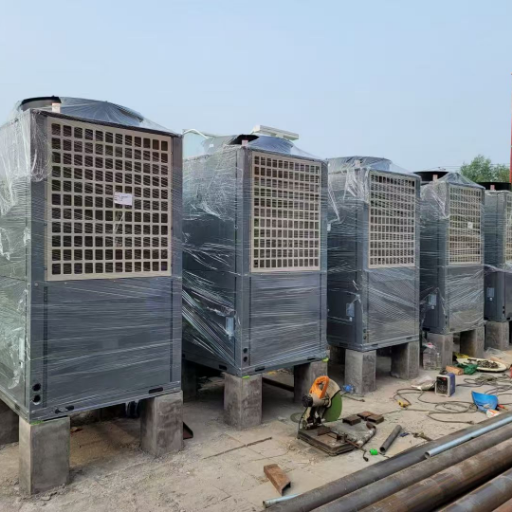
Data centers & computer rooms
- Continuous duty · narrow load band
- Screw territory: sustained load near design capacity
- Watch for the 1 Jan 2027 GWP deadline for the data center sector in particular
- Water-cooled KASLG where a tower exists: COP 5.56–5.83

Transport hubs, hotels, schools, libraries
- Intermittent duty · wide load band
- Modular scroll territory: 19 RT staging granularity
- The maximum COP for this unit is at 50% load, the building load.
- One compressor down doesn’t close the building
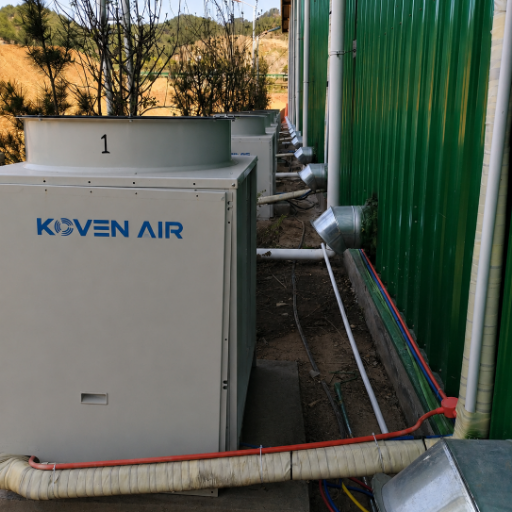
Process cooling — electronics, lithium battery, semiconductor, pharma, food
- Precision duty · refrigerant-law sensitive
- Exiting-fluid temperature decides which EPA row applies
- Semiconductor equipment ≤ 100 lb charge: exempt until 2030
- Not below 50 C outgoing fluid: rule not apply.
The high-ambient envelope
Export projects in the Gulf, South Asia and inland China won’t fail for capacity at nominal tons, but for failure to reject on the day the ambient rise to 48 C. All Koven chiller ranges under discussion have a standard operating envelope specified from 30 C to 50 C ambient, with KAFLG and KAFM values provided here rated at a standard ambient of 35 C to facilitate air-cooled comparison.
Total cost of ownership — evidence tier: Silver
The largest efficiency lever is heat rejection, not compressor type
Moving from an air-cooled machine to a water-cooled screw takes Koven’s published cooling COP from 3.23–3.35 to 5.56–5.83, and IPLV from 3.80–4.30 to 6.8–7.8. America’s Federal Energy Management Program states the principle without hedging: “air-cooled chillers are substantially less efficient than water-cooled models.”
For context on where these machines sit against a published floor rather than a competitor’s brochure: FEMP’s minimum for a full-load-optimised air-cooled chiller under 150 tons is EER 10.890, which converts to COP 3.19. Koven’s air-cooled screw at COP 3.23–3.35 and air-cooled scroll at 3.25–3.28 clear that federal procurement floor. They’re compliant machines, not efficiency records — and the honest route to a lower operating bill runs through the cooling tower, not through the compressor badge.
For the purposes of calculating lifetime costs, you must use your own electricity tariff and operate times, as will have been obvious throughout. Standard assumptions used by FEMP in its worked examples include an annual operating period of 2000 hours, a tariff rate of $0.099/kW h and a life expectancy of 23 years; they represent a starting point rather than your actual operating profile.
Any lifetime-cost figure quoted for your project should be built on your own tariff and run hours. FEMP’s own worked examples assume 2,000 operating hours per year, 9.9 cents per kilowatt-hour and a 23-year service life, which is a reasonable starting frame and a poor substitute for your actual load data.
Want the sizing done against your tariff and load hours?
Get a free capacity & COP sizing check →Certifications, Components and Protection Logic
CE
Standard, all series
ISO 9001
Quality management system
AHRI 550/590
IPLV test method · certification optional
Pressure vessel regulations
Design and manufacture basis
What actually stops an import order is rarely the brand name. It is stated most clearly by an American specifier writing about Chinese-built chillers: an “OEM component supplied exclusively by a company in China can dramatically increase downtime and costs” once non-OEM parts enter the picture. That is a spare-parts and service argument, and it deserves a spare-parts and service answer.
The failure mode a certificate does not cover
Field failures on imported chillers are rarely compressor failures. They’re condenser fan motors, refrigerant leaks and control faults, and no certificate protects against any of them. Structurally, a cabinet built from captive parts turns a small fault into a long delay, because the replacement component has exactly one source.
Unlike a captive bill of material, Koven Air engineers the refrigeration and control stack around world-recognised component brands, so your maintenance contractor keeps a second source and the parts risk falls with it. Every unit is validated across the −30 °C to 50 °C operating envelope and released only after the 24 hour ageing test in an ISO 9001 factory.
What is inside the cabinet
World-leading refrigeration and control components instead of captive parts gives your maintenance contractor an alternative supply source.
- High efficiency shell and tube heat exchangers in both evaporator and condenser, across scroll and screw range.
- Electronic expansion valve in KAFM scroll units.
- Built to the ISO 9000 quality management system, pressure vessel regulations, and refrigerant equipment safety standards.
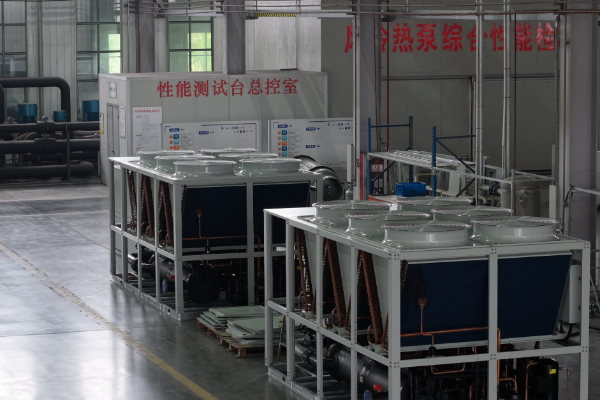
The protection stack, itemised
Your most expensive chiller is the one with the wrong load profile because the capital saving is spent annually in energy cost and it can’t be rectified except by the entire chiller unit. Structurally, heat rejection, refrigerant charge and capacity control each create separate demand in the Bill of Material, and a single headline figure disguises these three.
With 15 safety interlocks, it’s not a slogan; it’s a specification you should expect to get back, point by point, from every supplier.
Where the capital-versus-energy trade needs settling before an order, run it as a life-cycle cost analysis: the Federal Energy Management Program publishes both the method and the BLCC software, together with the AHRI 550/590 test basis these efficiency figures are stated on.
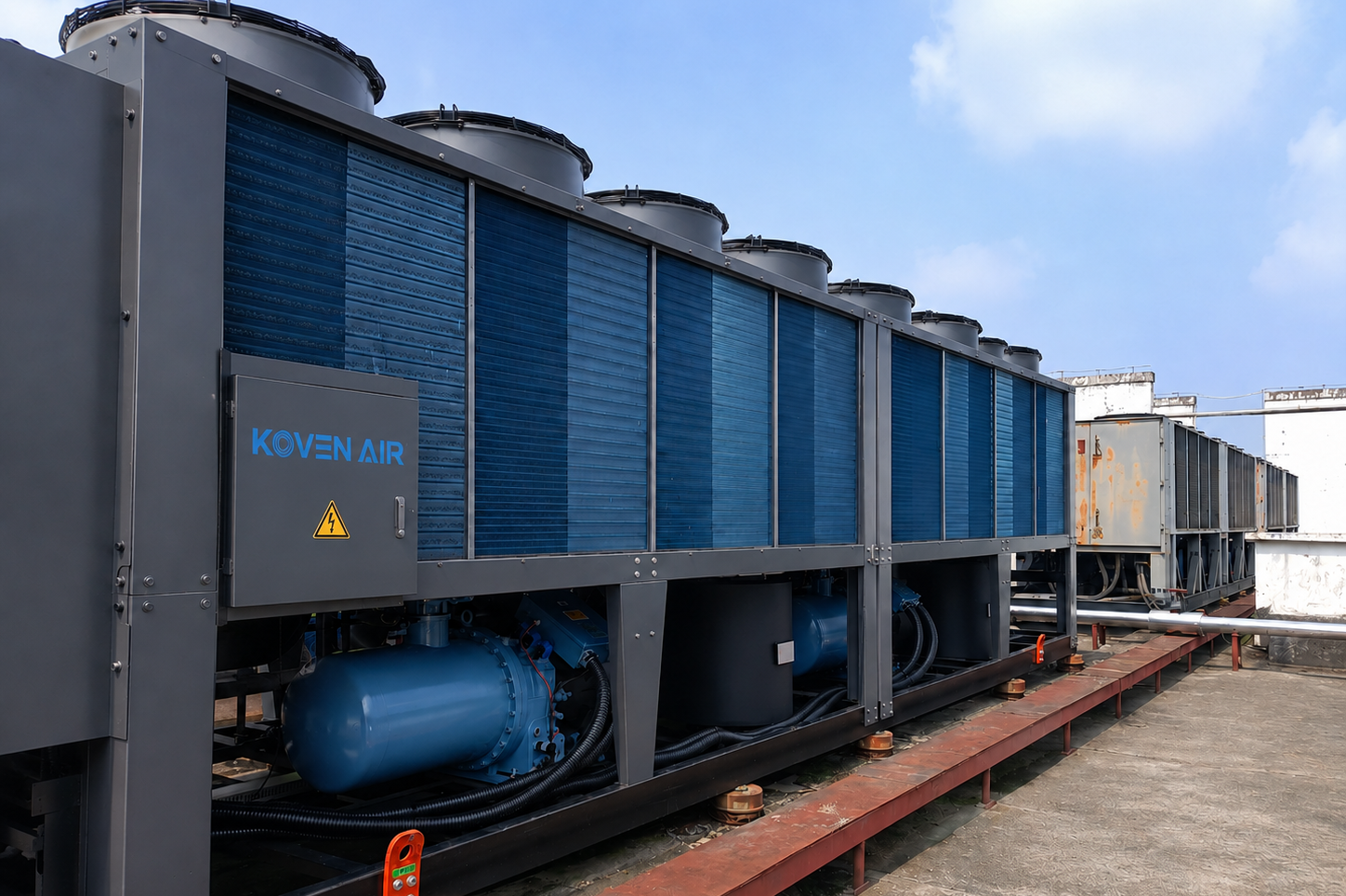
Procurement: Sizing Support, Lead Time and Lifetime Service
Because a chiller quoted to the wrong load profile is simply a discount on the wrong machine, Koven Air sells through engagement rather than price lists.
Where the capital-versus-energy trade needs settling before an order, run it as a life-cycle cost analysis: the US Federal Energy Management Program publishes the method, the BLCC software and the AHRI 550/590 test basis these efficiency figures are stated on. The refrigerant line of the bill of material is fixed for you by the EPA Technology Transitions rule, not by preference.
Before the order
Pre-sales engineering- Project design reviewed and parameter accuracy verified
- Professional calculation verification returned in writing
- Series match and refrigerant compliance confirmed against your jurisdiction
During delivery
Manufacture and commissioning- Equipment that only come off the line after a successful test result.
- Equipment under goes a 24 hour aging test within the dedicated chiller and heat pump laboratory.
- Technical personnel provide on-site installation and commissioning guidance
- Field modifications made where site conditions differ from drawing
After handover
Lifetime technical service- Lifetime free technical service guidance
- Problems addressed immediately within the warranty period
- Regular professional training for engineering contractors and site engineers
Why a cheap quotation gets expensive
The most expensive chiller is the one specified against the wrong load profile, because the capital saving is repaid every year in energy and the mistake can’t be corrected without replacing the machine. Structurally, the reason is that heat rejection, refrigerant charge and capacity control each move the bill of material independently, and a single headline price hides all three — so the risk transfers quietly to the operator.
Across this application range, from a 221 kW scroll unit to a 3,517 kW water-cooled screw, Koven Air quantifies the trade-off inside the quotation itself: series, refrigerant, staging and the published COP that each choice carries. Every unit ships only after the 24 hour ageing test in our ISO 9001 factory.
What actually moves the price
Our chiller prices are configured, not listed. These are the dimensions that drive a Koven quotation, generally in this order:
- Heat Rejection Type. Water-cooled adds a tower and condenser water pumps to the project scope, removing it from the equipment scope.
- Refrigerant Charge. Choosing a low-GWP R1234ze or R1234yf charge is a different Bill of Materials than the standard charge, and, in the United States, it’s non-optional.
- Capacity control. Full-inverter -PC variants carry a different compressor and drive package from the fixed-speed unit.
- Number of Compressors & Staging. A four step scroll unit is a different machine from a single screw head, both at the same tonnage.
- Hydraulic Module and Heat Recovery. Adding a pump, expansion device, or even partial heat recovery adds to the cabinet space.
- Voltage. 380V, 415V, 460V and 575V are all supported, and the voltage selection will follow your local standard, not ours.
Lead Time & Commercial Terms. We provide these based on configuration and destination. Submit your load profile and jurisdiction, and we’ll provide a quotation including the series, compliant refrigerant and delivery time frame.
Engineering Selection & Evaluation Tools
Technical utilities for system capacity crossover sizing, regional refrigerant compliance checking, and part-load COP estimation.
If the plant swings between roughly 25 % and 75 % of design capacity and the requirement is below about 422 kW, the modular scroll is usually the better machine — its peak COP occurs at 50 % load and a compressor failure does not take the plant offline. If the load sits above 70 % for most of the running year, or the capacity exceeds about 700 kW, stay with the screw, whose slide valve holds design efficiency across a wide turndown band and whose rotors are built for continuous duty. Between those two figures the answer depends on whether you value redundancy or seasonal efficiency more, and both machines are defensible. Before deciding, log the plant’s actual load hours for a month — that record settles the argument faster than any datasheet, because it shows where the machine will really live.
One field constraint belongs in this comparison. A screw chiller is rebuildable, which is an advantage only where a competent technician can be found — and the trade itself reports that there is a serious shortage of good chiller guys out there. Where that skill is scarce, the sealed-scroll replacement model is the lower-risk maintenance path, and that consideration belongs in the crossover band alongside efficiency.
On Koven’s own air-cooled figures the screw carries the higher Integrated Part Load Value, at 3.80–4.30 against 3.60–4.00 for the scroll. IPLV is a part-load weighted metric, so this is the fair comparison. Scroll’s advantage lies in redundancy, staging in 19 RT steps and a smaller footprint — not in a higher seasonal efficiency number.
Yes. Every series in this range — KAFM air-cooled scroll, KAFLG air-cooled screw and KASLG water-cooled screw — is offered as a fixed-speed model and as a full-inverter -PC variant. Published COP and IPLV figures on this page describe the fixed-speed units, so request the inverter ratings specifically when comparing quotations.
Not for comfort cooling, and not for industrial process refrigeration with an exiting fluid above −30 °C — both prohibitions are already in force under the EPA Technology Transitions rule at a 700 GWP limit. Specify the R32, R1234ze or R1234yf variant for those applications. Chillers serving semiconductor manufacturing equipment with a charge of 100 lb or less, and chillers with exiting fluid below −50 °C, sit outside those two rows.
Water-cooled screw units reach a published COP of 5.56–5.83 against 3.23–3.35 for air-cooled, and the Federal Energy Management Program states plainly that air-cooled chillers are substantially less efficient. What you trade is capital and maintenance scope: a water-cooled plant needs a cooling tower, condenser-water pumps and water treatment. If a tower already exists, the water-cooled screw is the single largest efficiency decision available to you.
CE and ISO 9001 are standard across the range. AHRI certification is available as an option rather than as a default, and the IPLV figures published here are stated as rated by the AHRI 550/590 method — which is the test procedure that defines the metric, not a certification status. Confirm the certification scope you require at quotation.
Send the cooling load, the load profile, the site ambient range, the destination jurisdiction and whether a cooling tower exists. Pre-sales engineering returns a verified calculation and a series match.
Match the chiller to the load curve, not to the catalogue
Simply supply us with your load profile, the expected ambient temperature range, and the jurisdiction; our application engineers will send you the matched series and verified performance data, along with a compliant refrigerant choice, all before you need to discuss price.


![Commercial Rooftop Unit Guide: Types, Sizing & Costs [2026]](https://kovenair.com/wp-content/uploads/2026/07/commercial-rooftop-unit-guide-featured-2-150x150.png)